Robot AI predicts outcomes before acting: 78.4% in lab tests
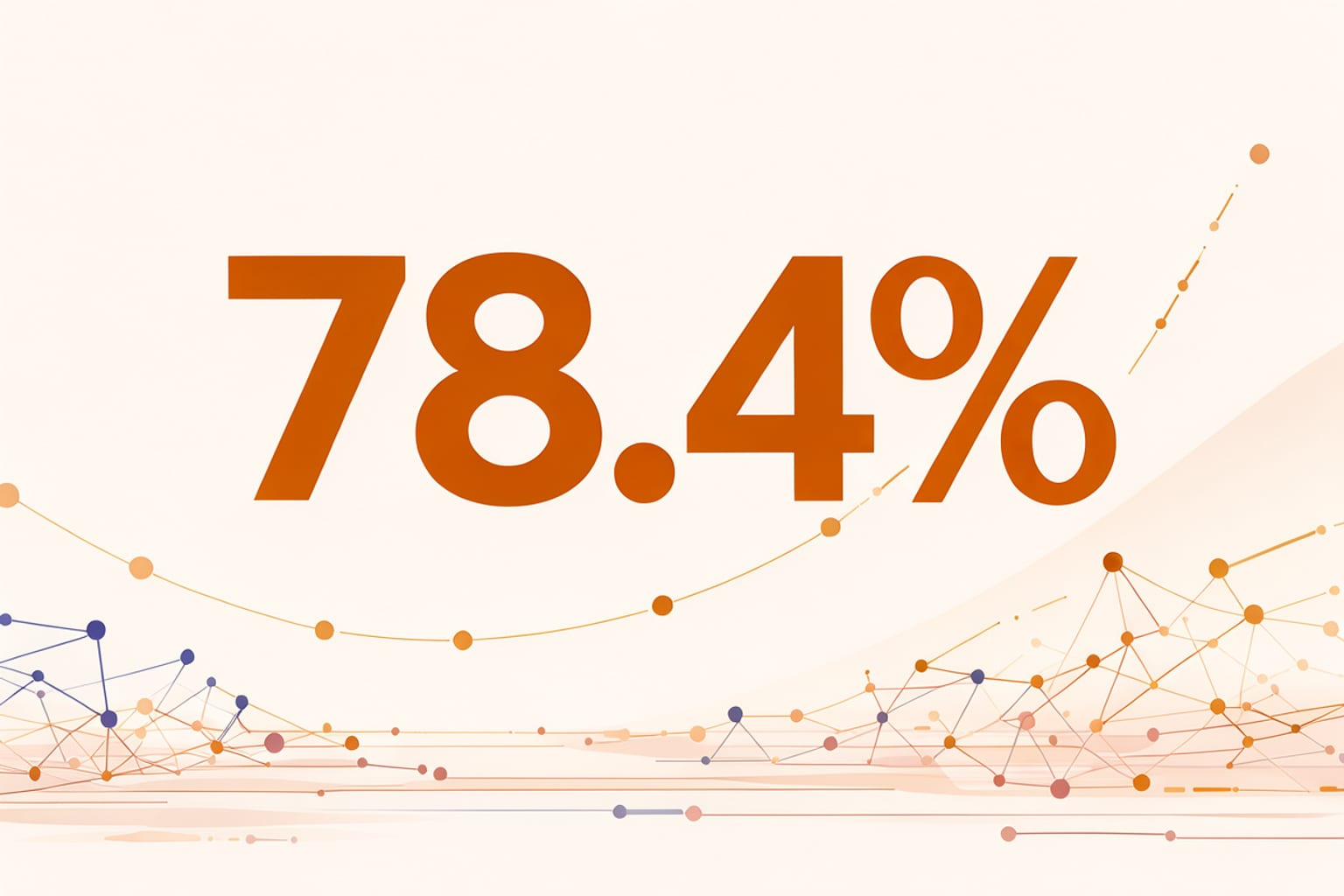
A robot that can picture the result of its own movement before making it is no longer a thought experiment. At Seoul National University, a team led by Professor Jaeyoung Do of the AIDAS Lab has built a system that reads a spoken or written request, imagines the finished scene, and then moves the arm to get there. In the team's own tests across four real-world manipulation settings, the system, called Dynin-Robotics, succeeded 78.4% of the time on average.
The problem it addresses is familiar to anyone who has watched a robot fail in an unfamiliar kitchen. A robot can repeat a movement it learned under fixed conditions, but real tasks change: the cup sits somewhere new, the drawer is shaped differently, and people ask for things in different words. Recent systems have used large language models, the text engines behind chatbots, to understand requests, and video-generation models to predict what comes next. The Seoul team merged both abilities into a single model, so that understanding the instruction, predicting the outcome and generating the movement are learned together.
The mechanism is simple to state. Given the camera image and the instruction, the model produces an image of the scene it expects once the task is done. That predicted image then either serves as a reference for generating the movement, or is used to score several candidate movements and keep the most suitable one. In simulated fruit-picking and flower-arrangement tasks, a model trained this way handled indirect requests such as "Put in the flower that symbolizes love" better than a model trained only to produce actions, which had to rely on the object being named directly.
Speed was the second problem. The team grouped the information needed for a sequence of actions and predicted it in parallel, and reused intermediate results that the computation would otherwise repeat. The action generator ran up to about 29.2 times faster than its unoptimized version, and up to about 36.6 times faster than the π0.5 model from Physical Intelligence, a US robot-AI company whose model was one of the comparisons.
What changes, and for whom? For now, the gain is scientific: a single model that links what a person says, what a scene will look like and how a robot should move, with a measured lead over two comparison systems. Robots that can carry out less rigid requests would matter first in warehouses, labs and homes, but the sources give no timeline, no product and no price, and the work is still a research paper on the arXiv preprint server. The paper has been accepted to NeurIPS 2026, one of the major artificial intelligence conferences, and is scheduled to be presented in December. The next evidence will come from whether the 78.4% holds once other teams run the same tests.
Comments
Loading the thread…
Sign in to leave a comment. Sign in