Self-learning NMR spectrometer lifts signal ~70%
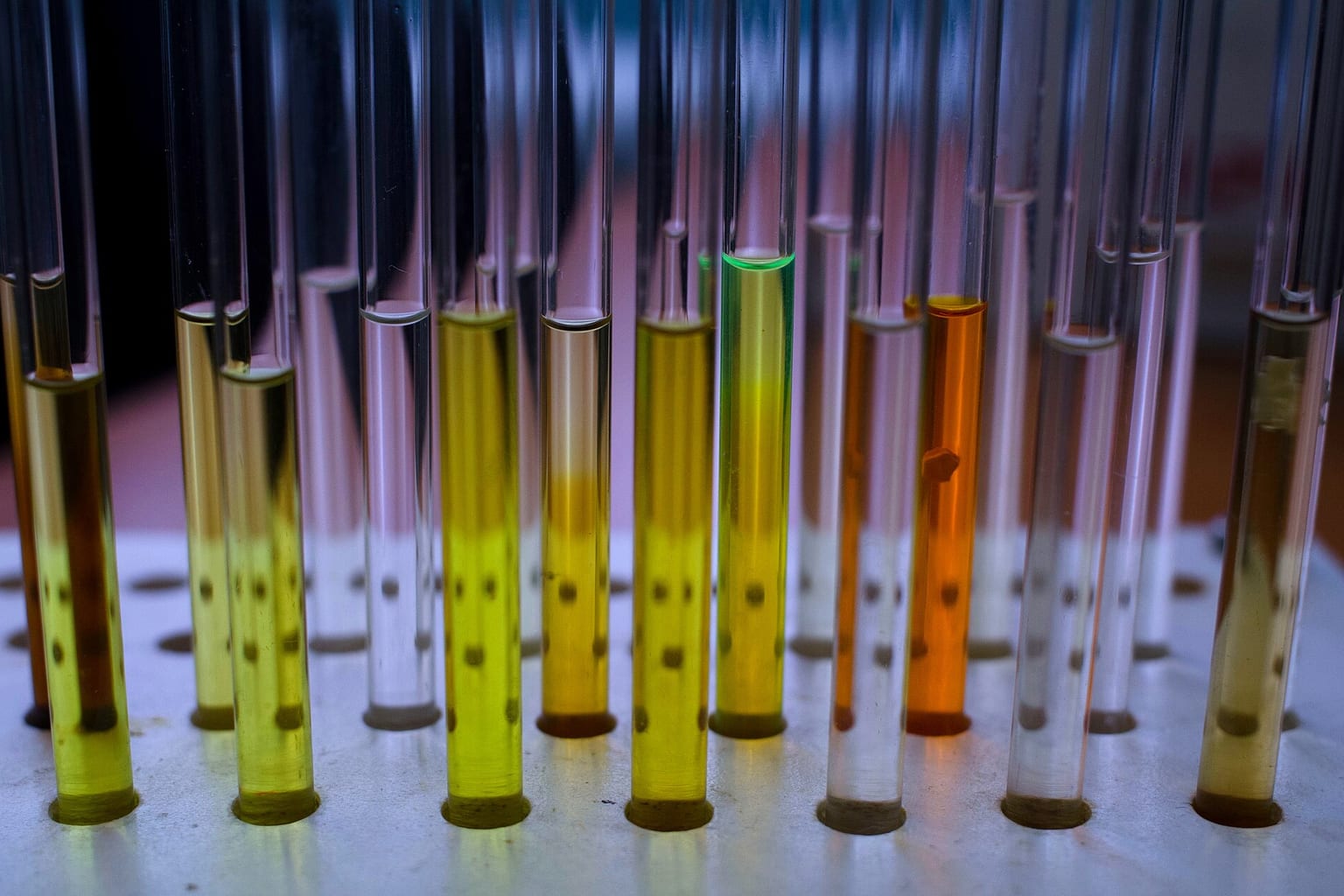
Inside a spectrometer at Aarhus University, a sample sits in a magnetic field while microwaves hit it in a carefully timed order. Nobody has to tell the machine which order to use. The machine finds it by trying, measuring and adjusting, and that is what the team has now demonstrated.
NMR reveals molecular structure down to the atomic level, but its signal is faint. Spin, a quantum property, makes atomic nuclei behave like tiny magnets, and only a very small excess of them points in one direction. Electrons can help: their magnetic moment is about 660 times larger than that of a proton, so their spins order much more strongly in a magnetic field. With carefully designed microwave pulses, researchers can transfer some of that order to the nuclei. The technique, dynamic nuclear polarization or DNP, is well established. Using it efficiently is not. A system of electrons and nuclei can contain hundreds or thousands of spins that all interact, which makes the ideal pulse sequence almost impossible to calculate in advance, and a computer model may miss imperfections in the real instrument.
The Aarhus team chose to skip the model. Its home-built DNP spectrometer is linked to a machine-learning algorithm based on Bayesian optimization, a method that picks each new trial using the results of the previous ones. The system tests a pulse sequence directly on the sample, measures the signal, learns from it and proposes the next experiment. “What is new is that we let the spectrometer learn for itself how to perform the best experiments,” says Filip V. Jensen, the PhD student who is first author of the study. On a simpler spin system, the algorithm reached solutions comparable with some of the best existing approaches. On the more complex one, the sequence it found delivered around 70% greater signal enhancement than the reference method the researchers used. Each optimization took from just under two days to almost five.
That cost is paid once. A sequence that works can be reused, and a stronger signal means fewer repetitions to obtain a usable measurement, which shortens total measurement time. Professor Niels Chr. Nielsen sees the same approach as a route to better magnetic-resonance quantum sensors, where large spin systems must be controlled without first being simulated in every detail. He also points to advanced laboratories, industrial process monitoring, environmental measurements and food analysis as possible uses over the longer term. These remain possibilities. The study is a proof of concept on model systems, and the team describes it as fundamental research. Other analytical methods are more sensitive if the only goal is to detect a trace substance, Nielsen acknowledges, while NMR's strength is the detailed picture of how molecules and materials are built.
For now, the result is a method that lets a spectrometer improve itself on the bench, where its own imperfections count, rather than on a simulation of an ideal instrument. For labs that rely on NMR to see structure, that means a tool that gets more signal from the same sample, with less time spent on repeated measurements.
Sources — read the originals(Paris time)
Read next
Comments
Loading the thread…
Sign in to leave a comment. Sign in