Soft Robot Intubation: 87% First-Try Success in Cadaver Tests
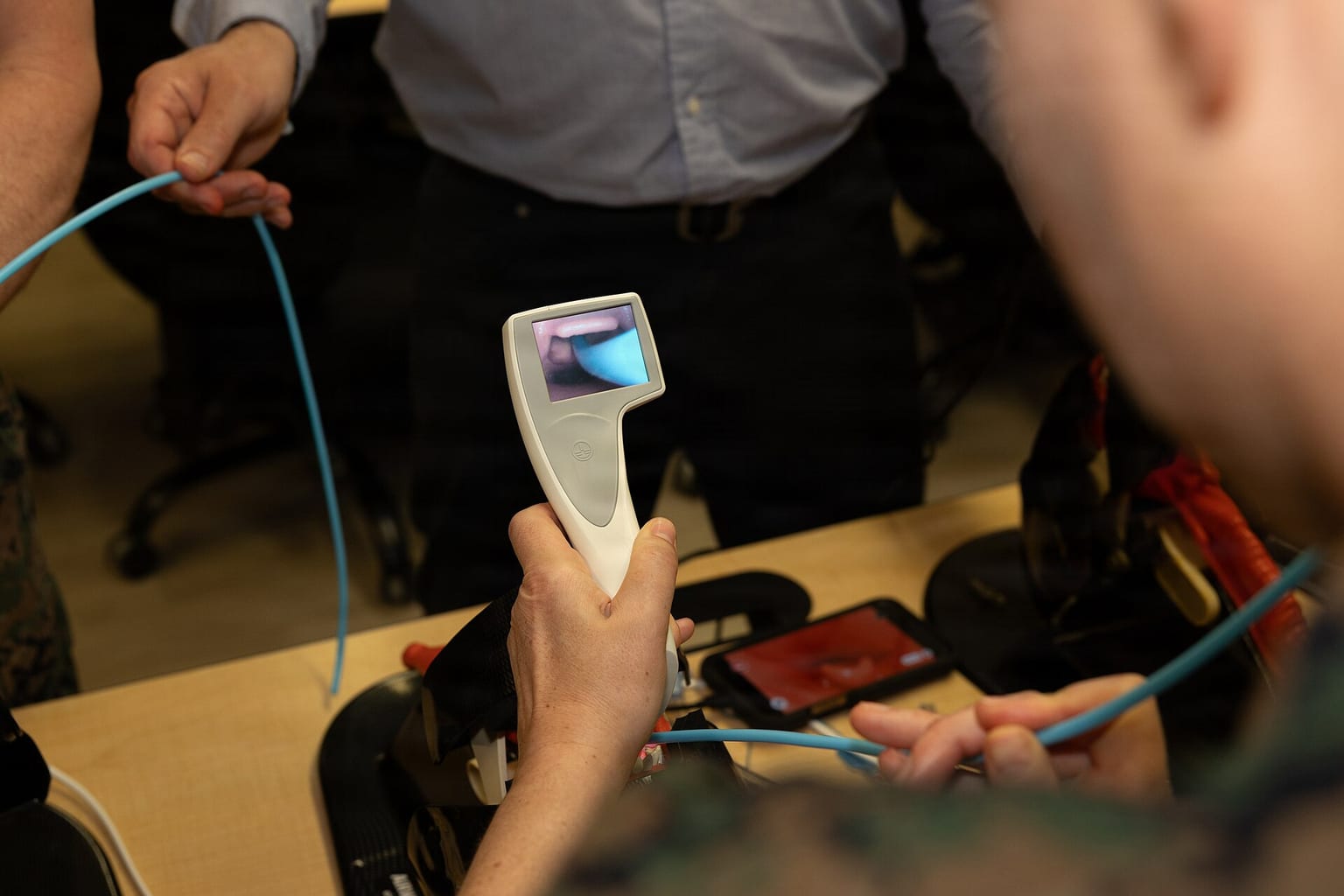
In a cadaver, a tube crept into the airway through its entrance like a vine, while the body itself stayed completely still. Eight responders took part in the test. Each had received only five minutes of training, and 87% of them intubated successfully on their first attempt, taking 21 seconds on average. Under the same conditions, the video laryngoscope succeeded 63% of the time, taking 44 seconds on average.
The purpose of tracheal intubation is to insert a breathing tube into the airway so oxygen can get through. In prehospital emergencies, the difficulty is especially acute: according to a UCSB research team, the first-attempt failure rate is close to 35%. Video laryngoscopes have improved the situation, but operators still have to visually locate the airway entrance first and then manually guide the tube through the curved anatomical path, relying heavily on experience and skill.
SRIS draws on the idea of vine robots. In 2017, researchers in the Department of Mechanical Engineering at Stanford University built a soft tube sealed at both ends. It folded inside itself, and when air pressure was pumped in from one end, its tip turned outward, like a sock being turned inside out, and kept turning. Elliot Hawkes’ team built on this basic principle to design SRIS. Only the tip advances while the body stays still, so there is no friction and the airway wall is not scraped. The tube is no longer pushed forcibly through; instead, it finds its own way through gaps.
For emergency responders, this means intubation no longer requires first seeing the airway and then pushing by hand, and ordinary responders with brief training can perform it. The developers describe the aim as “democratizing airway management.” Lead author David Haggerty completed his PhD research in Hawkes’ lab and founded Vine Medical in 2022 to commercialize the technology.
These figures still have clear limits: the test was carried out on cadavers, only eight responders took part, and safety has not yet been verified in patients. The next step is launching clinical trials to verify the device’s safety. Only after that step could this system truly enter a patient’s airway.
Sources — read the originals(Paris time)
Read next
Comments
Loading the thread…
Sign in to leave a comment. Sign in