Solar boat covers its power needs with 39.8% spare
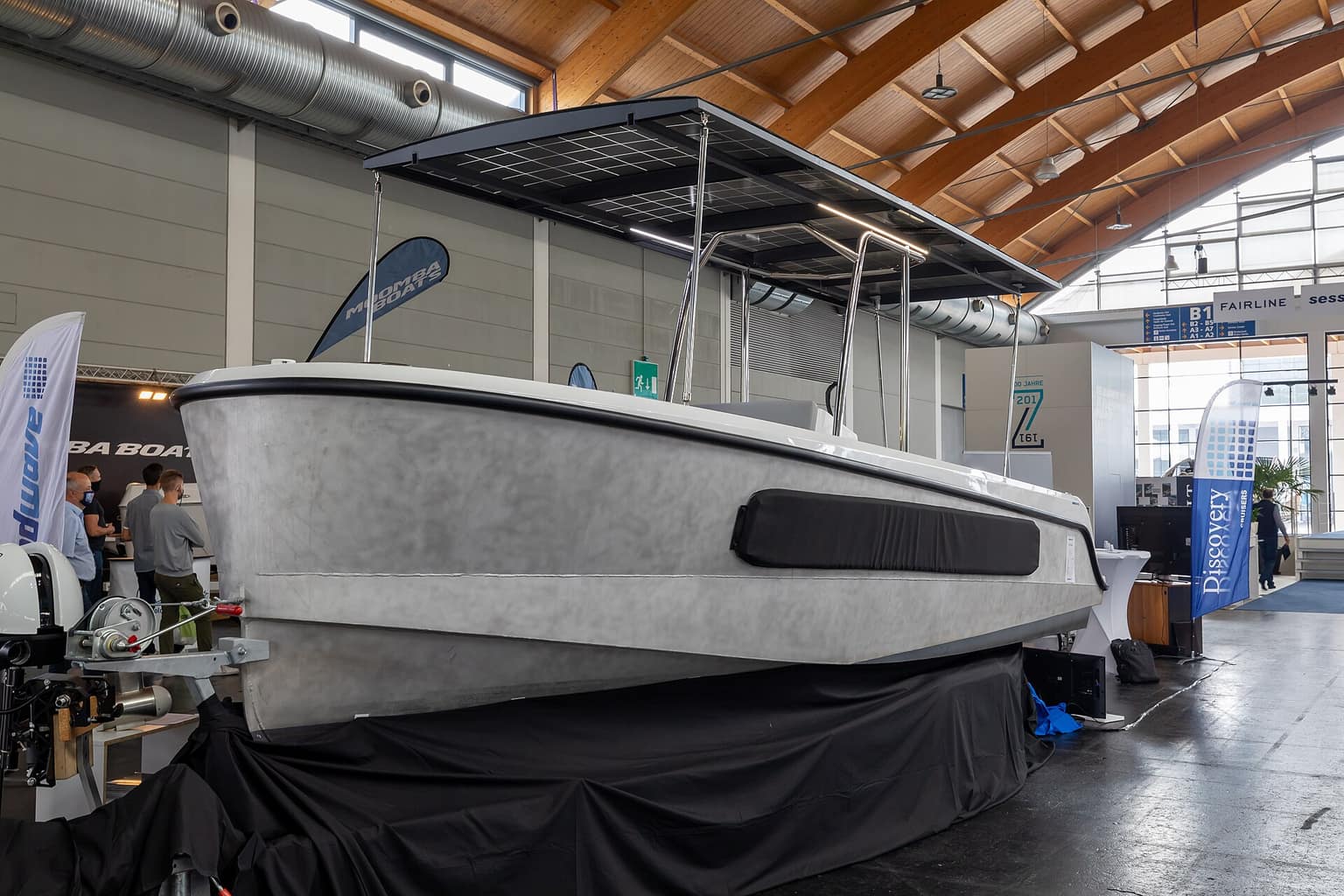
An 11.8-meter pleasure boat carrying five or six adults, powered only by the sun and a bank of batteries, is the subject of a study from Memorial University of Newfoundland in Canada, where a research team has designed it and modelled it in simulation. The array is made of 32 solar modules rated at 330 W each, for a combined 10.56 kW across about 62.4 m2. In simulation, under clear-sky irradiance peaks, it reaches a maximum output of nearly 10.98 kW, and it fully covers the baseline propulsion demand, with a 39.8% excess energy margin, when sized against the sunshine of Larnaca, Cyprus.
The difficulty is that the sun does not give steady power. Clouds, the time of day and the season all shift the output, while the motors need a constant supply. The team's answer is to split the array into four independently controlled subarrays, each connected to a common 48 V DC bus through a boost converter equipped with incremental-conductance maximum power point tracking (MPPT), a method that keeps each subarray at the point where it produces the most power. A central energy management system limits battery charging to about 50 A and limits surplus generation. Two 2.5 kW brushless DC motors turn the propellers, with Hall-effect sensors feeding a closed-loop PID controller that holds motor speed at 2,000 rpm.
The design targets 5.4 knots, a full-load displacement of about 2,250 kg, and an estimated 30 kWh of energy for six hours of daily operation. The batteries form a 48 V, 410 Ah bank, eight lead-acid units with a nominal capacity of 19.68 kWh. For the marine sector, the team's argument is environmental: by removing onboard fossil fuel, the architecture avoids local greenhouse gas emissions, reduces noise and prevents fuel spills in fragile waters. The team has not given a date for building such a boat, and it does not quote a cost.
The work stops at the computer. The researchers say it "establishes a rigorous computational foundation" for control and sizing, but the hydrodynamic drag of a real hull has not been measured. Full-scale sea trials, and a detailed economic analysis of levelized cost of energy, net present cost and payback under changing interest rates and fuel prices, are both still to come. The next step the team names is therefore a physical boat on real water, with those trials able to confirm or correct the simulated margin.
Sources — read the originals(Paris time)
Read next
Comments
Loading the thread…
Sign in to leave a comment. Sign in