Solar panels find their own hotspots, powered by waste heat
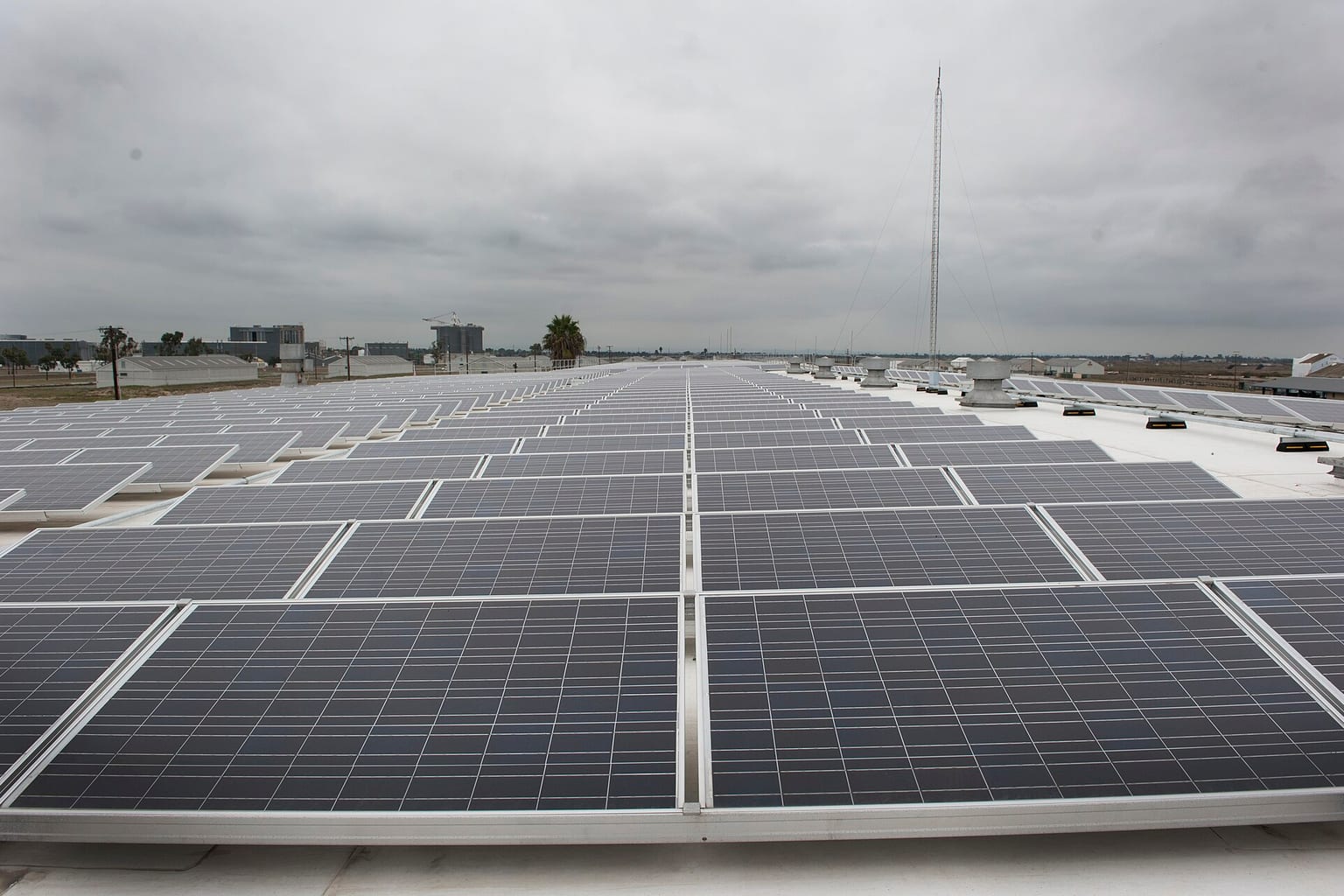
Four thermoelectric generators glued to the back of a solar panel were enough to locate a hot spot to within about 9.93 mm. On a rooftop in Taizhou, eastern China, the team placed black tape on the panel at three positions to create artificial hot spots, and the four generators pinpointed each one.
The device is a PV-TEG system, combining a photovoltaic panel with a thermoelectric generator, or TEG. A TEG turns a temperature difference into electricity through the Seebeck effect, which produces a voltage where two different semiconductors sit at different temperatures. Industry already uses TEGs to recover waste heat, but their cost and limited efficiency have kept them from spreading widely. Here, the panel produces power during the day, and the generators add a little more from the heat it gives off.
The novelty, according to corresponding author Jingming Cai, is that the generators do more than harvest heat. "The electrical signals generated by these devices can also reveal where thermal anomalies occur within a PV module," he said. Each hot spot produces its own pattern across the four channels, which the researchers mapped to two-dimensional coordinates. Before the field test, multiphysics simulations had already tied hot spot position, voltage response and local cooling together, with simulated temperature reductions between 8.15 K and 12.40 K. In the outdoor test, the system lowered the panel's surface temperature by an average of 5.4 °C across the monitored region, and by up to 7.7 °C at the measured point.
For the team, what matters is what this means for a solar farm or a rooftop. A panel that flags its own anomalies could catch faults early, and Cai's stated long-term goal is to reduce the need for energy-intensive monitoring infrastructure. The electronics ran without an external power supply, completing about 45 wireless transmissions during the 10-hour daytime test, from roughly 8 a.m. to 6 p.m. The results come from a single array on one site, and the team has not yet measured performance on the wider range of installations that a commercial product would face.
The next step, Cai said, is to test the system under electrically induced PV hot spots and more complex outdoor operating conditions.
Sources — read the originals(Paris time)
Read next
Comments
Loading the thread…
Sign in to leave a comment. Sign in