Solvent can replace surfactants in microemulsions, lab study shows
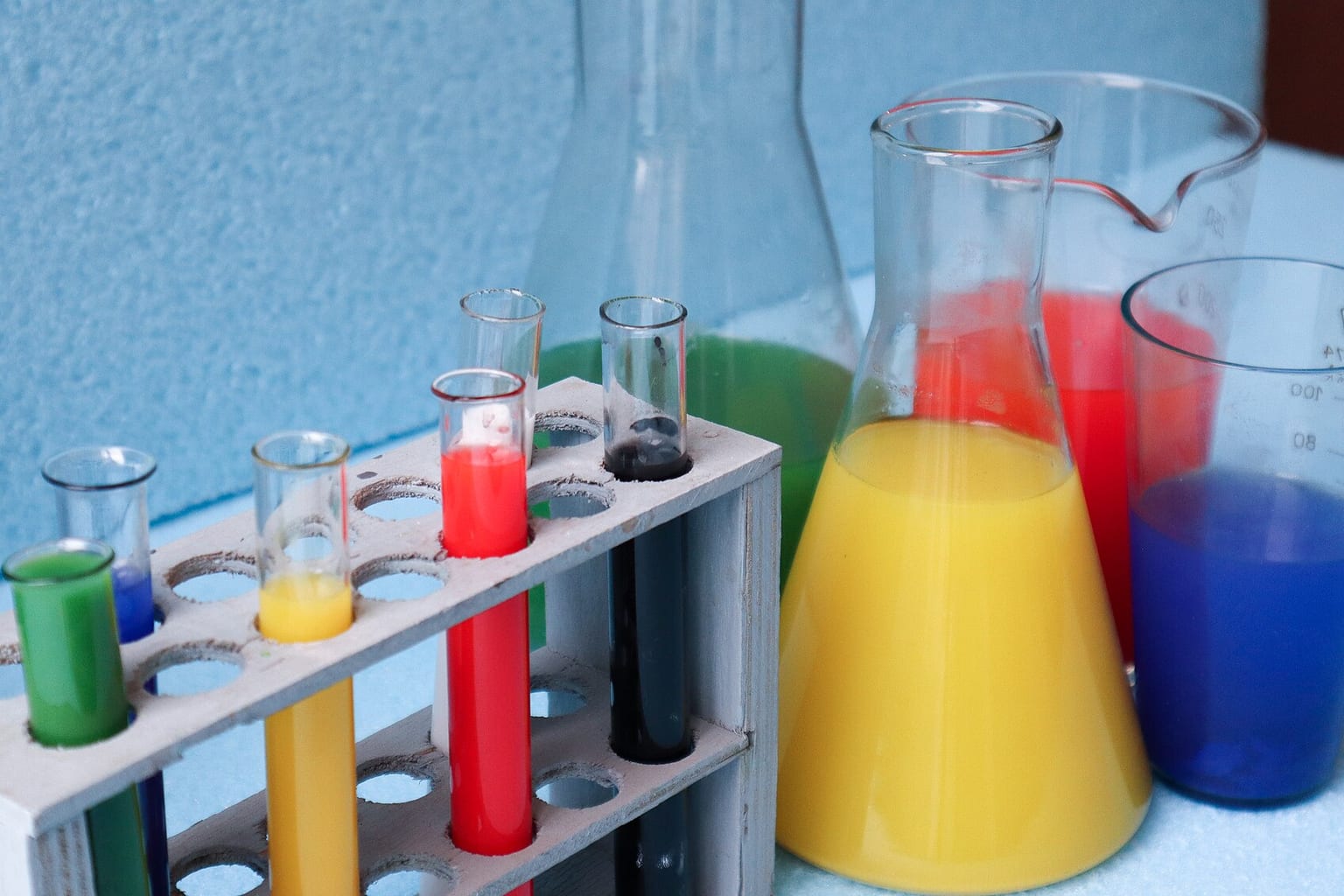
Shake oil and water together and the mix holds for a moment, then splits again. Chemists have several ways around this, and one of the most common is to add surfactant molecules that push the blend into a microemulsion, a mixture in which oil and water organize into structures just billionths of a meter across. Those liquids are used in pharmaceuticals, food products, chemical processing and the making of nanomaterials.
The problem is the surfactant itself. It works well, but it adds cost and environmental impact, and it can be toxic. It is also often hard to separate from the final product, which matters most when that product is a drug or a food additive. The team led by the University of Sydney set out to test whether the liquid could do the surfactant's job instead.
Its solvent is an ionic liquid called propylammonium nitrate, or PAN, which is amphiphilic: it has properties of both oil-like and water-like liquids. The researchers compared it with ethanolammonium nitrate, or EtAN, a closely related ionic liquid that is polar but not amphiphilic. To see structures too small for an optical microscope, they combined X-ray scattering with small-angle neutron scattering, which reads the arrangement of molecules and their distribution in the liquid. In a mixture of water, PAN and octanol, the neutron data revealed three distinct environments: a polar region rich in water and PAN, a nonpolar region dominated by the hydrocarbon chains of octanol, and an interfacial region between them.
For industry, the practical gain would be a microemulsion without an added surfactant to remove later. The researchers also observed strongly unequal distributions of polar and nonpolar components when their mixtures separated into two phases, which they link to possible uses in liquid-liquid separation. ANSTO says the approach "could reduce the need for surfactants, making microemulsion production more sustainable." No product, price or industrial partner is announced, and these are results on laboratory mixtures, so the gains for drugs and foods remain prospects rather than demonstrated uses.
The result is not the first of its kind. A related study on PAN as a solvent describes its microemulsions as weakly structured and relatively insensitive to the molecular structure of the oil or surfactant, unlike water-based systems, which is a limit to keep in view. An earlier paper had already reported surfactant-free microemulsions made from a hydrophobic ionic liquid, propylamine nitrate and water. What the Sydney team adds is a way to trace which part of the solvent's chemistry controls the structures. Jiang's group sees the next doors in sustainable synthesis, nanomaterial templating and greener solvent design.
Sources — read the originals(Paris time)
Pages consulted while writing
Read next
Comments
Loading the thread…
Sign in to leave a comment. Sign in