Soy waste becomes 3D-printable skin-repair material
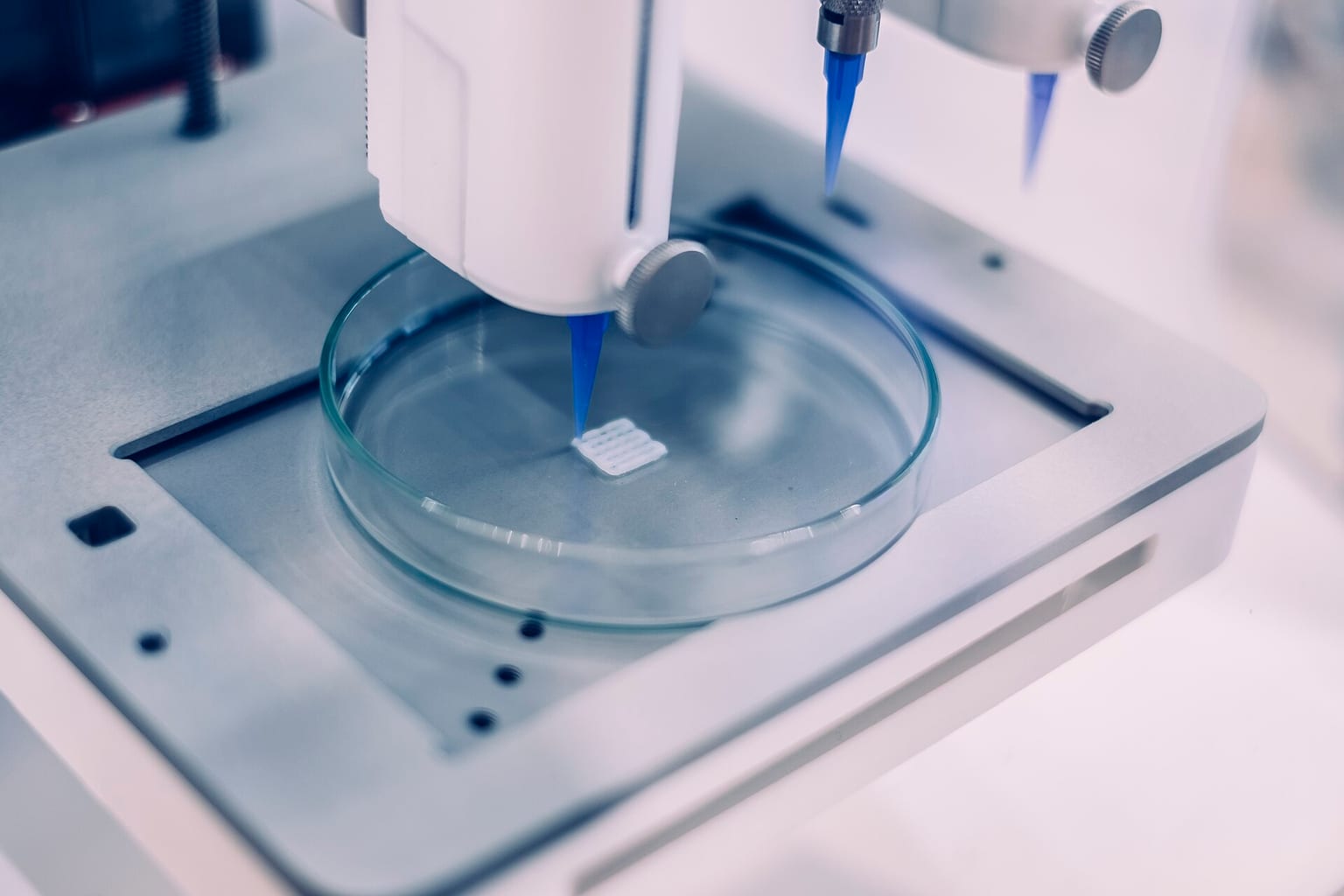
Okara is what remains when soybeans are pressed into tofu or soy-based drinks, and most of the time it is thrown away. Yet it still holds a significant protein component, and a team in Milan set out to find out whether that protein could become a medical material. Their study, published in Communications Materials, describes a bioactive, biodegradable material that can be 3D printed, and it is built on a deliberate choice: take a food-industry residue and turn it into something useful for the skin.
The researchers first broke the okara protein down into a protein hydrolysate rich in bioactive peptides, short chains of amino acids. In laboratory tests on human dermal fibroblasts, the cells that maintain skin structure and drive tissue repair, the hydrolysate showed antioxidant and anti-inflammatory activity and promoted fibroblast migration, a key step in wound healing. To make it printable, they mixed it into poly(ε-caprolactone), or PCL, a biocompatible and biodegradable polymer already used in biomedical research. Mechanical, thermal and structural analyses showed that the blend kept PCL's main properties and released the peptides gradually over time.
The material also survived the printer. According to the researchers, the blend still showed its antioxidant, anti-inflammatory and pro-regenerative features after 3D printing, and it could produce complex geometries, which points to customizable devices. The next step is a biomimetic phantom, an experimental model that reproduces some characteristics of breast skin. It will let the team study the material under controlled conditions before later validation phases, a sequence the study does not date.
For now, the people who could benefit are named but not reached. The study points to devices for local treatment of pain linked to breastfeeding and to recovery after breast cancer surgery, possibly in other biomedical fields as well. Those uses depend on steps that have not yet been taken: no test in animals or patients is reported, and no calendar is given. What is already measured comes from cell cultures and material tests, in a project coordinated by Serena Graziosi at Politecnico di Milano, with Carmen Lammi at the University of Milan and Raffaele Pugliese of the NeMO Lab at Niguarda Hospital.
The gain the researchers stress is also environmental. A residue that is usually discarded becomes a raw material, and the work asks designers to consider function, geometry, material and manufacturing together from the start. If the later validation phases confirm these properties, the same okara would feed a medical device rather than a waste stream. Until then, the result is a laboratory demonstration.
Sources — read the originals(Paris time)
Read next
Comments
Loading the thread…
Sign in to leave a comment. Sign in