Strata runs a 125-billion-weight model on a gaming PC
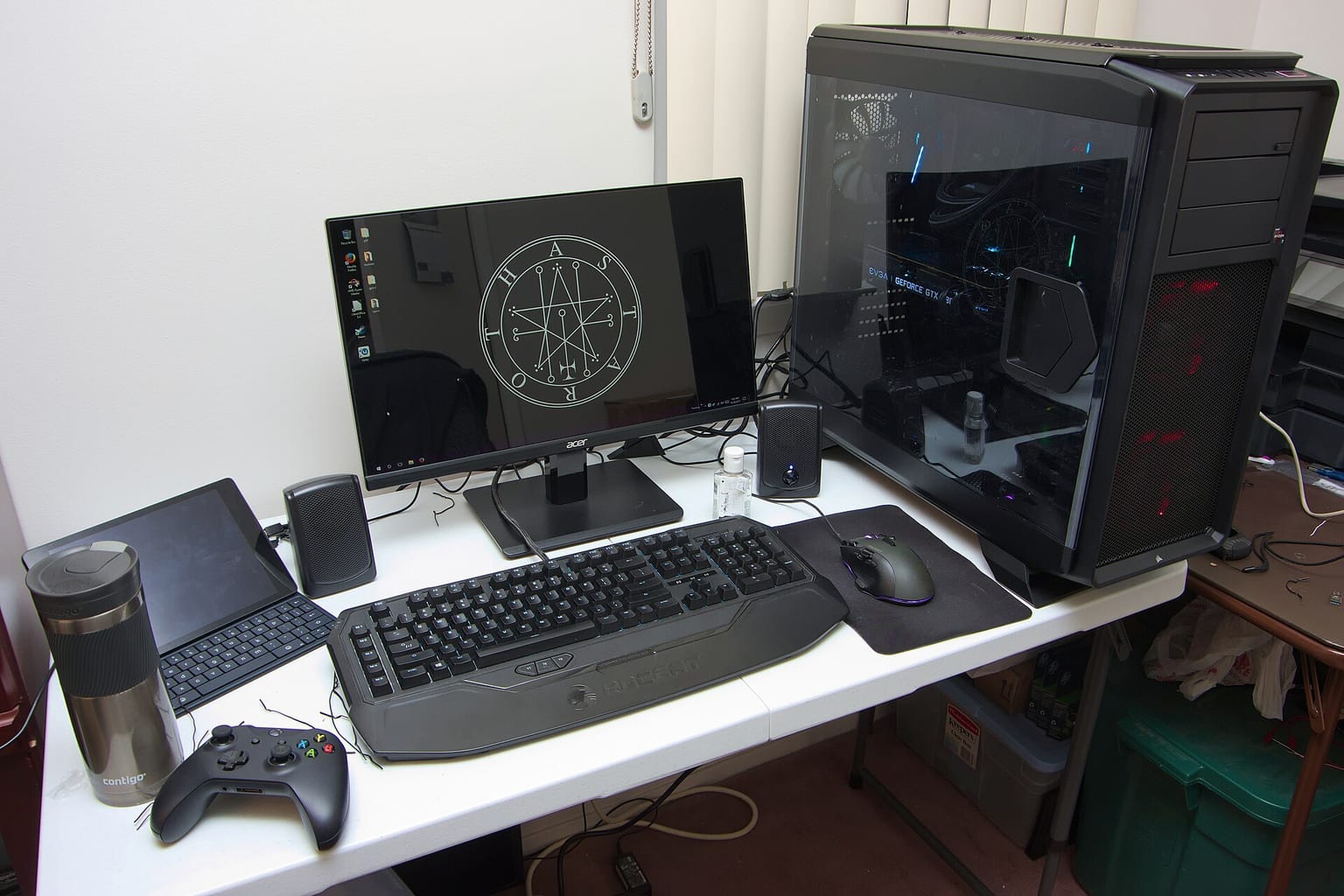
Many large language models do not fit into a graphics card's memory. Strata gets around this: the open-source engine runs a model with 125 billion actual weights (180 billion parameters in total) on a PC with 12 GByte of graphics memory and 32 GByte of system memory. heise tested the software in issue 12/2026 of iX magazine.
The trick lies in the architecture. The Qwen3.8-Flash-Next model consists of 512 experts, that is, specialist subnetworks, of which it selects ten for each token plus one permanently assigned expert. As a result, only six billion parameters are active per prediction. Strata keeps the most frequently used experts in graphics memory and the rest in system memory or on the SSD. The 98% hit rate in graphics memory means the expert currently needed is almost always already on the card. The 51 billion parameters of the N-gram embeddings, which are lookup tables, are loaded only selectively and may reside on the SSD. The weights themselves shrink to just under 55 GByte through 3.5-bit quantization, that is, a more compact storage of their numbers.
The measured values vary widely. heise measures 135 to 145 tokens per second on an RTX 5090 and 49 to 58 on a Mac Studio with M2 Ultra and 192 GByte of memory. The figures come from the magazine's own tests.
The price is system memory. According to heise, versatile model variants should have at least 64 GByte of RAM, while the model runs from 32 GByte.
Anyone with a gaming PC equipped with 12 GByte of graphics memory and 32 GByte of system memory can query a model of this size without a cloud service, and the data stays on their own machine.
Competition is catching up. heise names Infernix and Basalt for an RTX 5090, Project Maya for GLM-5.3, and Kapitsa for Macs with plenty of unified memory. For users without a high-end card, performance remains an open question, since heise carried out its measurements on an RTX 5090 and a Mac Studio.
Sources — read the originals(Paris time)
Pages consulted while writing
Read next
Comments
Loading the thread…
Sign in to leave a comment. Sign in