Three Saudi sites connect 7.8 GWh of batteries to the grid
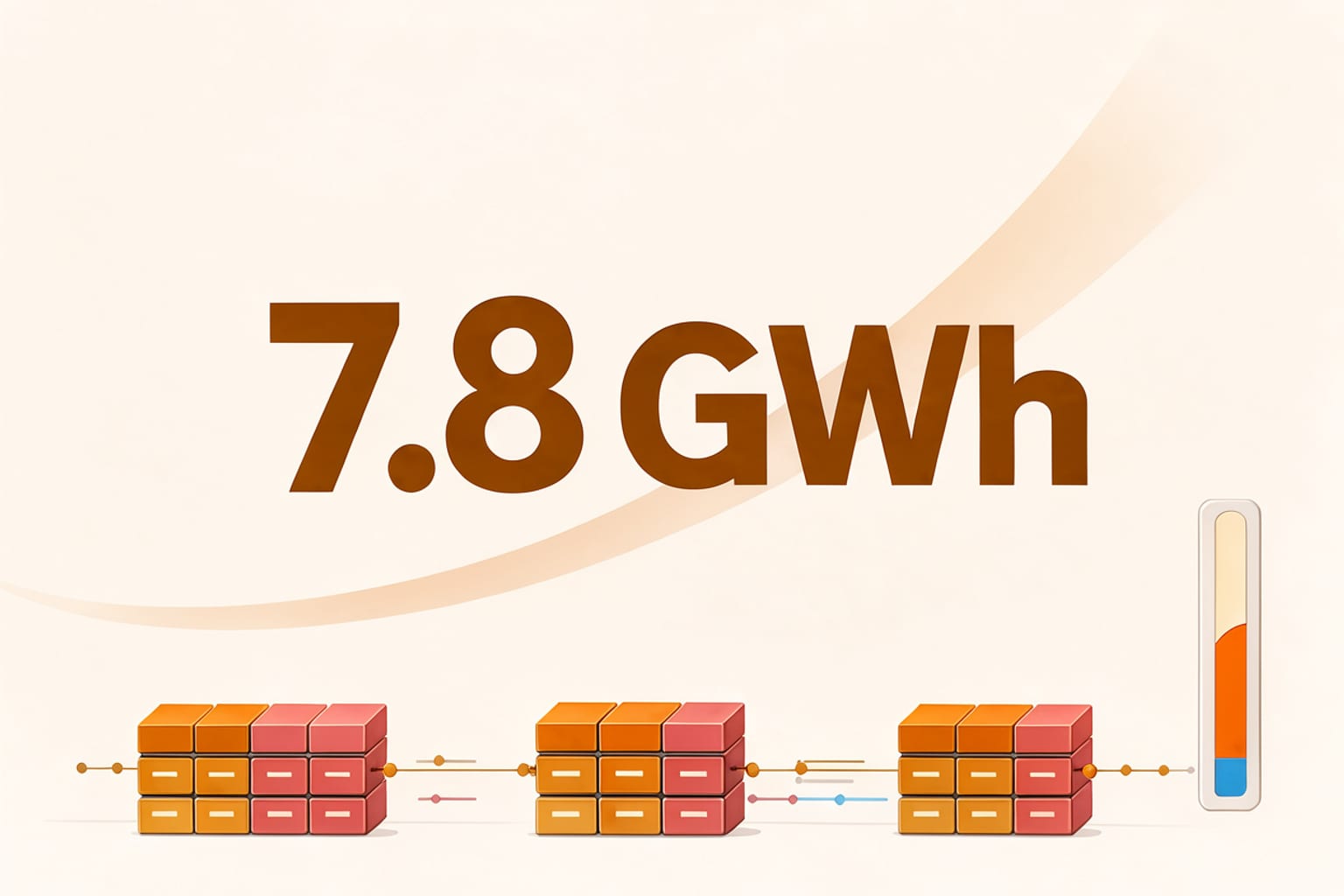
More than 1,500 PowerTitan 2.0 battery systems now sit across three sites in Saudi Arabia, Najran, Khamis Mushait and Madaya, together holding 7.8 GWh of storage. The gigawatt-hour is the unit that measures how much energy a battery can hold. Sungrow, the equipment supplier, announced that the grid connection of the three sites was completed in December 2025.
What made this faster to build is the way the equipment reaches the site. Sungrow integrates the batteries, power conversion systems, medium-voltage transformers and switching equipment into preassembled units. Factory testing and this preassembly, the company says, reduced the installation work left on site, while a local service team handled installation, commissioning and grid connection. The point of the whole assembly is simple: store electricity, and supply it when it is needed.
The Saudi program is not the largest figure in the list. Masdar's round-the-clock project in Abu Dhabi combines a 5.2-gigawatt solar plant with 19 GWh of storage. Saudi Electricity Company, the national utility, signed a 12.5 GWh storage contract with BYD in February 2025, which brings the combined cooperation between the two to 15.1 GWh. In China, Envision's station in Inner Mongolia, connected to the grid in late December 2025, has 4 GWh and passed the grid's three-charge, three-discharge verification in a single attempt.
These figures describe installed capacity and announced scope, and the list itself draws the line between them. Moss Landing in California reached 3,000 MWh of installed capacity in June 2023, but after a fire in January 2025 at its 300-megawatt facility, the EPA confirms that the affected building has had no active battery storage operations since. Grid connection shows that a site is built and linked to the network; it does not yet show years of measured output.
For a grid operator, the practical change is that solar power produced in the middle of the day can be stored and dispatched later. Masdar's project is designed to deliver 1 gigawatt of renewable electricity around the clock, extending solar delivery beyond daylight hours, with operations targeted for 2027. That date is the next milestone to watch.
Sources — read the originals(Paris time)
Read next
Comments
Loading the thread…
Sign in to leave a comment. Sign in