Two-photon printing cuts NIF target build time from 10 days to one
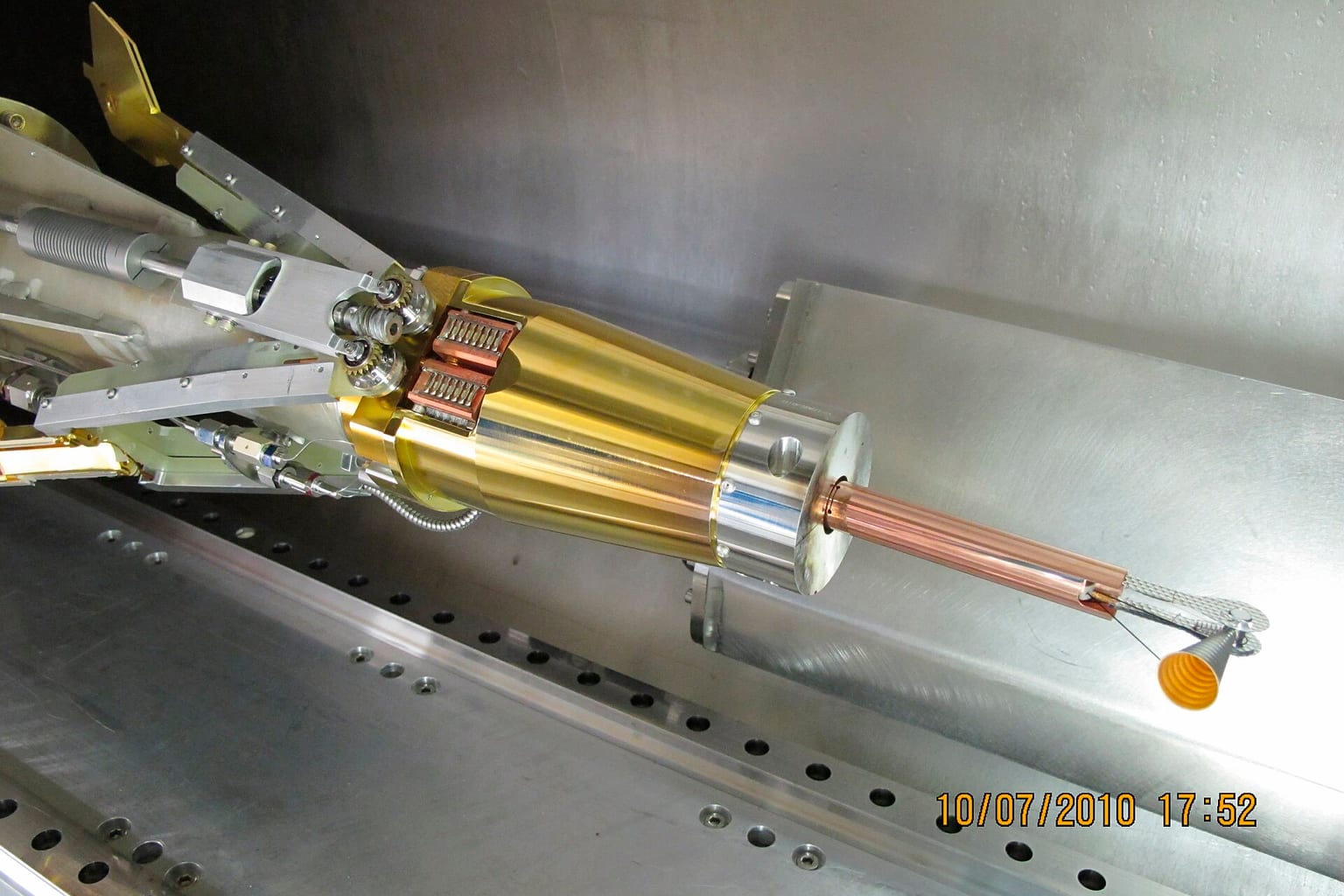
Inside the National Ignition Facility, the U.S. laser facility run by Lawrence Livermore National Laboratory (LLNL), each experiment rests on a target: a tiny assembly of dozens of parts that carries laser energy to a fuel capsule. One of those parts is a compound parabolic concentrator, a cone about 1.5 millimeters across with no flat surface to grip. Assembly technician Nancy Lau and engineer Maxim Shusteff now work with a version printed in a single piece, using a technique that focuses a laser into a spot smaller than one micron, where the material absorbs two photons at once.
The cone channels X-rays onto the fuel capsule during implosion, so diagnostics can record data. Making it used to be a long chain of work: diamond-turning a copper mandrel, coating it with gold and plastic, machining it again, then leaching the mandrel away. Additive manufacturing could not reach the required feature sizes, and its print area was too small, so parts had to be stitched together, and the seams missed the surface roughness requirements. Printing the cone as one assembly, without gold coating, cut production time from 10 days to one day.
NIF is a national security facility, and each new component must be characterized before it goes into a shot. The facility runs about 300 experiments a year, so new parts are first tested on other lasers, such as LLNL's Jupiter Laser Facility or the University of Rochester's Laboratory for Laser Energetics. In April 2026, a printed cone sat in a gold disk target used to calibrate diagnostics, and it performed as well as conventionally manufactured components.
The harder test came next. A discovery-science campaign studying how ions propagate through and interact with dense plasma needed the cone attached directly to an ion source, in a spot the team described as obscured, with stringent assembly tolerances. Target fabrication printed a cone with the same inner shape as an earlier one but a different outer profile, and added guide rails inside the gold cone so it could be slid into place and tacked with glue. A second printed part, a re-entrant cone, had to be made with very high accuracy to avoid sending laser light back into the beamlines; diamond turning would have struggled with its off-axis geometry. “This would have been impossible without the new 2PP method,” said target fabrication engineer Soojin Stadermann. The experiment ran in September 2026, and the team is analyzing the data to refine the next experiment in the campaign.
For the target team, the change is a new freedom in design. “Now we have this geometric freedom that has really blown open the design possibilities,” said LLNL mechanical designer Scott Vonhof. The engineers are now exploring fuel capsules with lattice structures that could hold wetted foams, a new approach to forming the capsule's fuel layer. The team gives no date for that step, but Vonhof's summary sets the direction: “This component is just the beginning.”
Sources — read the originals(Paris time)
Read next
Comments
Loading the thread…
Sign in to leave a comment. Sign in