WASP tests 3D printing that mixes earth with separable plastic
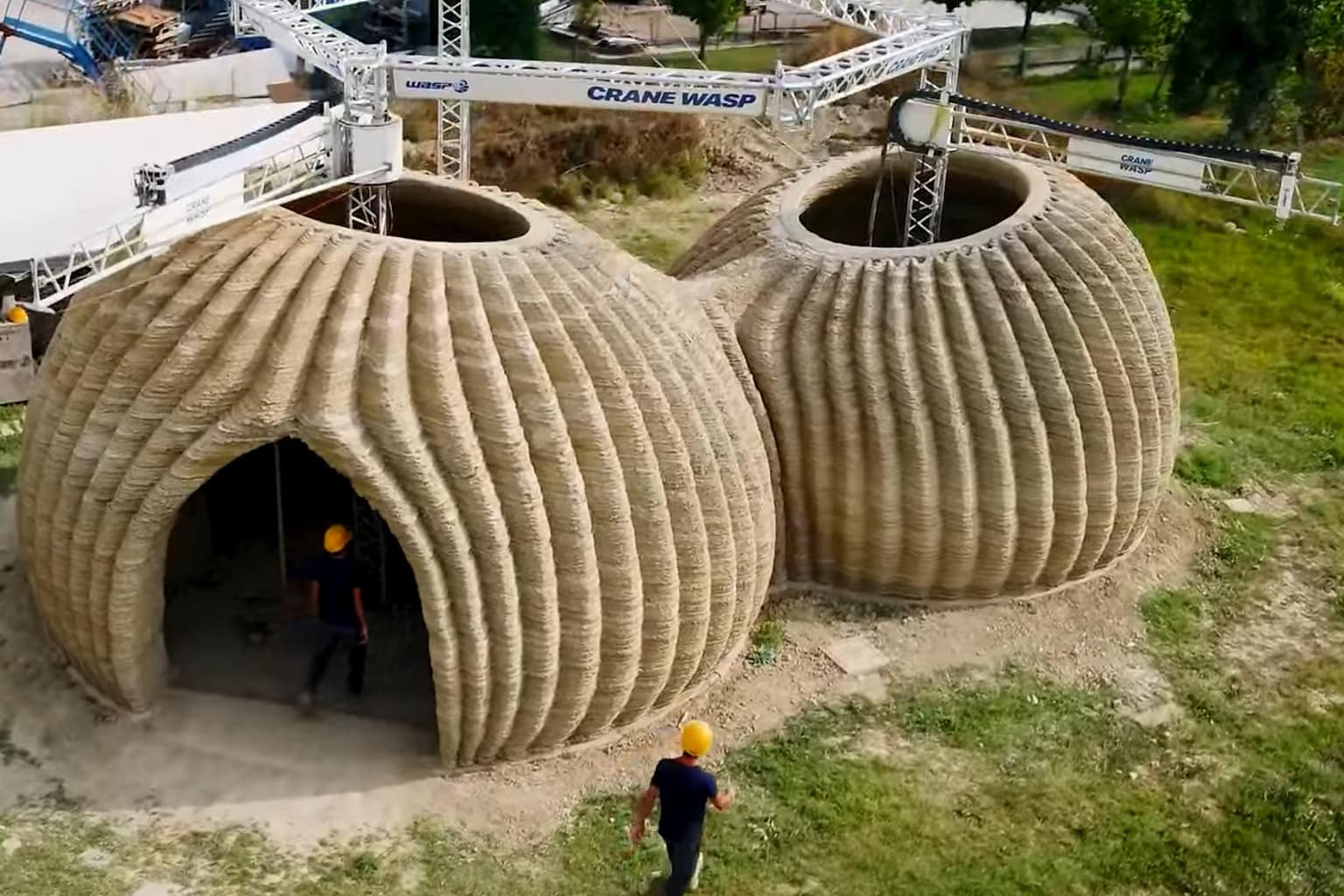
Layer by layer, the printer changes its tool. First a paste of earth goes down, then a strand of plastic, then earth again. That alternation is the core of a process that Italian manufacturer WASP is developing and has filed a patent for. Unsupported, earth paste can collapse before it sets, which limits the shapes a printer can build from it. Plastic inserted at selected stages of the print is meant to hold those shapes up while the earth is laid down.
The mechanism combines two existing methods. Liquid Deposition Modeling (LDM) deposits paste-based materials such as earth, while Fused Granulate Fabrication (FGF) pushes plastic granules through an extruder. WASP has explored both processes since 2012, and the dual system switches between them during a single build. Recycled PLA, a plastic, is among the materials used in its first experiments, but the company has not specified the full range of polymers it can work with.
The more unusual part concerns what happens after use. Conventional composites bond their materials permanently, which makes them hard to separate and recycle at the end of their life. WASP's approach plans for separation from the start: the plastic reinforcement can be removed from the earth structure, so each material can be recovered independently. The company links this to its interest in frugal architecture, drawing inspiration from the potter wasp, which builds its nest from locally available materials.
For builders who want earth structures with forms that paste alone cannot hold, the gain would be geometry; for anyone who eventually has to dismantle a structure, the gain would be the ability to separate its parts. But no commercial launch date has been announced, the company has not said which printing platforms could carry the technology, and no quantitative performance data from the initial tests has been published. Further testing must show how well the plastic supports complex shapes, and whether the two materials separate consistently at the end of their useful life.
The earth-printing work that precedes this project is already in use. With Columbia University's Natural Materials Lab, WASP produced hundreds of 3D printed earth tiles for the Earthen Rituals installation at the 2025 Venice Architecture Biennale, made from soils taken from construction waste and agricultural by-products. The Technion's TreeSoil project used the LDM technology to produce biodegradable modular components from locally sourced soil, interlocked and dried naturally, with no adhesives. The new process extends that work to a different question: how far earth can go when it is no longer alone in the printer.
Sources — read the originals(Paris time)
Read next
Comments
Loading the thread…
Sign in to leave a comment. Sign in