Wood-and-granite bridges, no concrete, designed to last longer
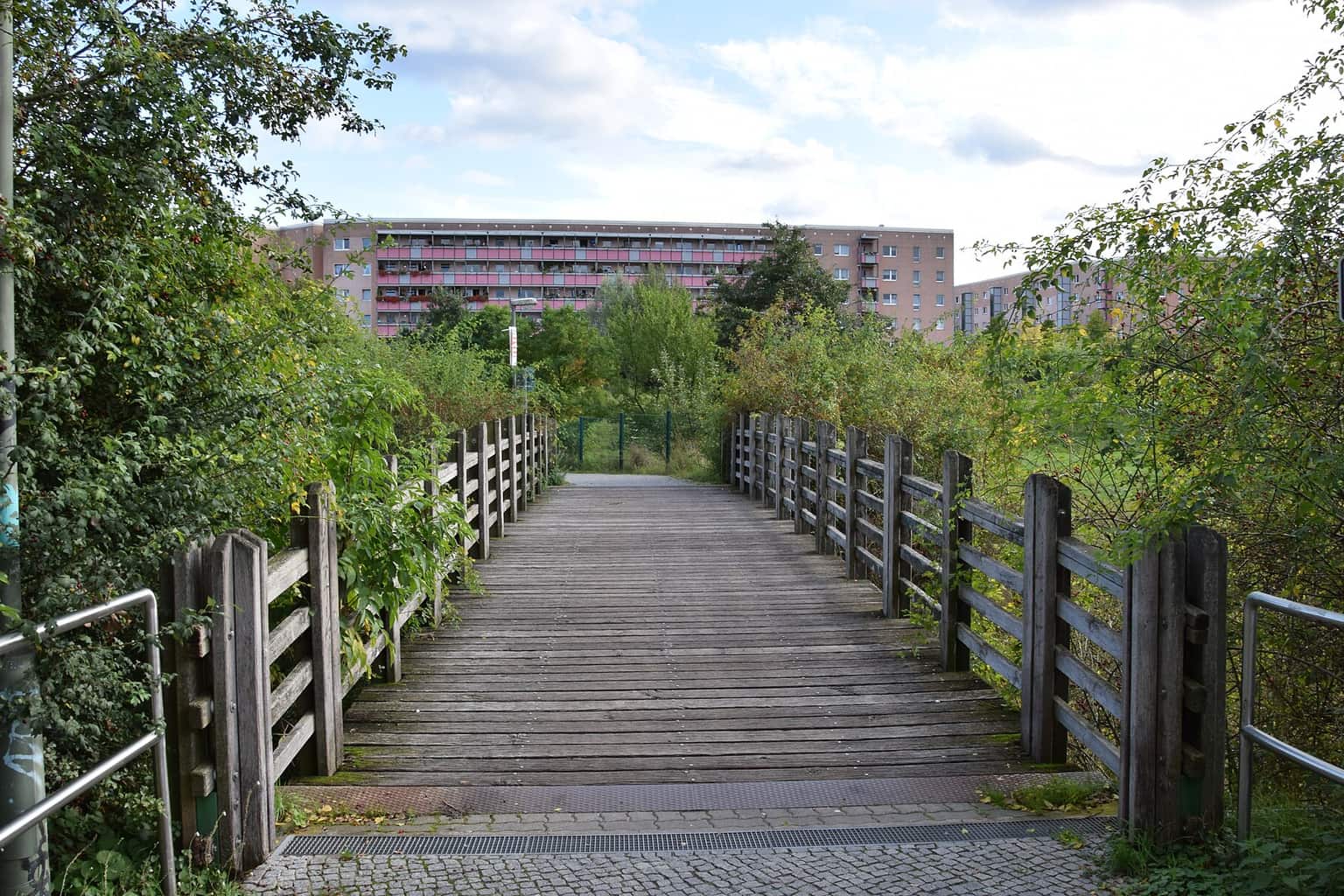
Rain is what wears out a wooden bridge. It soaks the beams, and wet wood rots. At Technische Universität Berlin (TU Berlin), researchers working with the engineering firm Miebach have built a footbridge that keeps the rain off its timber: the walking surface is a slab of granite, and the wood sits underneath, out of the wet. The team calls it the first bridge in the world to combine wood and granite this way. Its estimate for the result is three to five times the lifespan of a regular wooden bridge.
Wood does not rot on its own. It needs four things at once: moisture, air, a suitable temperature, and the wood itself as food. Remove one of them and the decay slows. That is the lever this design pulls. The granite shields the timber from the weather, and the beams are shaped to stay dry. Bridges that pair wood with a concrete deck already exist, as Volker Schmid, the head of the TU Berlin research group, points out. "We use large granite slabs instead of concrete, thus reducing the resulting emissions."
Making the two materials work together was the hard part, because granite and wood behave very differently. The answer lies in how the stone is cut. The granite slabs come in different thicknesses and interlock with the wooden beams beneath them. Screws hold them in place, and a high-strength epoxy adhesive, a resin-based glue, bonds the slabs together and seals the joints against water. The beams narrow toward the bottom, so they stay dry during heavy rain.
The structure went through numerous stress tests at TU Berlin, and the team believes the combination could also carry heavier loads. The lifespan figure, though, is an estimate, and the two bridges planned for Spandau are not yet built. Miebach already fitted a granite surface to a timber bridge in Schwäbisch Gmünd. What is new in Berlin, according to the German Federal Environmental Foundation (DBU), which funds the work, is that the granite slab itself carries load.
The second gain comes at the end of the bridge's life. Almost all the materials can be reused if the bridge is renovated or taken apart, a practice called circular construction, in which materials return to use instead of becoming waste. The granite slabs lift out once their screws are loosened, and the wooden beam can be reused as well. Replacing concrete with granite is also meant to cut the emissions of building the bridge, although the team gives no figure for the carbon saved.
For Berlin, the first change is two footbridges. Miebach will now carry out the planning and structural calculations for two bridges in the Spandau district, each about 15 meters long, to replace old wooden bridges that are deteriorating. They will serve pedestrians and cyclists. The DBU's secretary general, Alexander Bonde, notes that many bridges across the country need repairs. "We now have many solutions that are often more sustainable and require less energy and fewer resources." The researchers hope the design could become a model for other footbridges and cycle bridges across Germany.
The next step is that planning and calculation phase, which will show whether the wood-and-granite design can be repeated beyond these two crossings.
Sources — read the originals(Paris time)
Pages consulted while writing
Read next
Comments
Loading the thread…
Sign in to leave a comment. Sign in