A drug breaks down the protein driving a childhood bone cancer
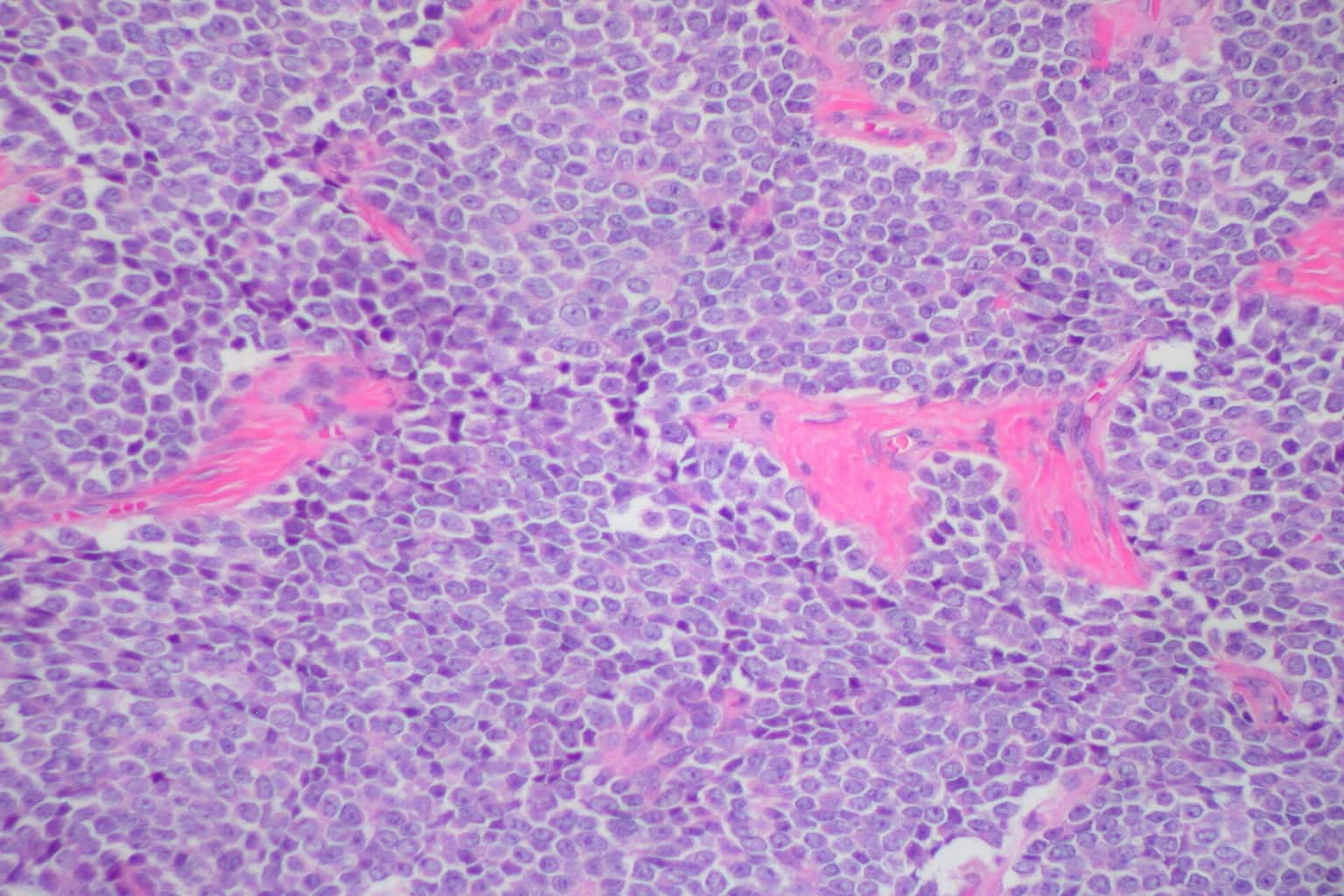
Chandrika Behura sees patients in clinic who relapse. Ewing sarcoma, a rare and often fatal bone and soft tissue cancer in children and adolescents, often returns in forms that resist treatment, and for those patients the options are few. Her team at Penn State College of Medicine has found a way to make the cancer's driving protein break down. In mice, a drug that depletes a helper enzyme made the protein break down, and the cancer spread less while the animals lived longer. Just three years after that discovery, a Phase I trial, the first stage of testing in people, is under way across 27 hospitals.
The problem sits in the protein itself. Ewing sarcoma is driven by EWS-FLI1, a fusion protein, which is a combination of two genes, that switches on numerous pathways controlling how cancer cells behave, grow and spread. Its structure is intrinsically disordered, which is why scientists had never found a way to block it directly and why it was long called 'undruggable'. Standard chemotherapy has not changed in more than 30 years, and five-year survival stays below 30% for recurrent or metastatic disease.
So the team aimed at the protein's support system instead. EWS-FLI1 relies on CK2, an enzyme, meaning a protein that speeds up biological reactions, which stabilizes it and protects it from being destroyed. Remove that support, and the fusion protein falls apart. Ewing sarcoma was not on the researchers' radar at first. For 14 years the team had studied CK2, which is especially active in high-risk B-cell leukemia and in breast, prostate and pancreatic cancers. Three years ago, the team says, nobody knew CK2 played a role in Ewing sarcoma. Public databases then suggested that sarcomas depend heavily on CK2, and the researchers set out to check it in the lab.
Genetic data from a pediatric cancer research network showed CK2 abundant in Ewing tumors, and higher CK2 levels and activity tracked with worse outcomes. In cells, including cells taken from patients, blocking CK2 with a drug produced the expected effect: the fusion protein broke down faster, the pathways it drives went quiet, and the cells lost their ability to migrate and invade tissue, the steps that let cancer spread. Lowering CK2 gene expression through genetic manipulation gave the same results, which the team takes as evidence that CK2 is a key target.
Next, the team tested the drug on tumor tissue from patients, grown in mouse models built to show effects on both the cancer and the rest of the body. Treatment slowed tumor growth and increased survival in these mice. In cell cultures, the drug also worked alongside irinotecan, an existing chemotherapy already used for relapsed Ewing sarcoma. 'The significance is how quickly we were able to move from bench to bedside,' Behura said. These results come from cells and mice, and the trials now under way are what will show whether the approach helps people.
The trials test the CK2 inhibitor combined with an irinotecan-containing therapy in patients with relapsed Ewing sarcoma. The first phase measures safety and tolerability. For patients whose cancer has returned, it would add a combination still being tested to a short list of options, and Behura says the approach could make the cancer amenable to other types of therapy. The next step is the Phase II trial, which opens soon after Phase I and will test whether the combination works in patients.
Sources — read the originals(Paris time)
Pages consulted while writing
Read next
Comments
Loading the thread…
Sign in to leave a comment. Sign in