A radar wristband turns your forearm into a smartwatch trackpad
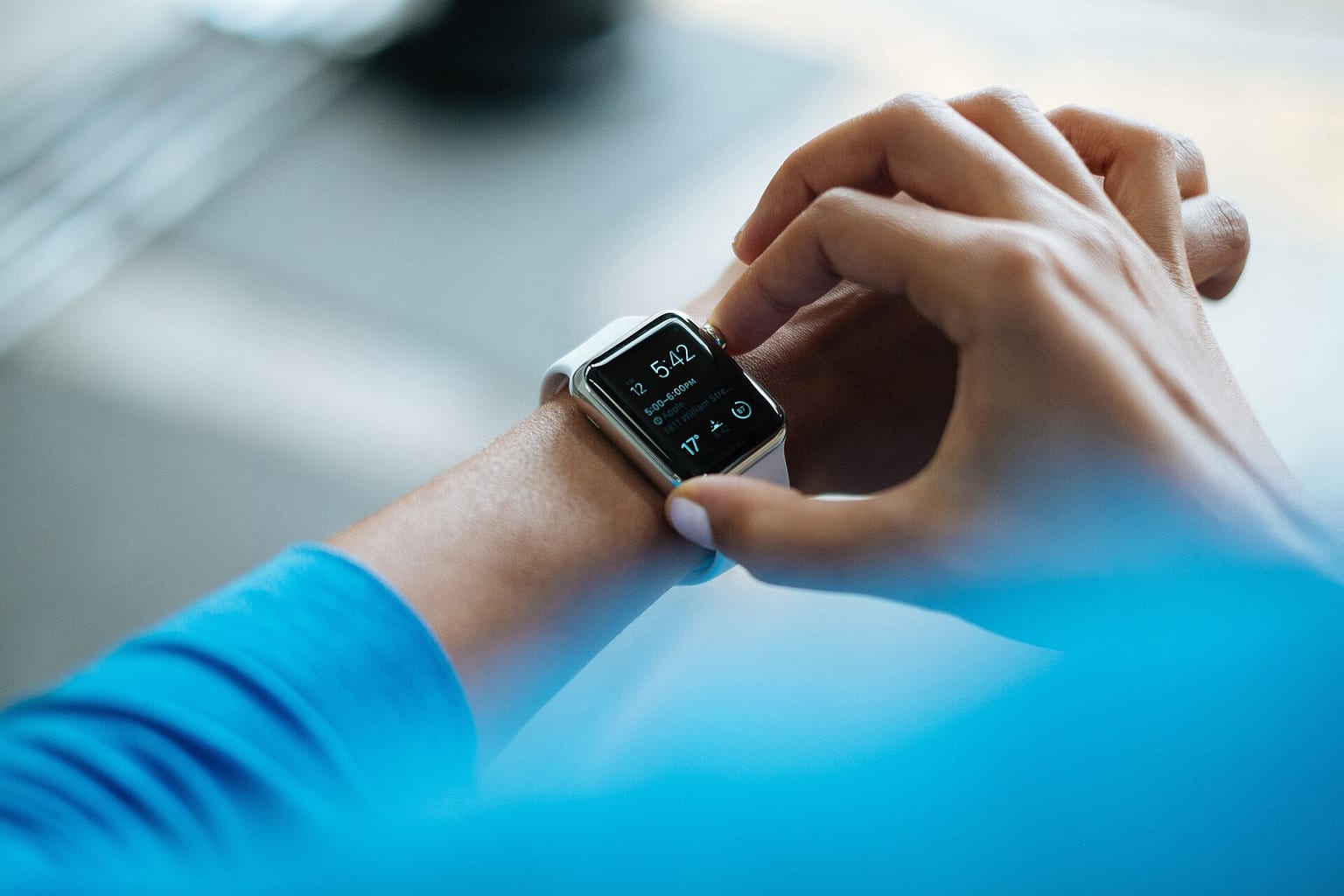
Smartwatch screens are often smaller than a thumb, and that is the problem. Two-finger scrolling and pinch-to-zoom work on a phone, but there is no room for them on a watch face. Researchers at North Carolina State University have found a way around the screen: the wearer's own forearm becomes the touchpad. In tests, the system recognized 92.8% of gestures after calibration.
The target is devices with little room for a touchscreen, such as smartwatches and screenless AI glasses. Chenhan Xu, the study's corresponding author, says the goal was to give wearers that level of control in a small device. The system, called EpiPad, is built around a compact radar. The radar sends high-frequency radio waves and reads what bounces back from nearby surfaces, the way an echo returns from a wall.
When a fingertip presses the forearm, the skin dents slightly. Sliding, tapping or pressing harder changes the pattern of the returning waves. Lightweight machine learning models sort those patterns into gestures and tell a light press from a heavy one. The system follows several fingers at once, which is what separates it from earlier work.
Using the body as an input is not new. In 2010, Carnegie Mellon University researchers built Skinput, which picked up the vibrations of taps on the arm with acoustic sensors. EpiPad relies on radar instead, and reads the tiny dents fingertips leave in the skin. Yuliang Fu, the paper's first author and a PhD student at NC State, says the aim is for the watch to feel familiar, with the expressiveness of a laptop trackpad. The team reports a ranging precision of 10.2 mm on users the system had never seen before. Each new wearer goes through a four-minute calibration when the device is first fitted.
For a wearer, the gain is a watch that can be controlled without a bigger screen. The researchers say the radar components are relatively inexpensive and could cost less than US$10 at scale. The sensor array itself measures about 5 by 4 mm, small enough, the team says, to potentially fit inside a conventional smartwatch. No commercial date has been announced.
The prototype is still rough. It is a wristband with a circuit board sticking out, which the researchers do not present as something to wear in public. The study covered 20 participants, and the findings come from a proof-of-concept prototype rather than a commercial product. Its performance in everyday conditions outside the laboratory has yet to be established.
The next step, according to the researchers, is to work with industry partners to shrink the technology and build it into next-generation wearables. The paper was published in the journal Proceedings of the ACM on Interactive, Mobile, Wearable and Ubiquitous Technologies, and presented at the UbiComp/ISWC conference.
Sources — read the originals(Paris time)
Pages consulted while writing
Read next
Comments
Loading the thread…
Sign in to leave a comment. Sign in