Smartwatch tracks full-body motion with ultrasound
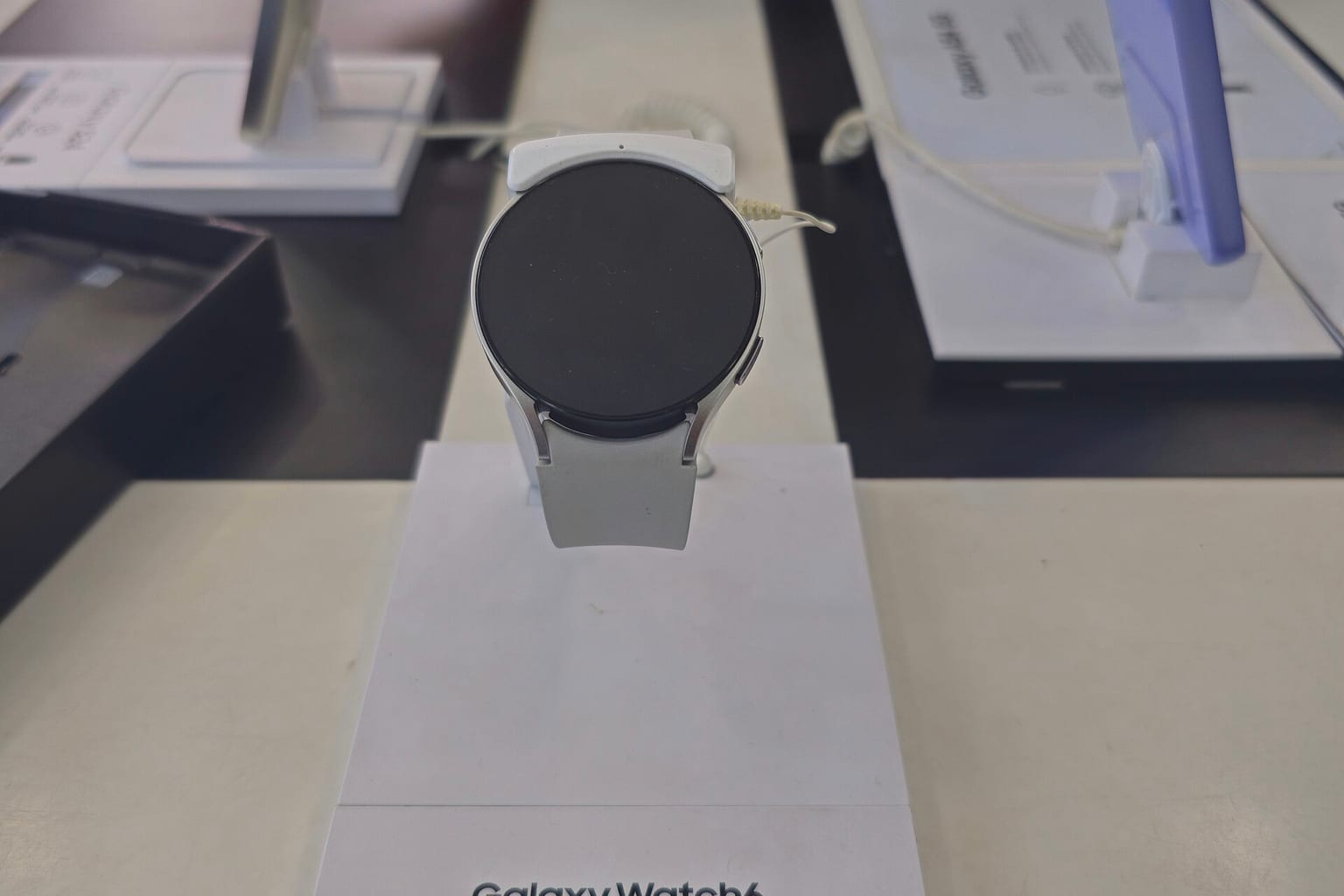
Ten volunteers strapped the team's 3D-printed prototype watch to their non-dominant wrist and ran through 18 exercises while the watch listened. Its built-in speaker sent out ultrasound, sound above the range of human hearing, and its microphone recorded the echoes bouncing off arms, legs and torso. A deep learning model turned those echo patterns into the positions of 12 joints, from head to ankles. The system is called EchoMotion, and it was developed by Cornell's Smart Computer Interfaces for Future Interactions (SciFi) Lab under Cheng Zhang. Its lead author, Saif Mahmud, a PhD candidate in information science, presented it on 13 October at UbiComp/ISWC in Shanghai. The team describes it as the first time a person's whole body has been tracked with ultrasound from a commercial smartwatch alone.
Until now, watches could only report their own motion. Their accelerometers and gyroscopes measure the device, not the knee bending or the arm rising, so whole-body tracking required extra hardware: smartphones, earbuds, VR headsets, or cameras. Cameras bring their own problem, since a lens in the gym records everyone around the wearer. Sound, by contrast, keeps the people in the room out of the data and produces far less information to process. The team also says the approach uses little power: in the prototype, sensing drew about 12 milliwatts, roughly 40 times less than a wearable camera, and a 30-minute session on a Galaxy Watch 6 used 5% to 6% of the battery.
The prototype was first built as a 3D-printed watch replica with a microphone and speaker pair on each side. Off-the-shelf watches carry only one pair, so the team tested the system on an unmodified Galaxy Watch 6 with 15 new volunteers. For people who had never used it, the average error per joint was under 10 cm. A one-time 12-minute calibration cut that error by more than a third, to 6.1 cm. The paper's abstract reports 5.99 cm for this 15-person study and 6.41 cm for a semi-in-the-wild test with 10 participants, which the team describes as a small room, a narrow hallway and a spot beside a noisy road. Furniture and ambient noise did not disturb the readings, but accuracy dipped in the hallway, where echoes from other people got in the way. Mahmud expects that thousands of users, rather than dozens, will teach the model to cope with crowded places such as the subway. That remains a projection, and the reference measurements in all these tests came from cameras.
For a wearer, the change is concrete. The team is building the technology for fitness tracking, so that a personal fitness agent can count reps and correct form during an exercise such as a Bulgarian split squat. Once EchoMotion is integrated into commercial wearables or VR systems, it could also follow workouts, daily activity and progress in physical rehabilitation. The researchers are also exploring a pairing with first-person vision on smart glasses, to track the objects a person handles. Mahmud sees body tracking as one part of a larger picture, a personal agent that could one day describe a whole day, "what you did, what you ate". For now the work exists as a research prototype, and the next step the team is pursuing is fitness coaching on commercial watches.
Sources — read the originals(Paris time)
Pages consulted while writing
Read next
Comments
Loading the thread…
Sign in to leave a comment. Sign in