A soft gel surface that stays clear in heavy fog
Lift the lid of a pot of boiling vegetables and the glass goes misty within seconds, hiding what is underneath. In a test run by the researchers, a patch of a new material on the underside of a glass lid fogged up, then turned completely transparent again after 30 seconds, while zucchini and carrots kept boiling below.
Fog is more than a kitchen nuisance. Microscopic droplets that condense on a transparent surface act like tiny lenses and scatter light, so the view turns hazy. Existing fixes come in two families. Water-loving coatings spread droplets into a film that lets light through; water-repelling ones use microstructures to make droplets bead up, like the eyes of cicadas. According to Thomas Schutzius, both work with mild condensation but typically fail once water builds up beyond that.
The Berkeley and ETH Zurich team combined the two ideas. Schutzius is a mechanical engineering associate professor at UC Berkeley and was formerly with ETH Zurich. The researchers started from a hydrogel, which attracts water through its many nano-sized pores. But that capacity is finite: once the gel is saturated, droplets form anyway. Their answer was to engineer a grid of cylindrical micropillars across its surface. The texture draws water sideways and spreads it into a stable, continuous film.
Under a range of condensation conditions, the team reports that the micropatterned hydrogel outperformed superhydrophilic and superhydrophobic coatings on optical clarity and stability. These comparisons come from the researchers' own experiments, published in Nature Communications in 2026 by Hyunchul Park and colleagues. The cooking demonstration is a laboratory test, not a product trial.
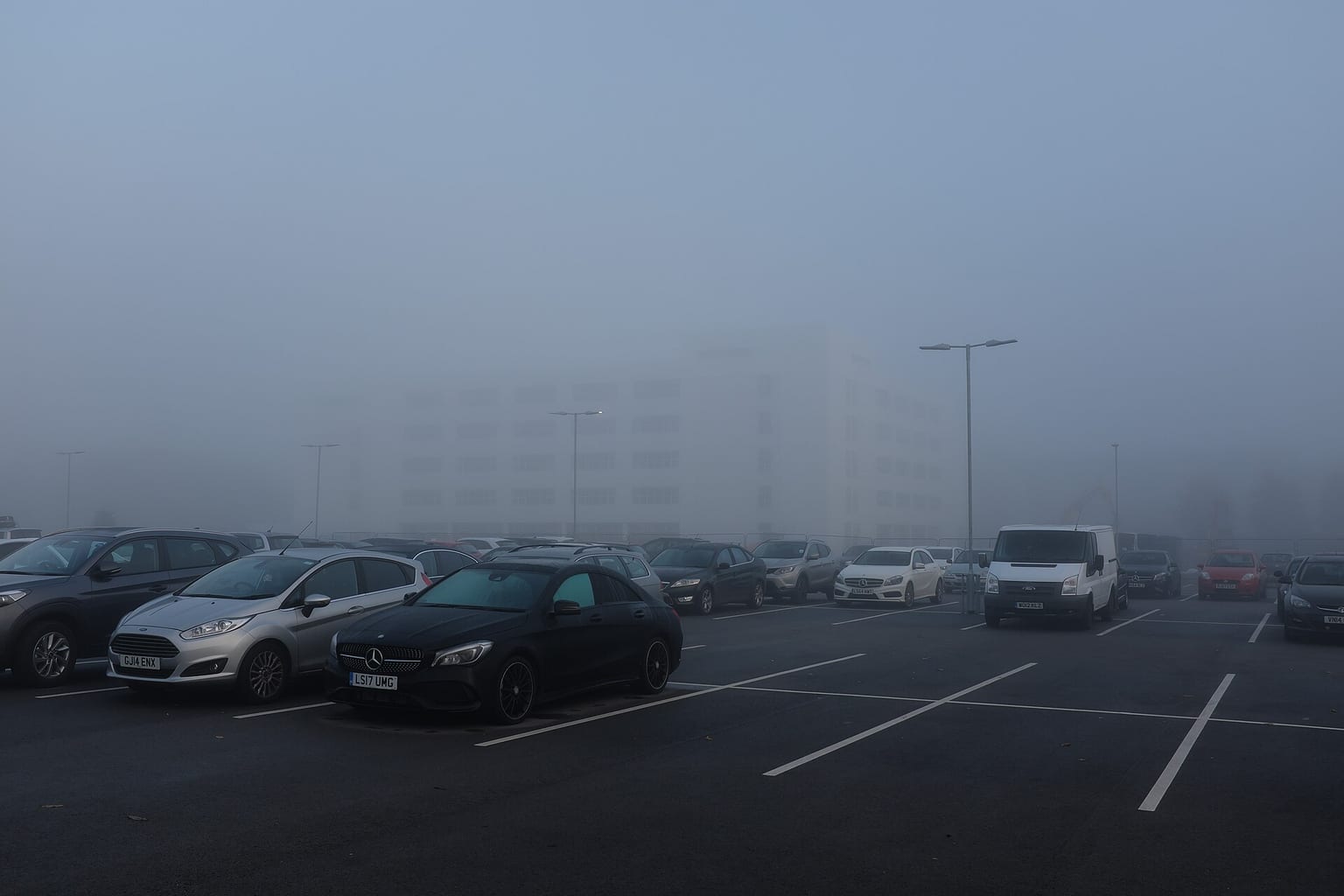
For the makers of vehicles and sensors, the gain would be clearer images where condensation can temporarily obscure cameras and LiDAR sensors, a safety problem the researchers highlight. Schutzius also points to sensors that work outside the human visible spectrum. The material could someday serve a broad range of applications that need optical clarity in heavy condensation, but no date has been given.
The next step is industry. Schutzius says the team will see whether companies are interested in developing the technology for specific applications, which could include sensors beyond visible light, or uses the researchers have not yet considered.
Sources — read the originals(Paris time)
Pages consulted while writing
Read next
Comments
Loading the thread…
Sign in to leave a comment. Sign in