Harvard's flat lens reflects less light than glass
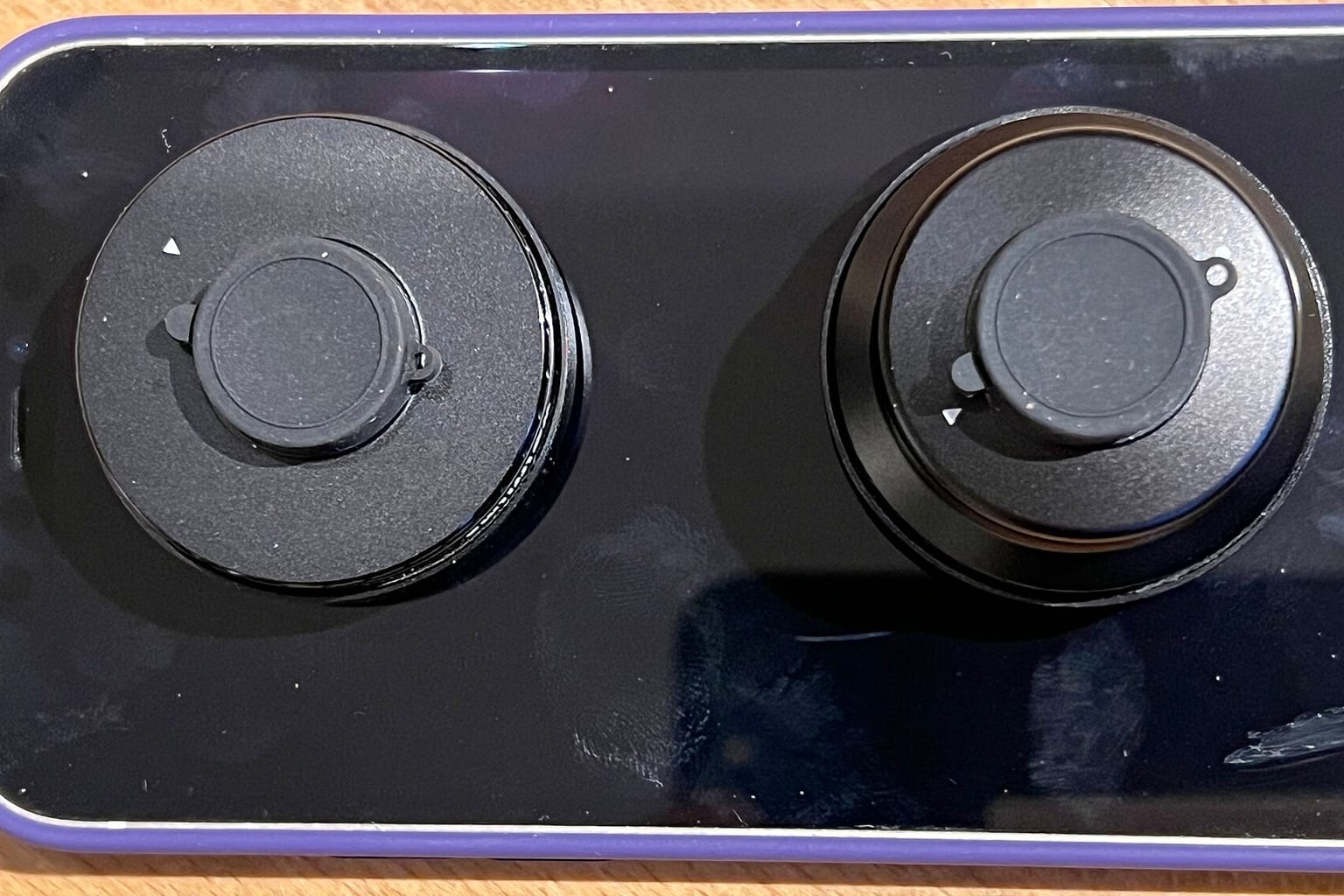
Smartphone cameras already use flat, ultra-thin metalenses instead of curved glass, and each one loses part of its light to its own reflections. At Harvard, a team led by applied physics professor Federico Capasso has built a metalens that reflects less light than bare glass: 2% of incoming light bounced back, against 3.3% for a bare glass surface, in the team's own tests.
A metalens looks smooth, but under a microscope it is covered in millions of tiny pillars, and each pillar slows light by a slightly different amount. That is why the usual antireflective coatings, the thin films that cut glare on ordinary glass, fail here: a single film tuned to one condition cannot suppress reflections across every pillar at once.
The answer was to stack a second layer on the first. Both layers are freestanding titanium dioxide nanostructures, and the upper pillar above each one is shaped to match the geometry of the pillar beneath it. Co-first author Davide Cassara, a graduate student, describes the result as point-by-point control of reflection across the whole lens. Capasso calls the work “a feat of nanotechnology at the highest level”, and the Harvard group says it was the first to demonstrate fabrication of a bilayer titanium dioxide metasurface of this kind.
Reducing reflection does not spoil the focus. In the same tests, focusing efficiency rose above the 86% of the single-layer control, so the second layer does not come at the expense of sharpness.
For a phone or a headset, the gain is simple: more of the light the lens collects reaches the sensor, and less of it is wasted as glare. The applications named so far are lightweight AR/VR headsets, sharper facial recognition and medical imaging. Harvard's Office of Technology Development is pursuing commercialization, but neither the team nor its partner Corning has put a date on it. The project grew out of a long-running partnership with Corning, the glass and optics company, and is funded by the National Science Foundation and the Air Force Office of Scientific Research. Corning's Paulo Dainese, a senior principal scientist, calls it a sign of the value of long-term collaboration between academia and industry.
The figures come from the team's own measurements on one lens design, tested at a near-infrared wavelength, and the work is still at the research stage. Multilayer lenses could later control light polarization or remove color distortion, and the design approach could eventually extend beyond titanium dioxide to silicon.
Sources — read the originals(Paris time)
Pages consulted while writing
Read next
Comments
Loading the thread…
Sign in to leave a comment. Sign in