Printed nanopillars cut camera exposure to a third
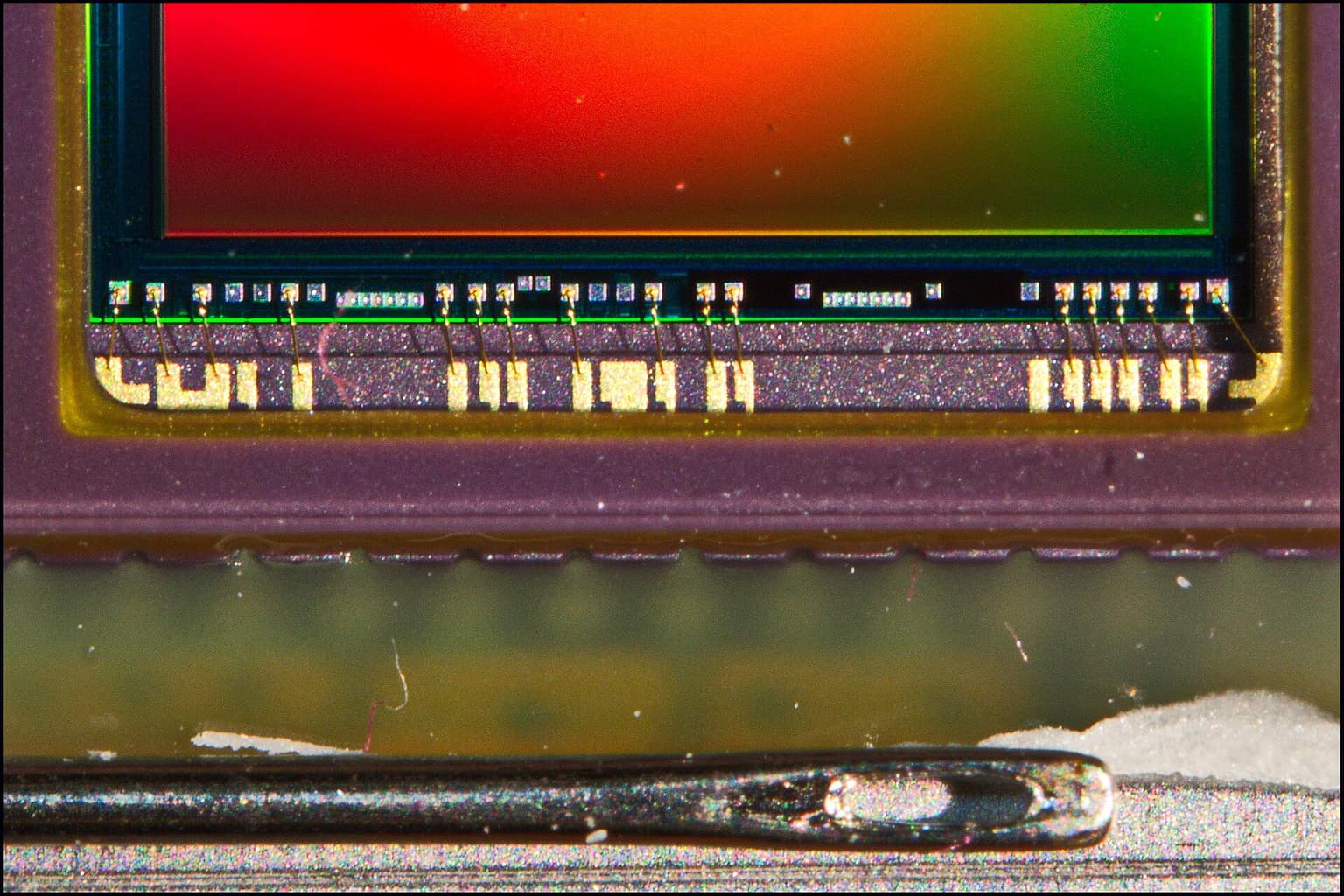
A camera sensor takes in only a fraction of what the lens sends it. Over the color filters that sort light into red, green and blue, the Bayer filter array, the most common arrangement in digital cameras, lets through about a third of the light that strikes it. The rest is absorbed. In a dim room, that loss is what turns a phone photo grainy, forces a longer exposure and blurs anything that moves.
A team of researchers from Singapore, China and Japan, led by Joel Yang of the Singapore University of Technology and Design (SUTD), has built a device that refuses to throw that light away. Their “color router” does not filter colors out; it steers each color toward the sensing region that needs it. “A color router instead steers those colors toward the corresponding sensing regions, allowing three times more of the incoming light to be used,” Yang said. The work was published in Nature Communications.
The central choice is geometry, not chemistry. Earlier color routers used high-index materials such as titanium dioxide or gallium nitride, which bend light strongly but require precise, multistep fabrication. The SUTD team used ordinary polymers and glasses, cheaper and easier to obtain, which interact with light much more weakly. To compensate, each unit cell carries four cylindrical nanopillars, printed to precise heights and widths by two-photon polymerization, and their light scattering interferes collectively. The team used particle swarm optimization, a search method that tests geometries in simulation and improves the weakest color channel first. The simulated design routes almost 90% of the light across the visible spectrum, against roughly 20% to 35% for typical commercial Bayer filters.
The printed devices are less efficient than the simulations. Arrays of 250,000 unit cells across one square millimeter reached about 70% efficiency, a gap the team attributes to fabrication deviations from the ideal design rather than to a basic limit of the approach. In tests with a monochrome sensor, images taken through the router showed better color fidelity with a third of the exposure time of images from a standard filter-based sensor. The pillars share a flat base with no overhangs, a “2.5D” structure that the researchers say suits mass replication, though they describe the printing as proof of concept and say manufacturing will need designs adapted to foundry materials and processes.
What changes, and for whom? For phone and camera makers, the promise is shorter exposures and cleaner images in low light, with a component that uses cheap, common materials. For biologists, the team sees a possible use in fluorescence imaging of living cells, where the signal is faint and strong illumination can damage the sample. The team gives no date for any of this. Its next step is to integrate the router directly onto an image sensor and measure exposure time, noise and color accuracy in a working camera, and it also wants to reduce leakage between color channels, improve performance at oblique angles and demonstrate repeatable replication. Until those measurements are made, the result is a laboratory demonstration.
Sources — read the originals(Paris time)
Read next
Comments
Loading the thread…
Sign in to leave a comment. Sign in