Bionic eye's pixels go from 100 to 367,500
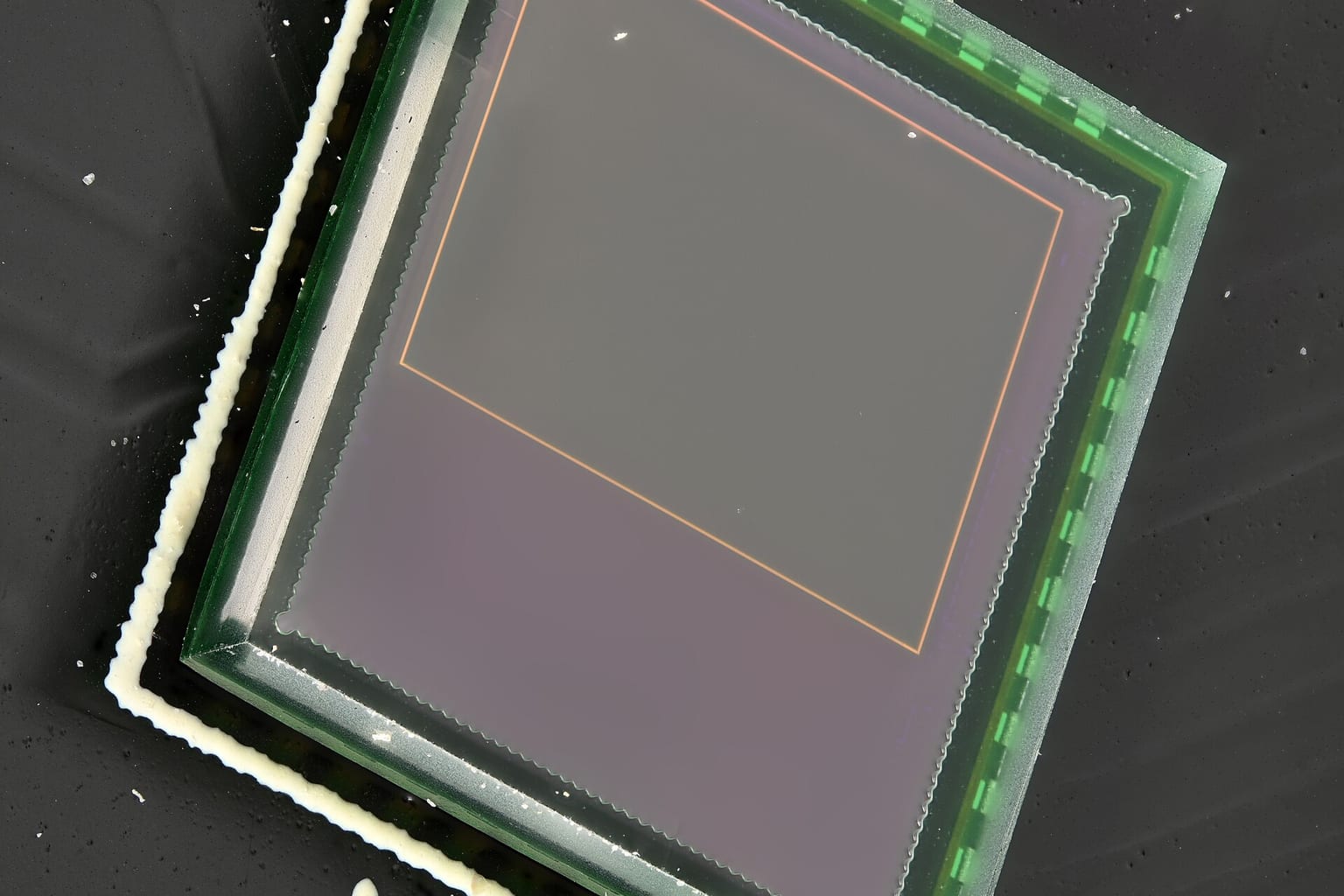
Curved like the retina at the back of an eye, a new bionic eye now carries 367,500 light-sensing pixels, up from 100 in the team's 2020 version. Researchers at the Hong Kong University of Science and Technology (HKUST) describe the device in Nature Materials, where the paper appears in volume 25. The work is laboratory research, led by Professor Fan Zhiyong.
Most cameras still use flat sensors. To correct optical aberrations, the distortions a lens introduces, they stack several optical elements and rely on processing afterwards, which adds bulk and power use and narrows the field of view. A sensor that follows the geometry of a biological retina can capture a wide view with fewer parts. The obstacle has been manufacturing: conventional lithographic processes are designed mainly for flat substrates. The HKUST team used a 3D laser fabrication approach on hemispherical substrates to reach a density of 1,905 pixels per inch.
The sensor combines blue-, green- and red-sensitive layers, which gives it full-color imaging across 300 to 800 nanometers, with aberration-corrected imaging over a field of view exceeding 160 degrees. Its tandem design also detects motion inside the sensor. A conventional camera records complete frames and compares them; here, the motion information is extracted at the sensor, so full image sequences do not have to be transmitted for the tasks tested. Under the study's test conditions, this reduced bandwidth demand by more than 99.95% against frame-based imaging, with a motion recognition accuracy of 98.6%.
Robots and autonomous systems are the intended users. A sensor that picks out motion on its own and sends far less visual data could make machine vision lighter to run, the researchers say. Fan says the team believes a next-generation bionic eye with over 1 million sensing pixels can be built, opening new options in robotics and autonomous driving.
The figures come from the study's own tests, under the conditions the researchers set. The team gives no timetable for bringing the device out of the lab. The first author, Dr. Long Zhenghao, carried out the work while at HKUST and is now an assistant professor at Fudan University; the research was conducted with Professor Zi Yunlong of HKUST (Guangzhou). The next step the team names is that sensor with more than 1 million pixels.
Sources — read the originals(Paris time)
Pages consulted while writing
Read next
Comments
Loading the thread…
Sign in to leave a comment. Sign in