Fingernail-sized chip sorts mixed light into clean beams
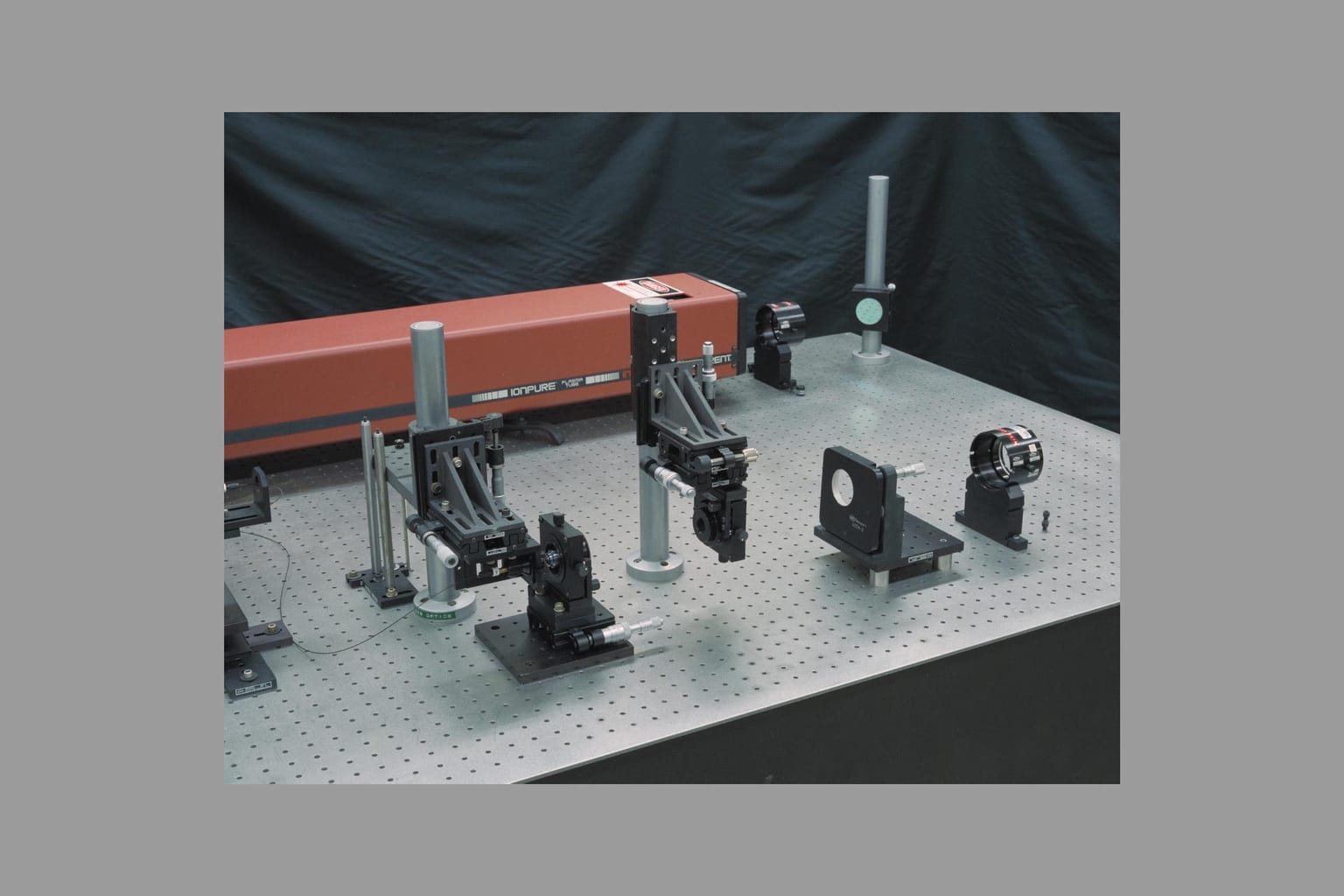
Point a laser through a mesh and the wall behind it fills with a sharp, speckled pattern. Hold a light bulb to the same mesh and the grid turns soft and diffuse. The difference comes from the photons: a laser's oscillate together, while a bulb's drift out of step. Real light, in most settings, lies between the two, a mixture of rhythms that today's instruments record as one blob.
A team led by Stanford engineers, working with colleagues at the Institute of Science and Technology Austria (ISTA), has built a chip that can take that mixture apart. The chip is the size of a fingernail, and it is a photonic chip, which channels light for processing the way electronic chips steer electrons. In the experiment, the researchers fed it two infrared lasers, whose combined light was partially coherent. The chip's algorithms and architecture sorted that light by source and sent each component into its own output beam. To check the result, the beams were recombined: they did not add up in intensity, which showed they were mutually incoherent. The team then added a third laser, and the chip still produced clean, separate beams.
Why this matters is a matter of information. "In a camera, we throw away the depth information," said David Miller, Stanford professor emeritus. Under a microscope, two overlapping fluorescent particles look like one. The light they emit carries signatures of two sources, and the chip can in principle tell them apart. Light from a camera or telescope carries far more information than the image records, and separating it is the first step toward extracting that information.
The next step is astronomy. Miller, Solgaard and Kroo are now collaborating with NASA to see whether the technique can probe light from distant galaxies, where what looks like a single point might hold distinct signals from separate stars and exoplanets. The team has not announced a date for those tests, and the chip remains a laboratory demonstration. For now, what changes is the way researchers can think about light: as a set of separable sources rather than a single image.
Sources — read the originals(Paris time)
Read next
Comments
Loading the thread…
Sign in to leave a comment. Sign in