Shoebox spectrometer reaches 6-femtometer resolution
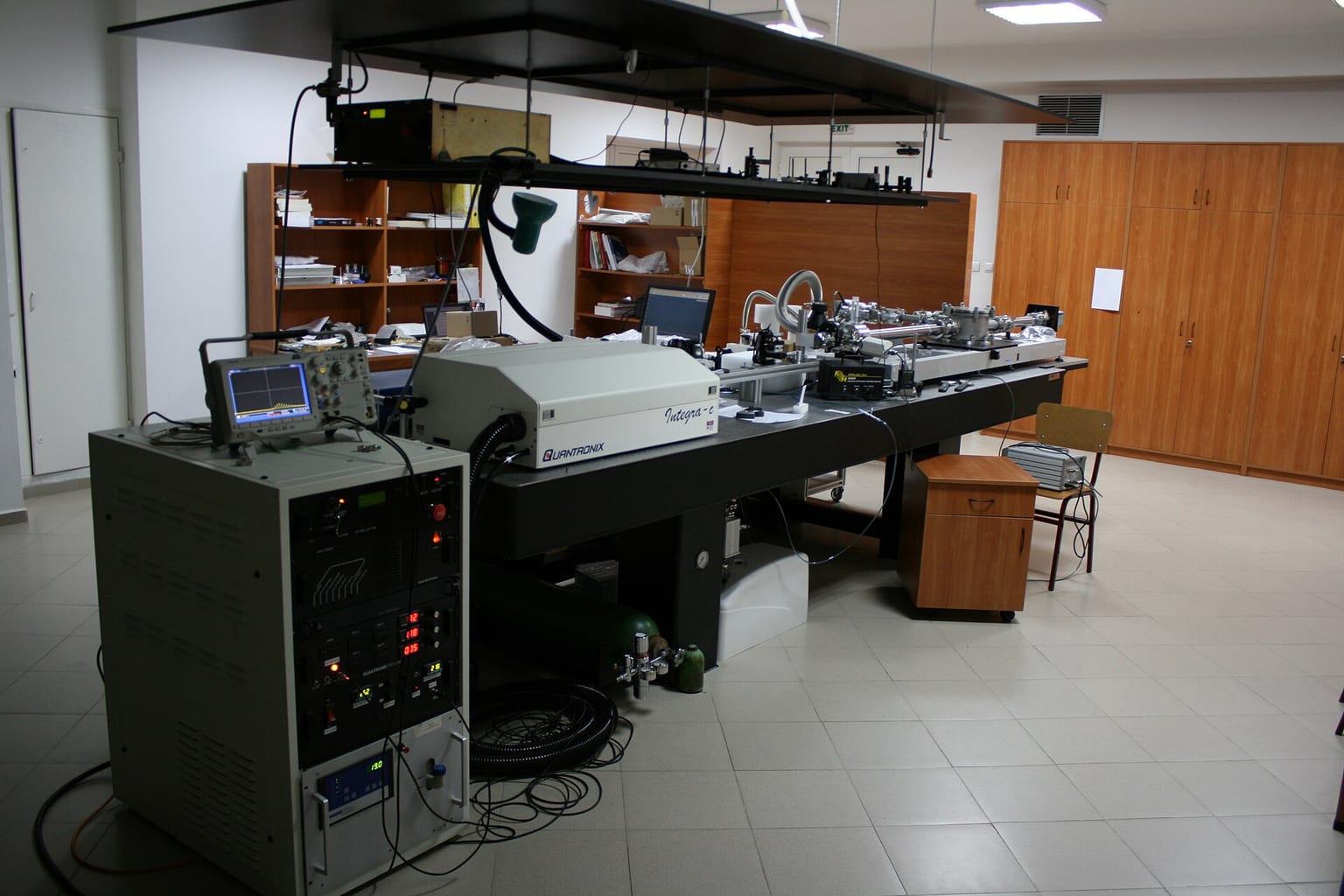
Shine a laser on a rough surface and the reflected light breaks up into a grainy pattern of bright and dark spots. Physicists call it speckle, and it looks like glitter made of light. For a long time, optical engineers tried to filter it out. A team led by Adelaide University has done the opposite: it used that pattern to build a spectrometer that resolves light to 6 femtometers, a figure reported from laboratory measurements. Gabriel Britto Monteiro, the PhD candidate who leads the paper, offers a comparison: it is like measuring the height of Mount Everest and knowing whether a single human hair lies on the summit.
The trick is an integrating sphere, a highly reflective hollow cavity in which light bounces many times before it leaves. Inside it, the speckle pattern becomes extraordinarily sensitive to very small changes in wavelength, so the device can act as an ultra-high-resolution spectrometer. The arXiv preprint gives a resolving power of 1.3×10⁸ at 780 nm and puts the resolution at under 3 MHz (megahertz). A specialist site reports an 80-fold gain over earlier speckle-based spectrometers, a figure that appears in its headline and that the preprint does not state in the excerpts available.
To test the device, the team measured the hyperfine structure of rubidium, the fine splitting of an atom's energy levels. The preprint describes this as the first direct speckle-based measurement of that structure. The speckle measurements agreed with those taken with a photodiode to within 1.5%. Rubidium underpins atomic clocks, quantum processors and quantum sensors, so the test targets the element that these devices depend on.
For the moment, the gains are confined to the bench. The preprint describes the speckle-based approach as compact, mechanically robust and insensitive to alignment, which is what would make it attractive outside a specialist optics lab. The researchers see potential in environmental monitoring of pollutants, cancer diagnosis and quantum technologies. The measurements reported so far, however, are on rubidium, not on pollutants or patient samples, and the sources consulted give no date or price for a commercial instrument.
The next step, Britto Monteiro says, is to combine speckle spectroscopy with optical frequency combs, a technology that lets researchers see tiny spectral details with absolute precision. That could help tell apart two similar-looking chemicals in complex gases.
Sources — read the originals(Paris time)
Pages consulted while writing
Read next
Comments
Loading the thread…
Sign in to leave a comment. Sign in