In the lab, a chip blue laser retunes a million times a second
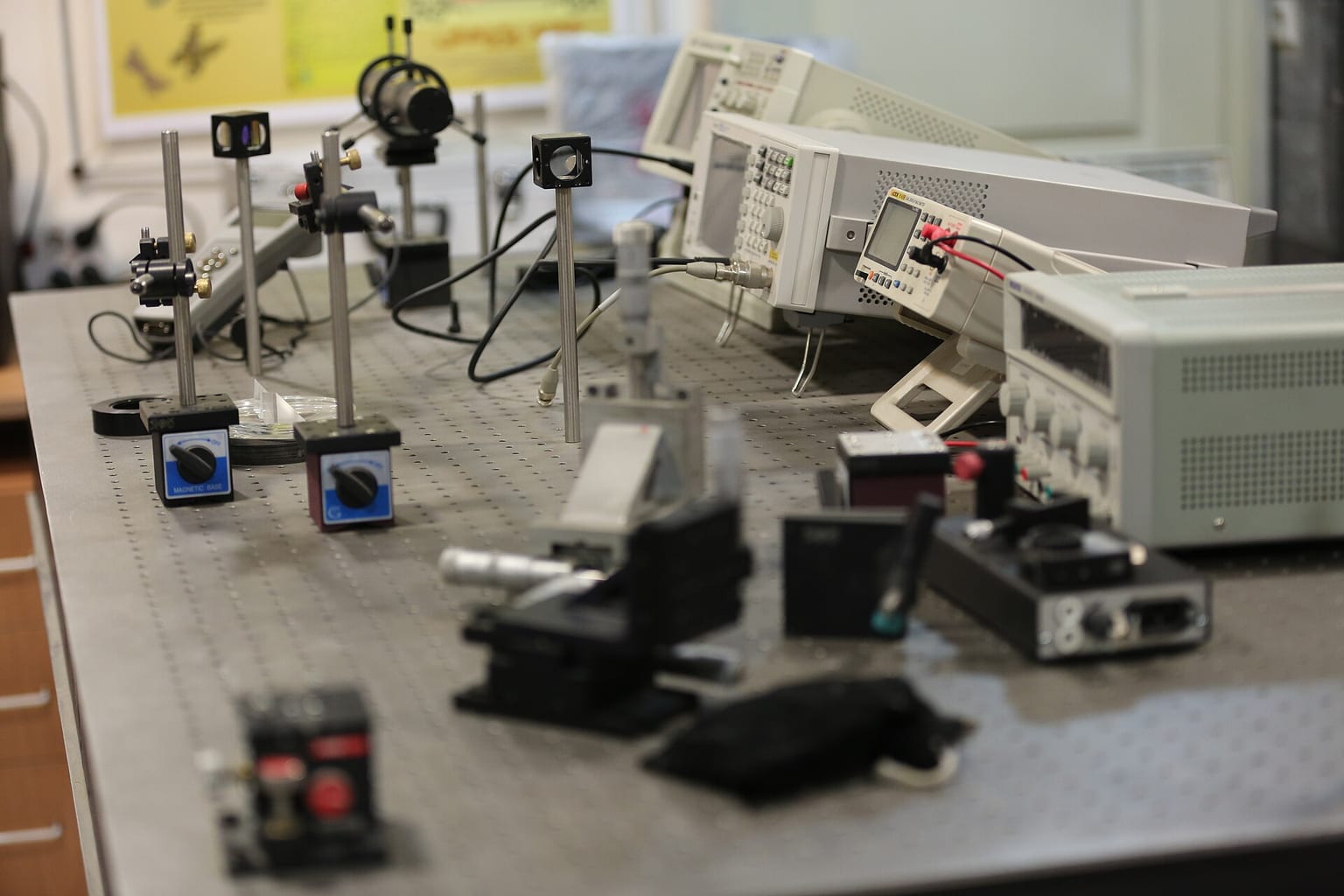
A blue laser built on a chip can now hold a steady frequency and change it up to 1 million times per second. Researchers at EPFL, led by Tobias J. Kippenberg and Simone Bianconi, describe the device in Nature Photonics. Its beam sits at about 461 nanometers, in the blue part of the spectrum, and the team demonstrated it in the lab.
Blue light has two useful traits: it passes through water more easily than the infrared light used in most optical communication, and it scatters strongly off tiny particles in air. That makes blue lasers attractive for underwater links, pollution monitoring and scientific instruments. The difficulty was control. A useful beam must stay stable enough to separate a signal from background noise, yet shift quickly to carry information. Existing blue systems manage this with bulky optical parts, and shrinking them onto photonic chips had proved hard, because at blue wavelengths even tiny imperfections scatter light and cut performance.
The team connected a conventional blue laser to a chip carrying a microscopic ring. The ring selects one precise frequency and feeds part of it back into the laser, which steadies the beam. To limit light losses, the chip's light-guiding structures are only 25 nanometers thick. Added components made of aluminum nitride, a material that changes shape under voltage, create tiny mechanical stresses that alter how light travels through the ring, and that is what lets the frequency shift so fast. In one configuration the linewidth, a measure of how precisely the laser holds its frequency, falls below 30 kilohertz. In another, the frequency moves over a range exceeding 900 megahertz.
Two lab tests followed. In a 30-centimeter column of water, the team encoded a digital image of the EPFL logo into frequency changes, and the receiving system rebuilt the picture. In a second experiment, candle smoke in the air produced a clear change in the detected signal, while an infrared laser at 1,550 nanometers showed no detectable change under comparable conditions. The concentration of the smoke was not measured, and both tests are short-range demonstrations on the bench.
For a sensor station or an underwater link, the gain is a light source small enough to fit on a chip, with the frequency control that data transmission and measurement need. The same precision matters for atomic clocks and quantum computing, where stable blue light is essential. The study announces no product, no timeline and no field trial, so for now the change is a demonstrated principle that other teams can build on.
Sources — read the originals(Paris time)
Read next
Comments
Loading the thread…
Sign in to leave a comment. Sign in