A wheat AI app now reads nine plant traits from field photos
In a lab bench at South Dakota State University (SDSU), a graduate student counts kernels on the head of a wheat stalk, one by one, then rates how badly the same head is diseased. That hand work is still how much of wheat breeding is measured. A team there has built a tool meant to take much of it off the bench: WheatAI, a web app that now analyzes nine plant characteristics from smartphone and drone photos.
The bottleneck is not sequencing. A plant’s DNA can be read accurately and cheaply today, says Professor Sunish Sehgal. What is slow is linking that DNA to what the plant does, the measures of growth and productivity that breeders call phenotypes. Visual ratings vary from one person to another. Two researchers can give the same wheat head a 5 and a 7 for disease severity. “However, the camera always looks at it the same. It takes the bias out,” Sehgal said.
Sehgal started taking photos in 2022. WheatAI was built from smartphone and drone images of winter wheat, taken five times between May and July at SDSU research farms near Pierre and Brookings and in producer fields in Winner and Hayes. In 2025, Sehgal and assistant professor Maitiniyazi Maimaitijiang, from the Department of Geography and Geospatial Sciences, began a working prototype to estimate yield from plant traits and to assess diseases, including Fusarium, a fungal pathogen that can infect wheat plants and damage kernels. A technical paper by the same team, posted on arXiv, describes version 1.0 as a browser interface that processes single images or bulk uploads.
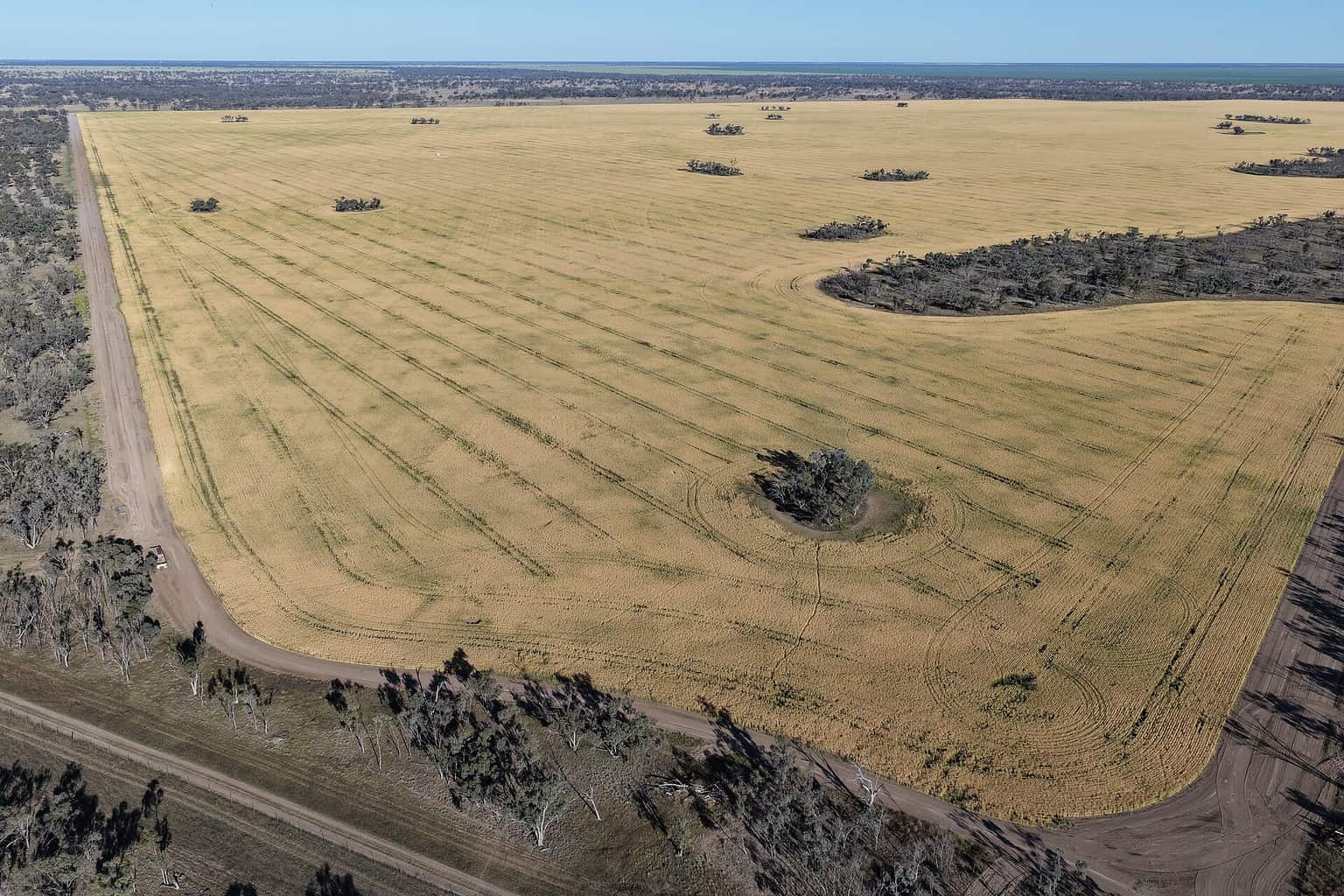
For farmers, the change is in how a field is sampled. Today, yield potential is estimated by counting heads per square foot in a few spots. With WheatAI, the team says, 10 to 20 photos taken across a large field can be uploaded for an automated count. The approach would be faster and more consistent, the researchers note, but only if the photos represent the field and the model is accurate. The same images could help a producer decide earlier whether a crop goes to grain or silage, and help assess fusarium-damaged kernels in the harvest.
For breeders, the promise is volume. Finding a useful wheat line is “a numbers thing,” Sehgal says: the more lines screened, the better the odds. The team plans to add another 10 to 12 traits before public release, tentatively in 2028, and says the platform will be free. A version 1.0 is already described in the technical paper, but the 2028 date is for the release at wheatai.net. Until then, WheatAI remains a prototype, and its first real test will be whether its counts hold up across the fields it has not yet seen.
Sources — read the originals(Paris time)
Pages consulted while writing
Read next
Comments
Loading the thread…
Sign in to leave a comment. Sign in