According to the clinic, a world first: surgeons cut and seal tissue with a robot
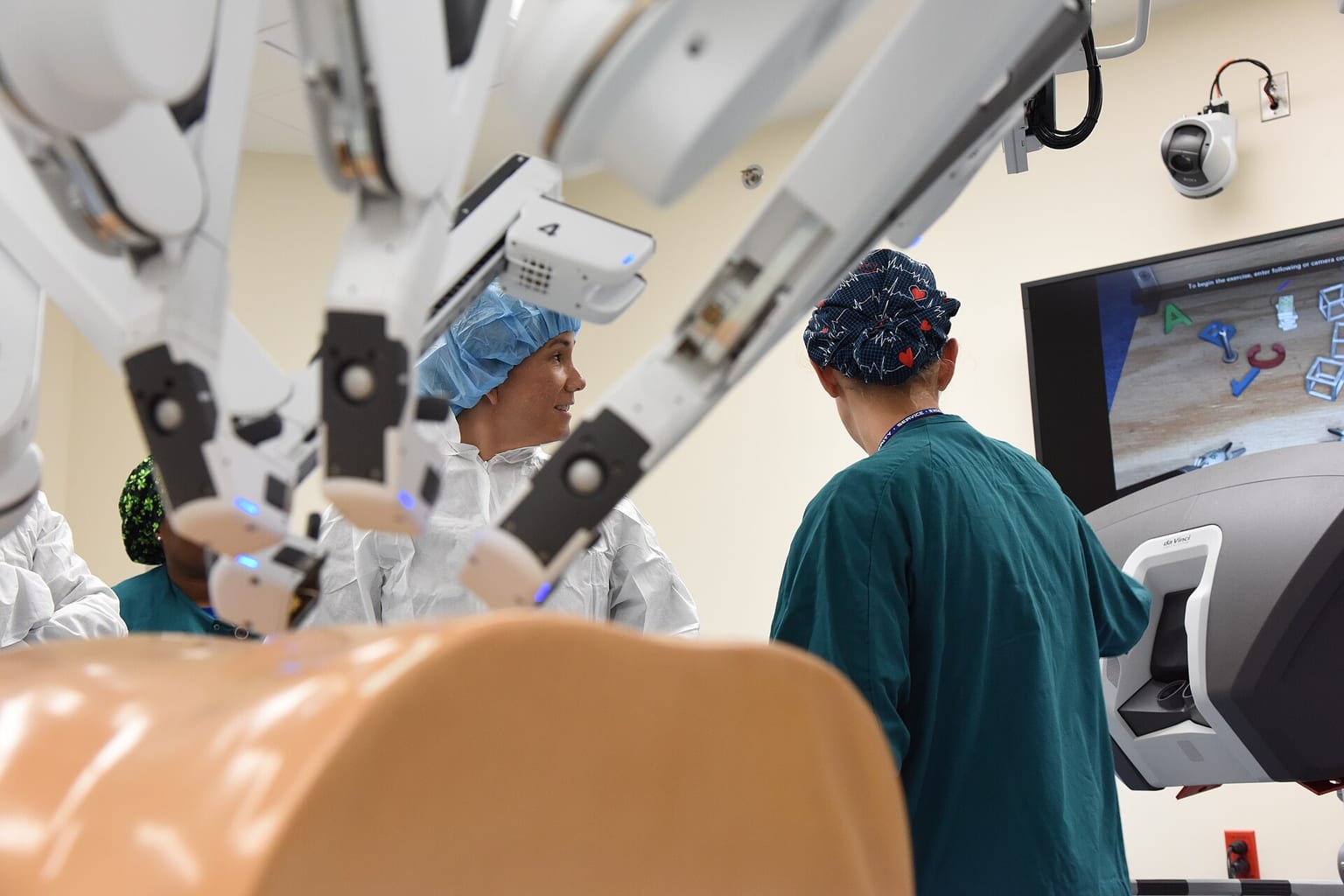
In a 76-year-old patient at RWTH Aachen University Hospital, suspicious lymph nodes in the neck were removed using an instrument that, according to the clinic, was used on a human in this form for the first time worldwide. The team led by managing senior physician Ashkan Rashad operated in head and neck surgery, using the Symani surgical robot.
The patient has CUP syndrome, a cancer whose origin is unknown. When asked, the clinic said the soft tissue was dissected at a microsurgical level, meaning very fine and precise. The lymph nodes were removed safely, and neighboring sensitive structures were spared. The patient is doing well, and the recovery after the operation has been unremarkable.
Symani comes from the company Medical Microinstruments (MMI), founded in 2015 near Pisa, Italy. The robot does not operate on its own: the surgeon guides it, and the system transfers his movements to the microsurgical instruments on a reduced scale. Whether surgical robots should be given more autonomy in the future is disputed. Supporters hope for more consistent results, while critics point to unresolved liability questions.
The new instrument combines dissecting scissors with a monopolar function. High-frequency current flows through the tip into the tissue. The heat cuts the tissue and at the same time seals small blood vessels by altering the proteins in them. This allows bleeding to be stopped while cutting. The current flows back out through a neutral electrode attached to the body. According to the clinic, Symani can now also carry out the finest dissection steps robotically. The system has carried the CE mark in Europe since 2019 and has been approved by the US authority FDA since 2022.
The limitations are clearly stated. The procedure was not part of a clinical study but a proof of feasibility. Measurements exist for the duration of the operation, but not for precision. Whether the instrument actually shortens procedures or improves treatment outcomes is to be shown by a clinical study. The experience from the first use is also to be evaluated scientifically.
Rashad expects the combination of scissors and monopolar function to make operations simpler and shorter. For patients undergoing complex procedures in the head and neck area, this would be a noticeable benefit, but for now it is an expectation rather than a finding. When the study will begin is not stated in the information provided. For now, there is a single case, documented by a clinic that has announced the evaluation.
Sources — read the originals(Paris time)
Pages consulted while writing
Read next
Comments
Loading the thread…
Sign in to leave a comment. Sign in