ACE-Brain-0.6 beats GPT-6 Astra on company-run spatial tests
Ask a robot to pick up a part, and the hardest step is not the arm's movement but knowing exactly where the part is. That is the problem ACE Robotics says its new model, ACE-Brain-0.6, is built to solve. The company, chaired by SenseTime co-founder Xiaogang Wang, describes it as an embodied foundation model of roughly 9 billion parameters, the numerical settings a neural network learns during training and a rough measure of its size. Its focus is visual grounding: linking a language instruction to a precise location, an object part or an interaction region in a physical scene.
The model is based on Qwen3.5-9B. Its vision encoder stays frozen, meaning the part that reads images is not retrained, while the language part was fine-tuned on about one million spatial samples, covering roughly 940,000 images and 2.7 million question-answer pairs. The training data merges more than 30 open robot datasets with private first-person footage. Tools such as Grounding DINO and SAM 3 turn gripper-state and motion cues into spatial labels that can be checked. ACE Robotics says the model only answers when the visual evidence is complete: before it answers a counting question, for example, every instance must be labelled.
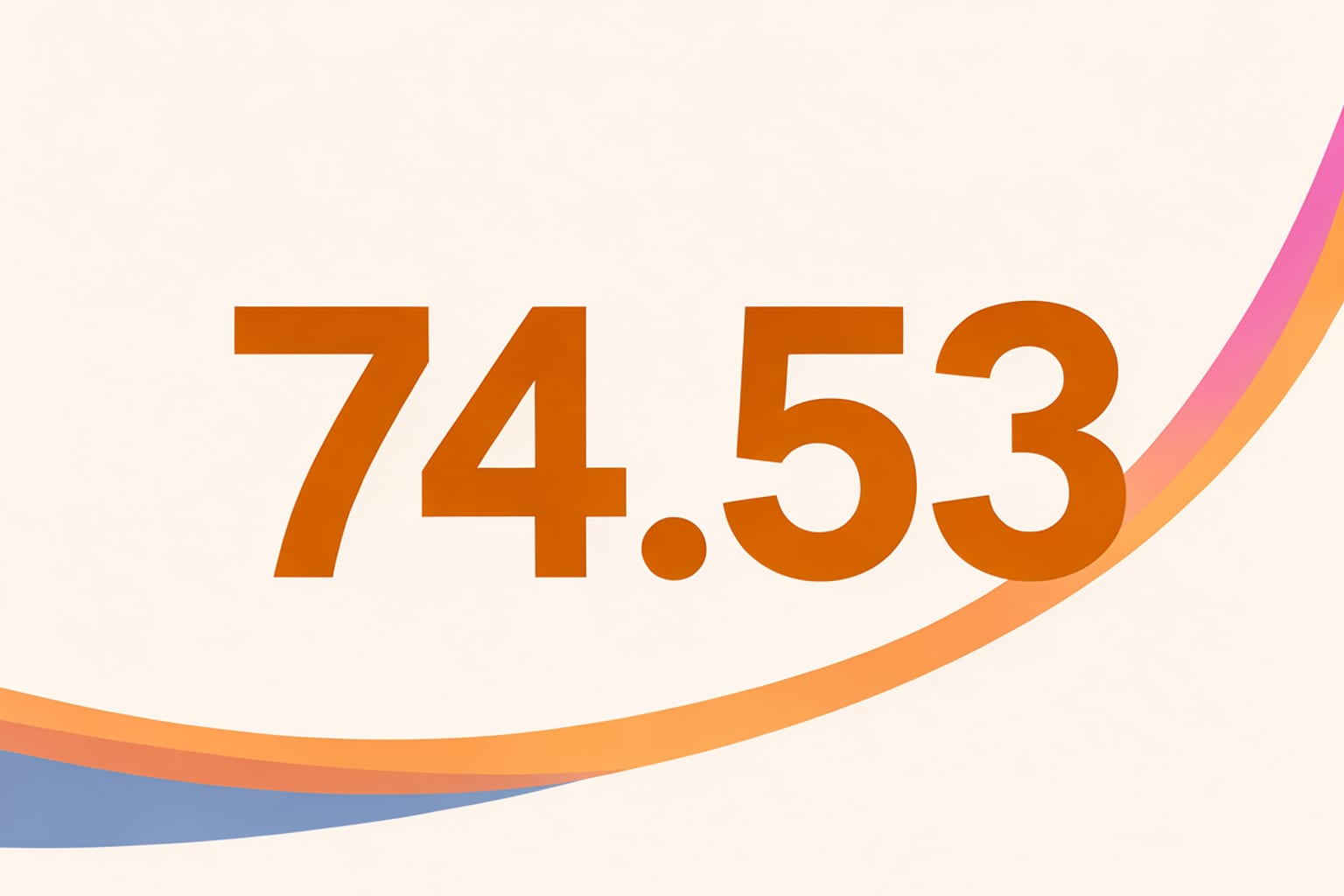
The performance figures are the company's own, and have not yet been independently verified. On six of eight grounding evaluations, ACE-Brain-0.6 scores above GPT-6 Astra, OpenAI's model in the company's comparison. On Where2Place it reaches 76.55 against 71.10, and on RobotGrounding, a 2,591-question set the team built itself across 14 task types, 94.13 against 91.10. Averaged over seven public benchmarks, the scores are 74.53 and 73.68. That margin is small, and it is measured on tests the company chose.
The more instructive result concerns data. In controlled runs, with architecture and training recipe kept fixed, growing the training set from 260,000 to about one million samples raised the seven-benchmark average from 69.3 to 74.5, on a curve the company describes as near log-linear. Doubling the data added about 2.4 points on average, while simply adding more samples of the same type gained less than one point. The gains came from variety, meaning new scenes, spatial relations and supervision formats, rather than from volume.
For now, the practical benefit is narrow. As of publication, ACE-Brain-0.6 weights were not listed as open; the public GitHub repositories under DAXIAORobotics still list ACE-Brain-0 and ACE-Brain-0.5. Robotics teams that want to test the model on their own hardware will have to wait for a release they cannot yet download. If the open release follows and the results hold outside the company's own benchmarks, the gain would reach research groups and robot builders first, who could then test whether better-chosen data helps their own robots find what they are meant to grasp.
Comments
Loading the thread…
Sign in to leave a comment. Sign in