AgiBot robot reaches 85.7% task success in a real convenience store
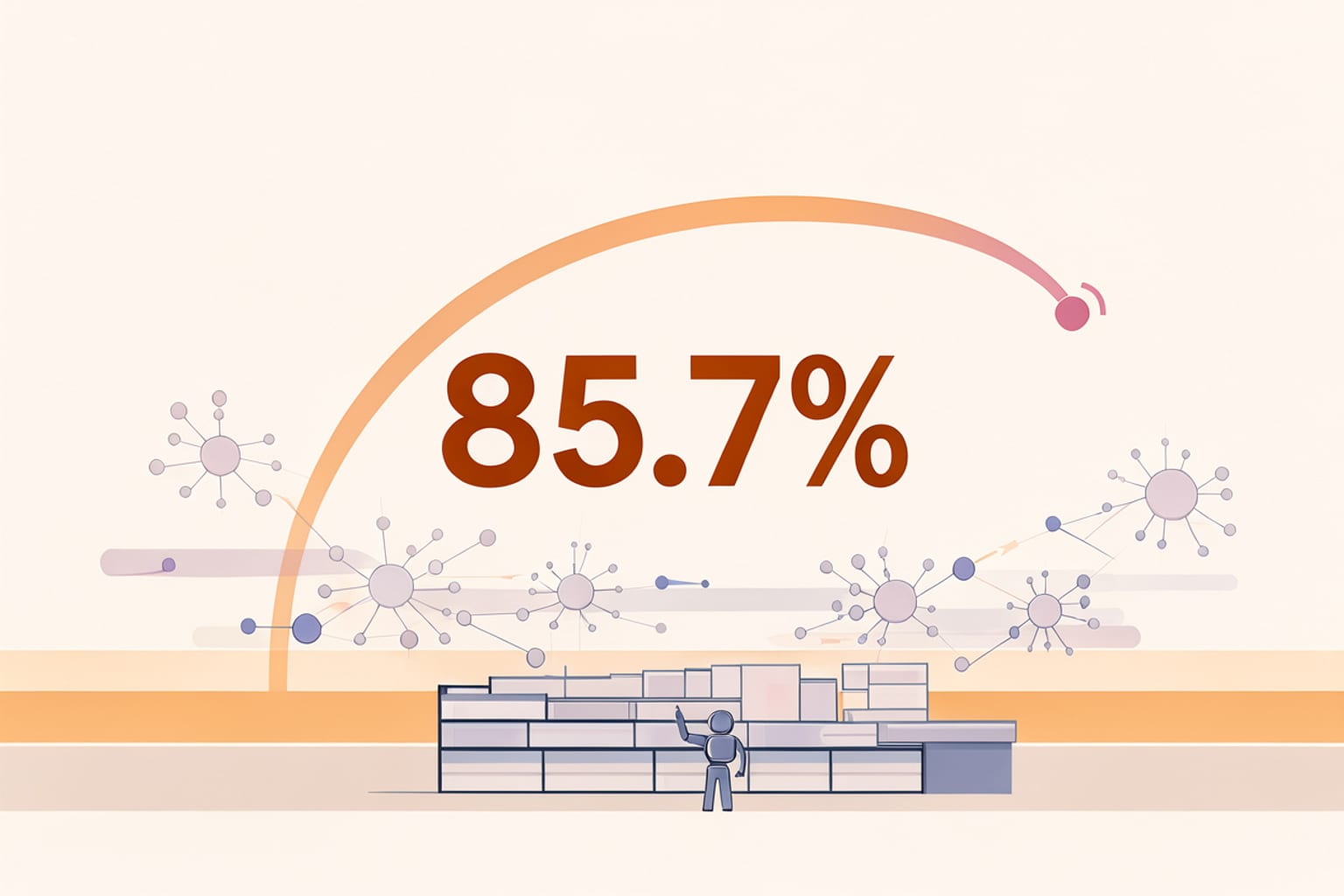
On a convenience store floor, a robot corrected its own errors without a technician stepping in. That is the demonstration AgiBot showed when it launched GO-3 Preview on October 29, an embodied AI model, meaning artificial intelligence that drives a physical body. In the store, the company's G2 robot identified why its attempts failed, changed its approach and kept the lesson. Across the full task workflow, its success rate went from 28.6% on the first day to a stable 85.7% after five days.
The model is built around an architecture AgiBot calls World Reasoning Action Model, or WRAM, which links three steps: reasoning about a task, predicting its outcome, and turning that decision into movement. Training runs in three stages: pre-training, post-training and deployment. During pre-training, the model learns from first-person videos of people handling objects and from robot trajectories that connect what the robot sees to the physical actions and their results. AgiBot says it can then handle unfamiliar tasks in homes, kitchens and multi-robot settings, and perform dexterous manipulation without fine-tuning, that is, retraining, for each new activity.
After pre-training, a distributed system called Genie Evolver draws on data from about 100 physical robots, combined with physics simulations and world models, which are software representations of how a scene changes. Robots practice, evaluate their results and retry. In a tabletop curling demonstration, a robot beat the average of the humans tested after four hours of online practice. Another removed five consecutive blocks from a block tower without toppling it. On a separate hook-hanging task, AgiBot reports a 17.7-percentage-point gain in single-task success over conventional supervised fine-tuning, the method that trains a model on labeled examples.
For robot makers, the practical change is the cost of each new job. Instead of building a separate model for every activity, a system can reuse earlier knowledge and adjust it to a new setting, and keep improving once it is working. These are the company's own figures, not independent measurements, and the store trial covers one robot in one location. Prices and deployment plans beyond that demonstration have not been announced.
AgiBot plans to release the complete GO-3 model as open source by the end of 2026. That release would give researchers and developers access to the architecture, and it is the next step to watch for anyone who wants to test the claims outside the company's own demonstrations.
Sources — read the originals(Paris time)
Read next
Comments
Loading the thread…
Sign in to leave a comment. Sign in