AI agents formally verify the 7,654-page Stacks Project
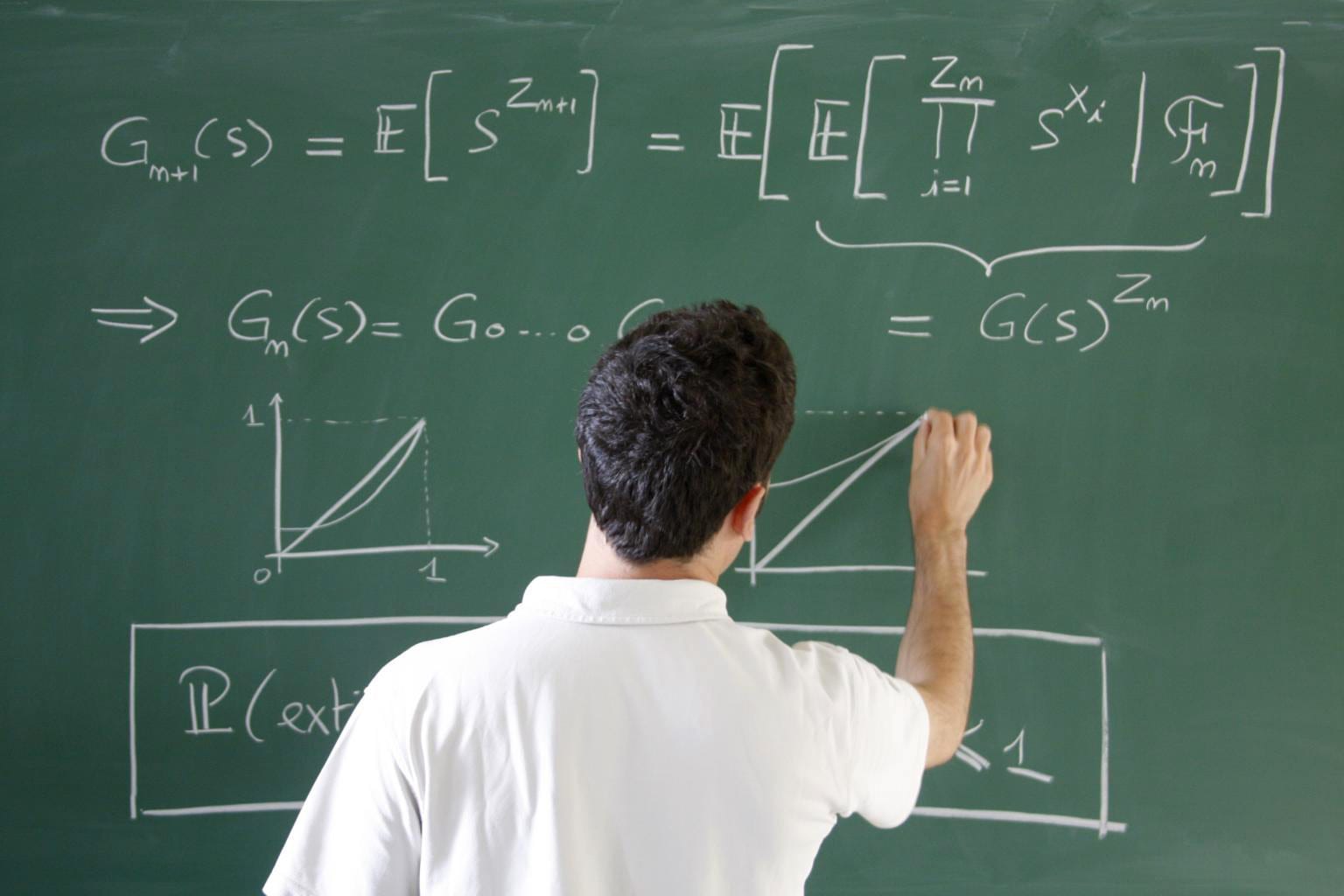
On Wednesday, AxiomMath announced that its AI agents had formally verified the Stacks Project, one of the largest bodies of mathematics ever written by humans: 7,654 pages of results, from college-level algebra to the field's most advanced ideas in algebra, geometry and number theory. Mathematicians have contributed to it since Columbia's Johan de Jong started it in 2005 as an open-source reference.
Formalizing a proof means rewriting it as code in Lean, a programming language built for mathematics. A program called a proof assistant then checks that code line by line. If the proof passes, its logic holds. Engineers use the same method, called formal verification, to confirm that chip designs work. Here the goal was larger: rebuilding an entire body of mathematics this way. Last month, OpenAI released 719 manuscripts claiming solutions to hard problems, and the question of whether math can absorb AI-generated errors has become pressing.
The difficulty was the structure. The theorems in Stacks depend on one another, like a family tree, so a single broken link could undermine many results. The team had to keep every connection intact across about 16 million lines of Lean. AxiomMath CEO Carina Hong, who left a Stanford math PhD program to found the company in March 2025, said she was unsure at first whether the approach could preserve the project's coherence. The agents were given a loose hierarchy and ran in parallel, choosing their own tasks. The company also trained its own models for mathematics, and it says the agents gradually developed a sense of what good formalization looks like.
The result also fills a gap. Swaminathan, a member of the technical staff, described a large hole in formalized mathematics that covers algebraic geometry. Researchers who wanted to check new work in that field with Lean had little to build on. Now they have a verified base. Terence Tao, the UCLA mathematician and Fields Medal winner, has put the principle simply: "The more formalized proofs you have, the more formalized proofs you can make." The announcement comes from the company itself, and the reporting on it mentions no independent review of the 16 million lines.
For developers, the consequence is practical. Software bugs and security holes are hard to rule out, and that gets harder as AI agents write more code. AxiomMath's bet is that future software will rest on verified foundations, much as the Stacks Project now does for mathematics. Its agents can read the Lean code, understand it and build new components on top of it. Hong has challenged every coding company to take on formalization at this scale.
Sources — read the originals(Paris time)
Read next
Comments
Loading the thread…
Sign in to leave a comment. Sign in