Alpöge says AI helped him find proof of 167-year-old math problem; code passes machine check
On November 20, 2026, Anthropic mathematician Levent Alpöge published a four-page document on his personal website, along with about 17 million lines of formal proof code. He says that with help from the AI model Claude, he may have found a proof of the Riemann hypothesis. The problem has remained unsolved for 167 years.
The Riemann hypothesis was proposed in 1859 by German mathematician Bernhard Riemann and concerns the distribution of prime numbers. Primes appear irregularly among the integers, seemingly without pattern. The conjecture asserts that a set of mathematical objects governing this distribution all lie on one specific straight line. If so, estimates of how primes are distributed could reach the most precise level currently known. The Clay Mathematics Institute lists it among the seven “Millennium Prize Problems” and offers a $1 million prize for its solution.
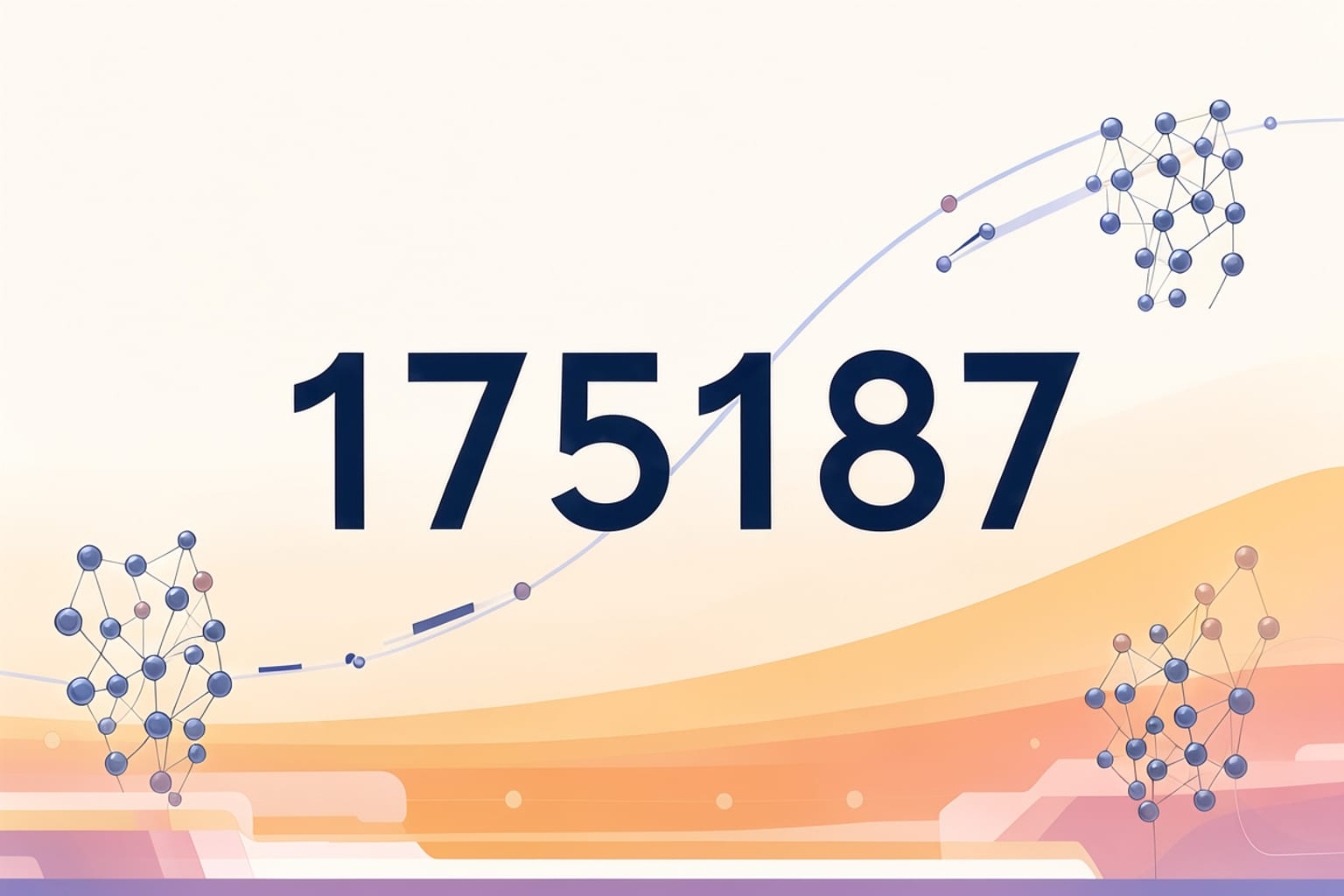
The challenge lies in the proof's size: checking it line by line by hand would be slow and error-prone. Lean is a formal language designed for writing mathematical proofs, in which a computer breaks each step of reasoning apart and checks whether it holds up. The Lean Foundation and the Mathlib project have publicly said they are highly confident in the proof's correctness. Results published by MIT mathematician Andrew Sutherland show that all 175,187 proof modules compiled successfully, and several independent proof checkers have also accepted the conclusion.
Controversy has followed. Mathematician Jenny Lorraine Nielsen published a paper on PhilArchive questioning the proof over a “vacuous truth” problem: the code defines one condition as always true, which may cause some geometric constraints that should have applied to lose their effect. A code review confirmed that this definition exists, but whether it is enough to overturn the final conclusion has not been confirmed. The Lean and Mathlib communities have also not withdrawn their earlier certification statements.
Shing-Tung Yau called the result a milestone, saying mathematical research “has entered a new era.” He noted that machines may first break down and verify the derivations, with humans then working to understand the proof and distill its theory, and that this order of research may become increasingly common. Fields Medal winner and Oxford University professor James Maynard said he is 98% to 99% confident the proof is correct, but that what really matters is understanding why the conjecture holds. If the proof survives all checks, dozens of mathematical problems that depend on the conjecture would immediately gain a foundation.
Two matters remain unresolved. Alpöge has not yet made public the complete AI-generated explanation, which he says runs to more than 250,000 pages. The Clay Mathematics Institute has also not announced that the problem has been solved, and mathematicians are still reviewing its mathematical content. Maynard expects that mathematicians could first use AI to condense the enormous proof material, then gradually produce a complete version that people can read.
Sources — read the originals(Paris time)
Pages consulted while writing
Read next
Comments
Loading the thread…
Sign in to leave a comment. Sign in