AI maps 2,895 protein partners in mitochondria, tested in cells
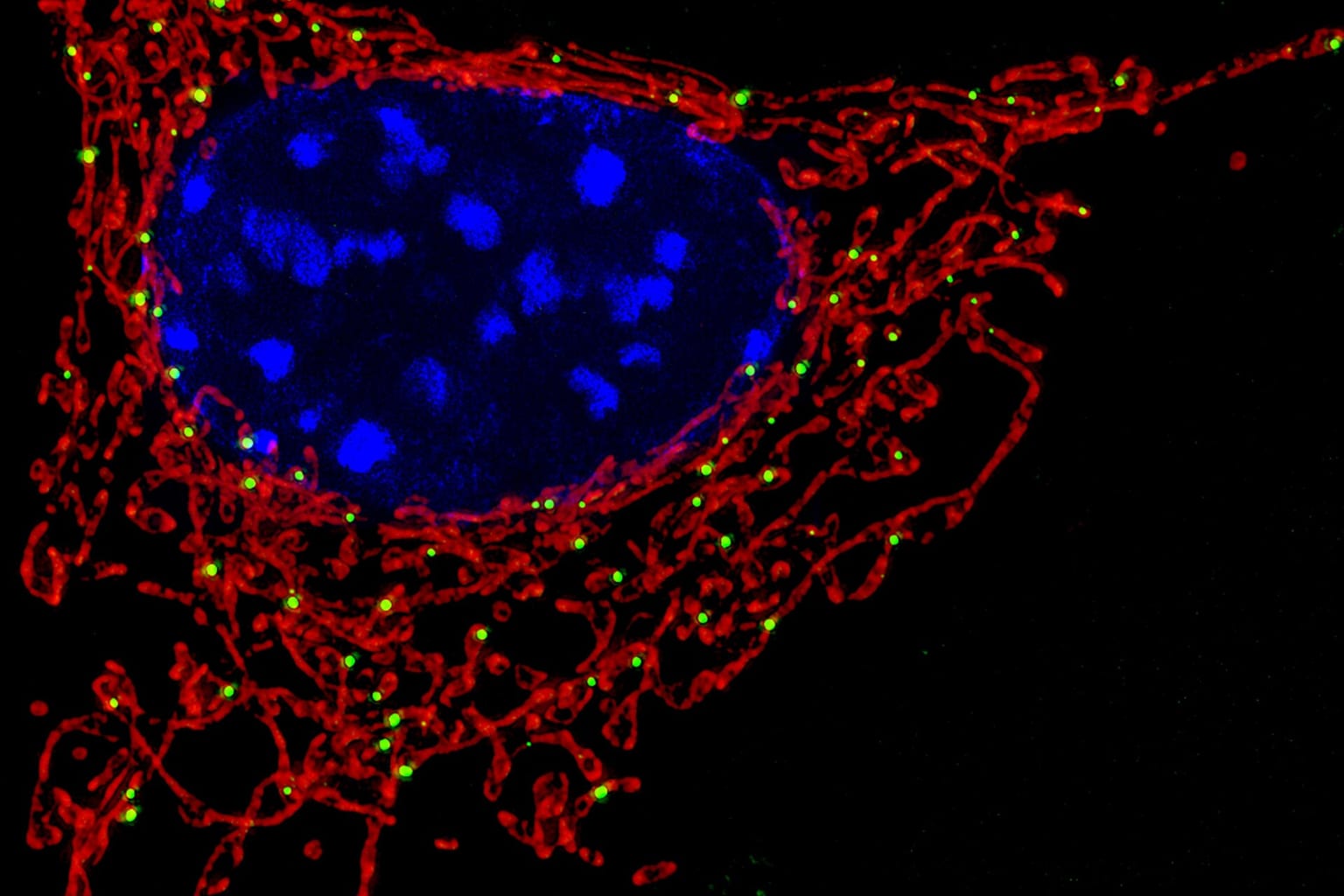
Inside every human cell, about 1,100 proteins work in the mitochondria, and a computer has just checked each possible pairing among them: more than 630,000 combinations in all. The result is a map of 2,895 likely interactions, and more than half of them had never been reported before.
The work comes from Texas A&M AgriLife Research, where Abhinav Swaminathan and his advisor Vishal Gohil run a lab that, in Swaminathan’s words, is “a traditional biochemistry and genetics lab, not an AI lab.” Nearly three years ago, they decided to test AlphaFold-Multimer, a tool Google DeepMind unveiled in 2022 to predict the three-dimensional shapes that proteins form together. They repurposed it to estimate whether two mitochondrial proteins are likely to interact. “It worked really well, so we decided to apply it to all human mitochondrial proteins,” Swaminathan said.
The predictions were then checked by hand. Over about two years of laboratory experiments, the team confirmed several of the predicted partnerships in yeast and human cells, some of them in collaboration with Washington University School of Medicine in St. Louis. The predictions were not all accepted at face value: the lab work is what turned a list of guesses into a working map. The study also gave 85 previously uncharacterized proteins their first probable partners, which offers a starting point for working out what those proteins do.
For researchers, the change is practical. Scientists studying a given protein can now check its likely partners before designing experiments, which narrows the search that used to be slow. The team has made the predictions available as a free online resource, MitoMatch, so researchers worldwide can use them for the proteins they study. Several teams are already working with the data to understand cell function better.
The benefit for patients is still distant. Swaminathan said cures for mitochondria-linked diseases “may still be far into the future.” What the study offers is a shorter route toward them: knowing which proteins to test, and with whom, before a treatment can be designed.
Sources — read the originals(Paris time)
Read next
Comments
Loading the thread…
Sign in to leave a comment. Sign in