AI tracks objects through poor light using heat
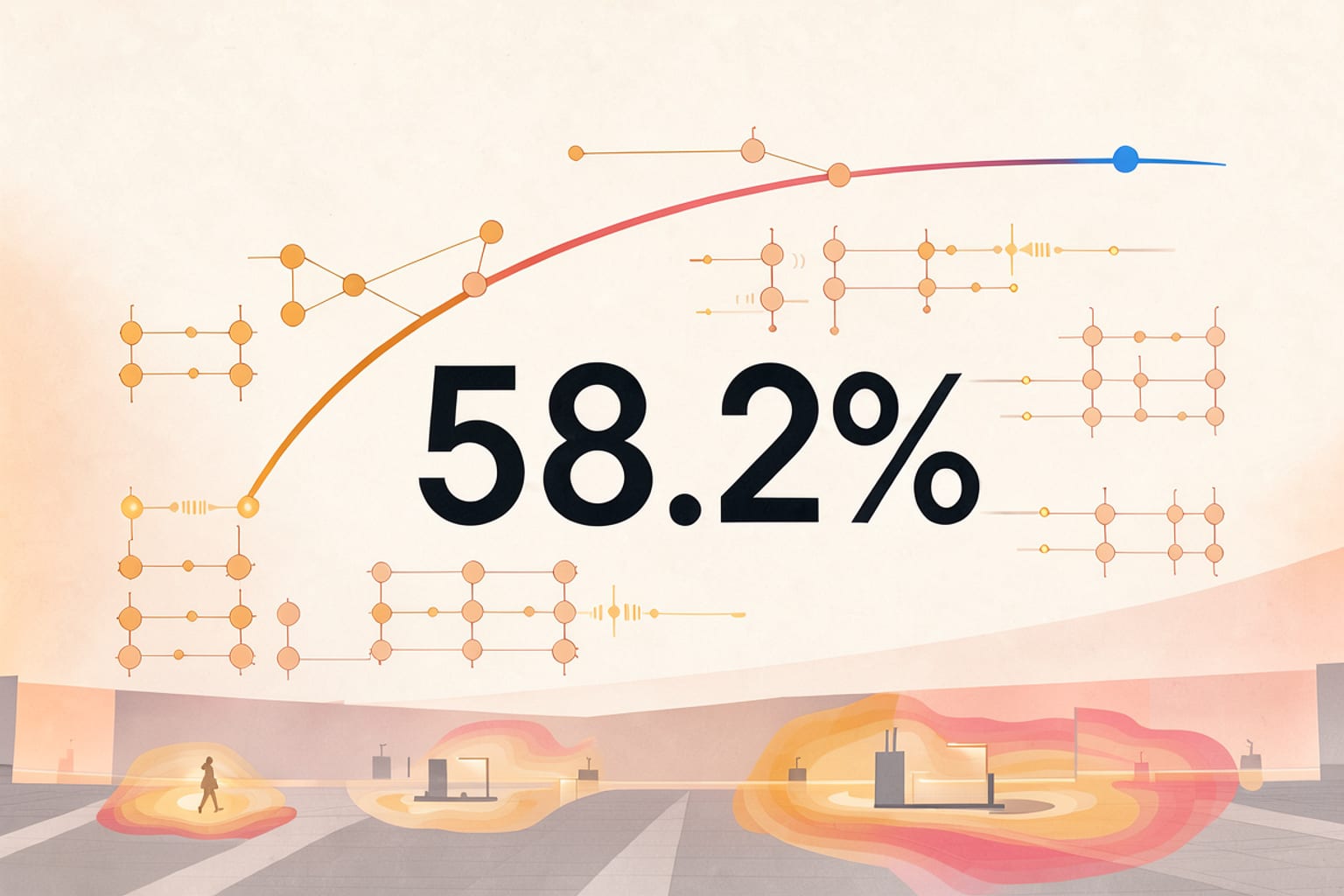
When the light fades, when the image blurs, or when another object slips in front of the target for a moment, a video tracker can lose the thing it is following. Researchers at the Changchun Institute of Optics, Fine Mechanics and Physics, part of the Chinese Academy of Sciences, have built a network that addresses these problems together. Their system, ETATrack, takes visible-light images, which carry texture and colour, and thermal-infrared images, which record heat patterns that remain readable in poor lighting. The paper, by Yufan Shi and colleagues, appears in the journal Infrared Physics & Technology. On LasHeR, the largest benchmark used in the study, the tracker reaches a 58.2% success rate while keeping real-time speed.
LasHeR gathers 1,224 pairs of visible and thermal videos, with more than 730,000 frame pairs, covering 32 object classes and 19 environmental challenges. Earlier frames are tempting to use, because an older image can show the object's appearance before it changed. But a stored frame may be blurry, obstructed or outdated, and processing every frame multiplies the computing load. The difficulty is to keep the useful information without misleading the tracker with unreliable observations.
ETATrack runs everything through one stream. Templates from both camera types, several earlier templates and the current search area become a sequence of visual tokens, and temporal markers indicate when each template was recorded, so the network can tell recent views from old ones. A bidirectional Mamba encoder extracts and fuses the features. Its cost grows linearly with sequence length, which lets it take a longer history with less computation than attention-based designs. Two mechanisms steer that history. A compact guidance token represents the target and is updated from the current image before being fed back into the sequence, which helps preserve the object's identity as the video changes. A second mechanism compares each earlier template with each position in the search region and keeps only the most relevant one, so a weak old view cannot dominate the prediction.
Tested on four public visible and thermal benchmarks against representative methods, the network kept a consistent balance between accuracy, model size and speed. Removing the temporal cues, the guidance process or the complementary use of templates lowered performance. Past a certain point, more history stopped helping: adding templates beyond the best tested setting brought no gain and could add redundant or outdated information. The 58.2% sits above the 51.4% success rate that a separate paper reports for another method on the same benchmark, although the two figures come from different studies.
For now, the change concerns builders of tracking systems that combine light and heat images: ETATrack offers a way to use time without growing the model. Devices with restricted computing resources cannot run it as it stands, and the researchers say further simplification is needed. They plan to explore adaptive template selection and lighter network designs. The fixed number of stored templates remains a limit, since the method cannot adjust its history length to the difficulty of each sequence.
Sources — read the originals(Paris time)
Pages consulted while writing
Read next
Comments
Loading the thread…
Sign in to leave a comment. Sign in