An AI spots small fires at solar plants
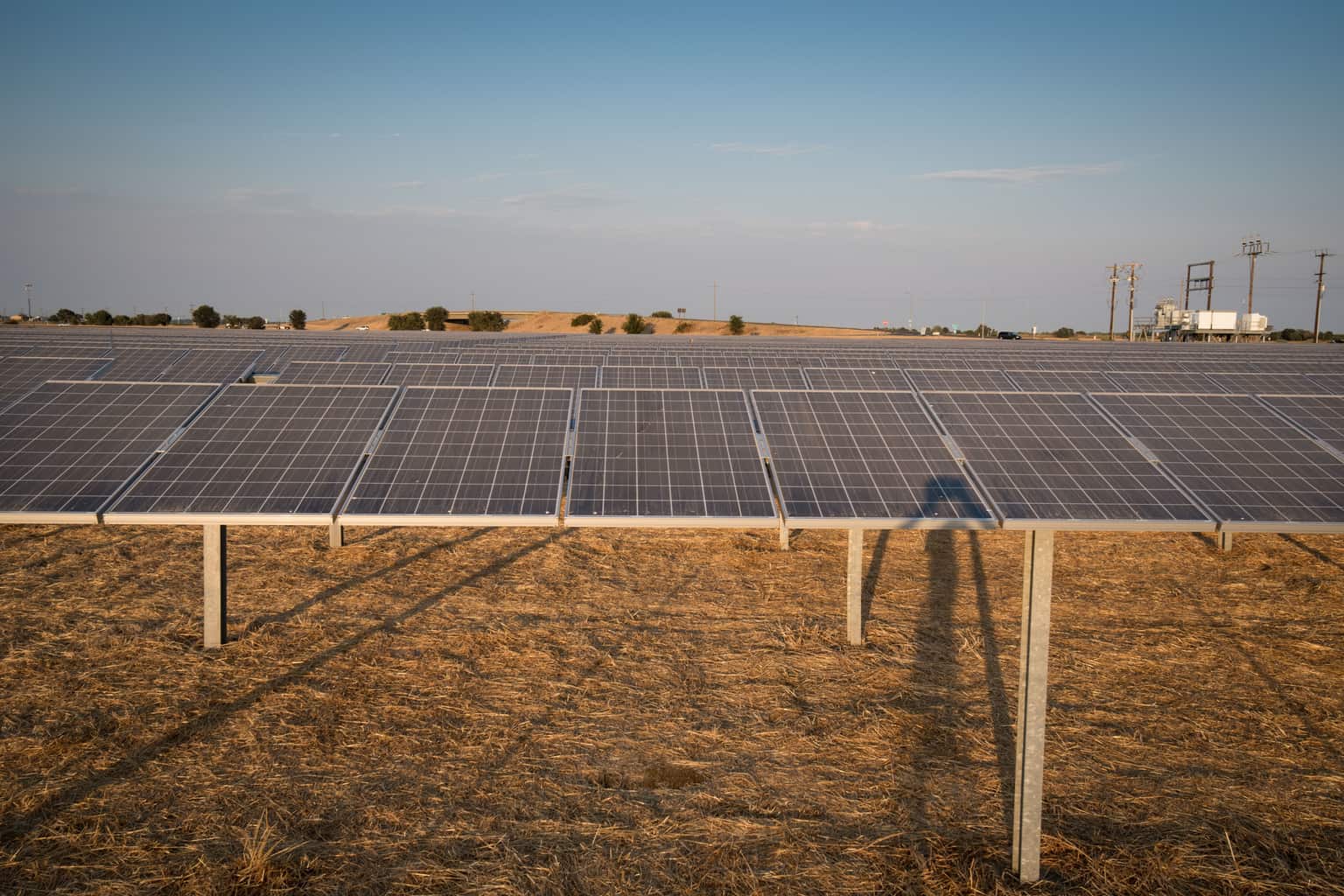
On a solar farm, the sunlight that powers the panels can also fool a camera. Glare bouncing off glossy module surfaces can look, to software, like the first flicker of a fire, and a fire that starts small is the hardest kind to catch. A research team at China Huaneng Group, the Chinese state-owned utility, has built a deep-learning system aimed at that gap. Called PVFire-YOLO, it is designed to detect small flames and smoke plumes in real time while setting off fewer false alarms from reflections.
Fire has been a blind spot in solar research. The team says deep-learning work on photovoltaic (PV, solar) inspection has focused on three problems: cracks seen in electroluminescence images, hot spots seen in infrared, and surface defects or soiling visible to the eye. Fire detection, it says, has received almost no dedicated treatment. A separate paper on joint smoke and flame detection in photovoltaic systems shows that some work exists. The Chinese team's claim is narrower: its PV-Fire dataset is the first annotated flame-and-smoke corpus built for PV environments. It holds 5,824 images with 9,107 annotated flame and smoke objects, mixing drone and surveillance footage from operating utility-scale plants, controlled burns staged among real modules, and some synthetic images. Of those images, 4,070 trained the model, 870 validated it and 884 tested it, with scenes kept separate across the three sets.
The model starts from YOLOv12, a real-time object-detection network that scans an image and draws boxes around what it recognises. Three additions target its weak spots. A patch-aware attention block amplifies faint flame and smoke signals. A gather-and-distribute mechanism combines information across four feature levels, that is, four scales of detail in the image. An adaptive fusion head adds a high-resolution branch that picks out tiny targets.
In the team's tests, PVFire-YOLO reached a 87.4% mean average precision on PV-Fire, a standard score that combines how many objects a detector finds with how precisely it outlines them. Compared with 14 existing detectors, including Faster R-CNN and several YOLO variants, the figure held at 85.0% on footage from operating plants alone and 84.4% on D-Fire, a public dataset where the model was compared with 13 alternatives. On small targets, it improved by 5.2 percentage points over the YOLOv12 baseline, and the rate of false positives caused by reflections fell to 3.1%. The figures are averages over three training runs.
Speed is the other half of the argument. The model ran at 79 frames per second on an RTX 3090, a desktop graphics card, and at 21 frames per second on a Jetson Orin Nano, a compact AI computer. The researchers conclude that this meets the latency budget for real-time edge deployment, meaning detection run on small computers placed at the plant itself, across distributed monitoring.
For operators of large solar farms, the gain would be earlier warning on the parts of a site where cameras struggle most, such as glare-heavy areas. The study describes no plant using the system and gives no date for one. The next steps the researchers announce are to extend the dataset to plants in more diverse climates, add temporal filtering to suppress isolated false alarms, and fuse visible-light detection with infrared thermal imaging so the system holds up under poor lighting.
Sources — read the originals(Paris time)
Pages consulted while writing
Read next
Comments
Loading the thread…
Sign in to leave a comment. Sign in