Bushfire smoke cut solar output by up to 70%, UNSW study shows
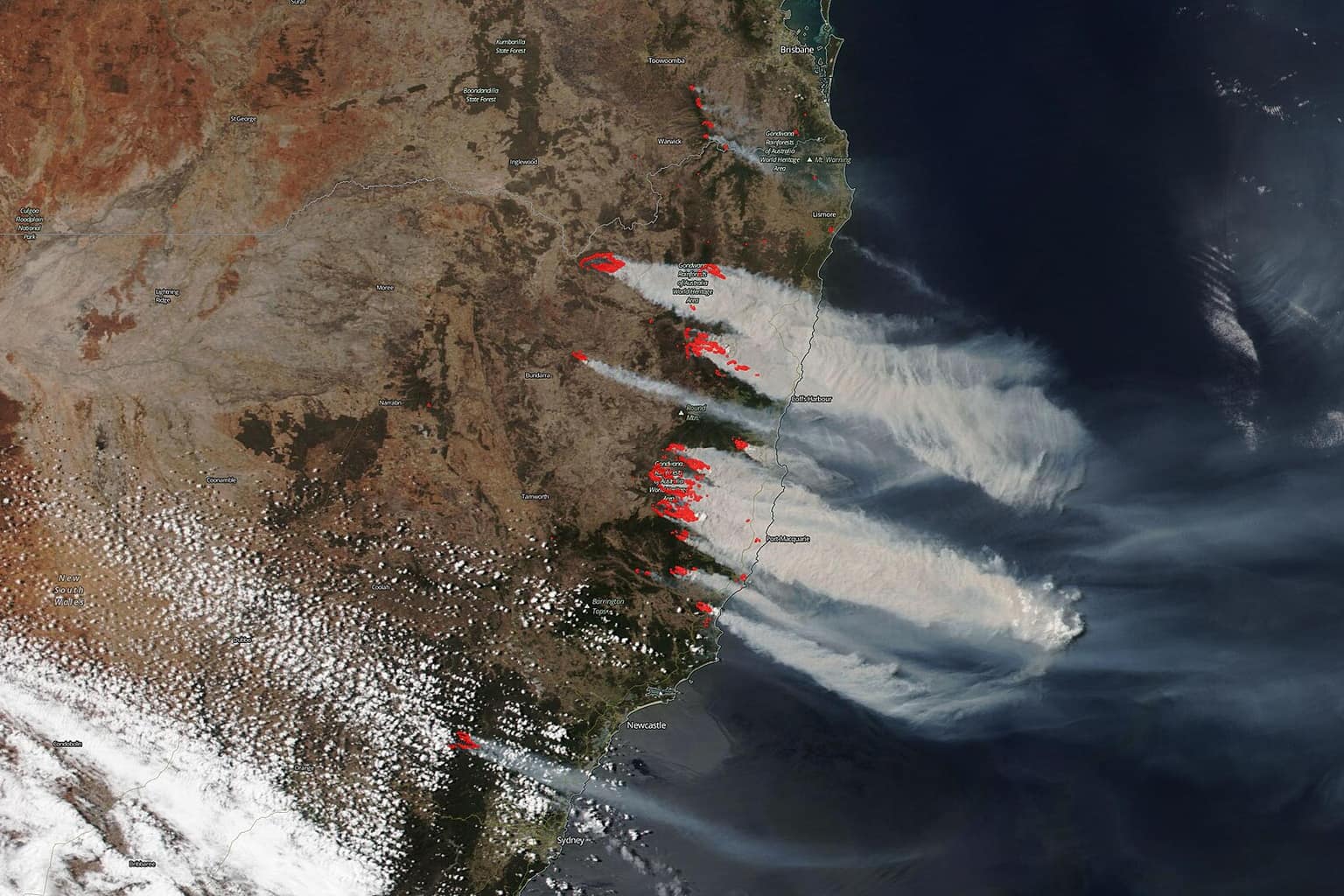
Smoke can cut a solar farm's output by up to 70%, even when the flames are far away. During Australia's Black Summer bushfires of 2019–2020, generation fell by up to 70% near the fires and by 30% to 40% in areas more than 150 km away. Bushfire risk for solar plants has mostly been measured as direct fire damage. The UNSW team shows that the effect of a fire travels much further.
The mechanism is simple. Smoke contains fine particles, known as PM2.5, that scatter and absorb sunlight before it reaches the panels. Particles also settle on the glass, which lowers efficiency and can create hotspots. Fires also raise temperatures, and the researchers found that heat accelerates the degradation of modules and shortens their service life. The Black Saturday fires of 2009, which claimed 173 lives in Victoria and destroyed more than 2,000 homes, showed the same pattern on a smaller scale: smoke reduced generation by up to 18% near the hotspots and by 5% to 10% in areas more than 100 km away.
The team, led by corresponding author Bram Hoex, used 20 years of atmospheric and satellite data, from 2003 to 2024. The researchers selected clear-sky days to isolate the effect of smoke, then simulated generation with and without smoke. During Black Summer, smoke-related periods of low generation averaged up to three hours a day in affected areas, and reached eight hours a day in the worst-hit locations. Module temperatures rose by 10 to 20 degrees Celsius above climatological levels, adding roughly 0.15% of thermal degradation. These figures are modelled estimates, and they have not yet been checked against measurements in the field.
For operators, the study provides a method. The team recommends better smoke forecasting, vegetation management, regular module cleaning, thermal monitoring and predictive maintenance, and it says the approach can help assess bushfire exposure when a solar farm's site is chosen. Forecasters can also use it to refine yield estimates, and grid operators can plan for sudden drops in supply. A 2023 UNSW study estimated that smoke from Black Summer caused financial losses of up to AUD 29 million ($20.4 million) in PV generation. The same work found that rooftop solar systems could serve as an early warning of bushfires, by detecting changes in their own output caused by smoke.
The researchers say the findings could be relevant to other bushfire-prone regions, including California, southern Europe and South America. For now, the framework is a tool for planning and monitoring. Hoex said it "provides a framework for evaluating bushfire exposure during solar farm site selection and strengthening operational resilience in fire-prone regions."
Sources — read the originals(Paris time)
Read next
Comments
Loading the thread…
Sign in to leave a comment. Sign in