Rooftop solar angles recovered from power data, in a study
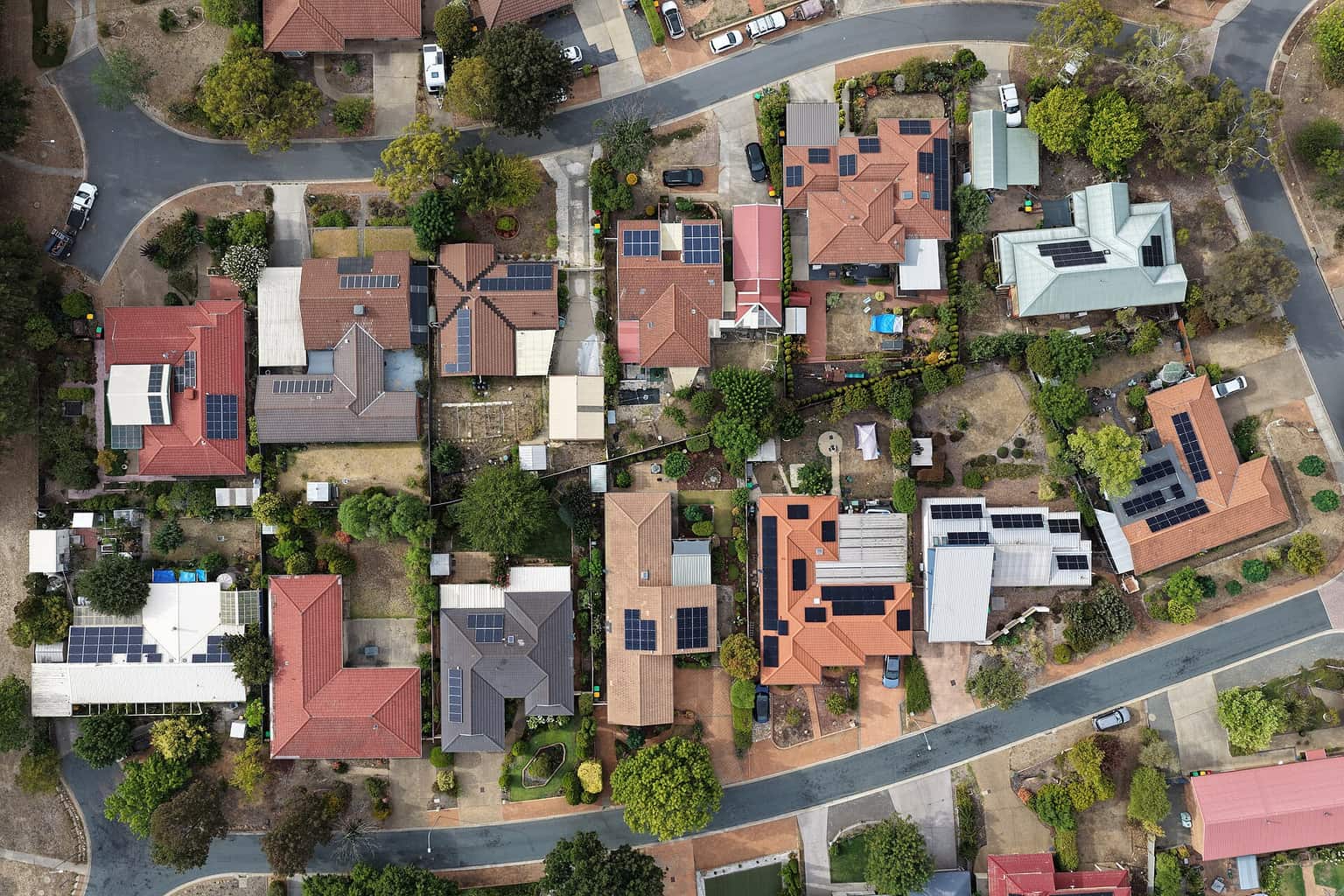
Solar panels have a tilt and a direction, and the records that describe them are often missing or wrong. An international team has found a way to recover both from the electricity the panels already produce, without anyone climbing onto a roof. On 17 commercial rooftop systems in Australia whose orientations had been checked independently, the method recovered tilt to within about 2° and azimuth to within about 4° in median error, on unshaded systems.
The problem is practical. Accurate orientation data is needed to estimate how much electricity a system will generate and to detect faults, yet installation paperwork is unreliable and site inspections do not scale to large portfolios. The team's approach starts from data operators already collect: DC power measurements recorded every five minutes for each maximum power point tracker, the unit that follows the output of a group of panels. For each system, the researchers used a clear-sky model, which estimates the sunlight reaching a panel on a cloudless day at a given tilt and azimuth, together with ERA5 weather data.
The fitting works in steps. The researchers kept only periods of strong direct sunlight with readings both in the morning and in the afternoon. An optimisation algorithm then searched for the orientation whose predicted output best matched the measured output, while adjusting the system's effective capacity to absorb power losses. The team compared two fitting measures: R², which shows how closely the model follows the observed data, and Huber loss, which limits the influence of outliers such as the dips caused by shading.
Clear-sky modelling beat ERA5 consistently. For unshaded systems, ERA5 gave median tilt errors of 10° to 12° and azimuth errors of 48° to 62°. Shading was the main source of error: it raised clear-sky azimuth errors from 4° to 35° with Huber loss, and from 15° to 27° with R². Below a tilt of 5°, azimuth is hard to pin down, but the team notes that panel direction then has little effect on incident sunlight, which limits the impact on estimated generation.
For operators managing many rooftops, the gain is concrete: a way to fill in missing or wrong records, estimate output and spot faults without a visit. Because the method works on DC data, it can also resolve each array on its own at the MPPT level. The results come from a single published study covering 17 systems, and the team is clear about where the work stands. Its next step is to reduce the effect of partial shading, "the main limitation of the method", and to make it hold up against inverter clipping and tripping, so that it can be applied reliably at large scale.
Sources — read the originals(Paris time)
Read next
Comments
Loading the thread…
Sign in to leave a comment. Sign in