Hail-safe solar tilt depends on the site, a simulation shows
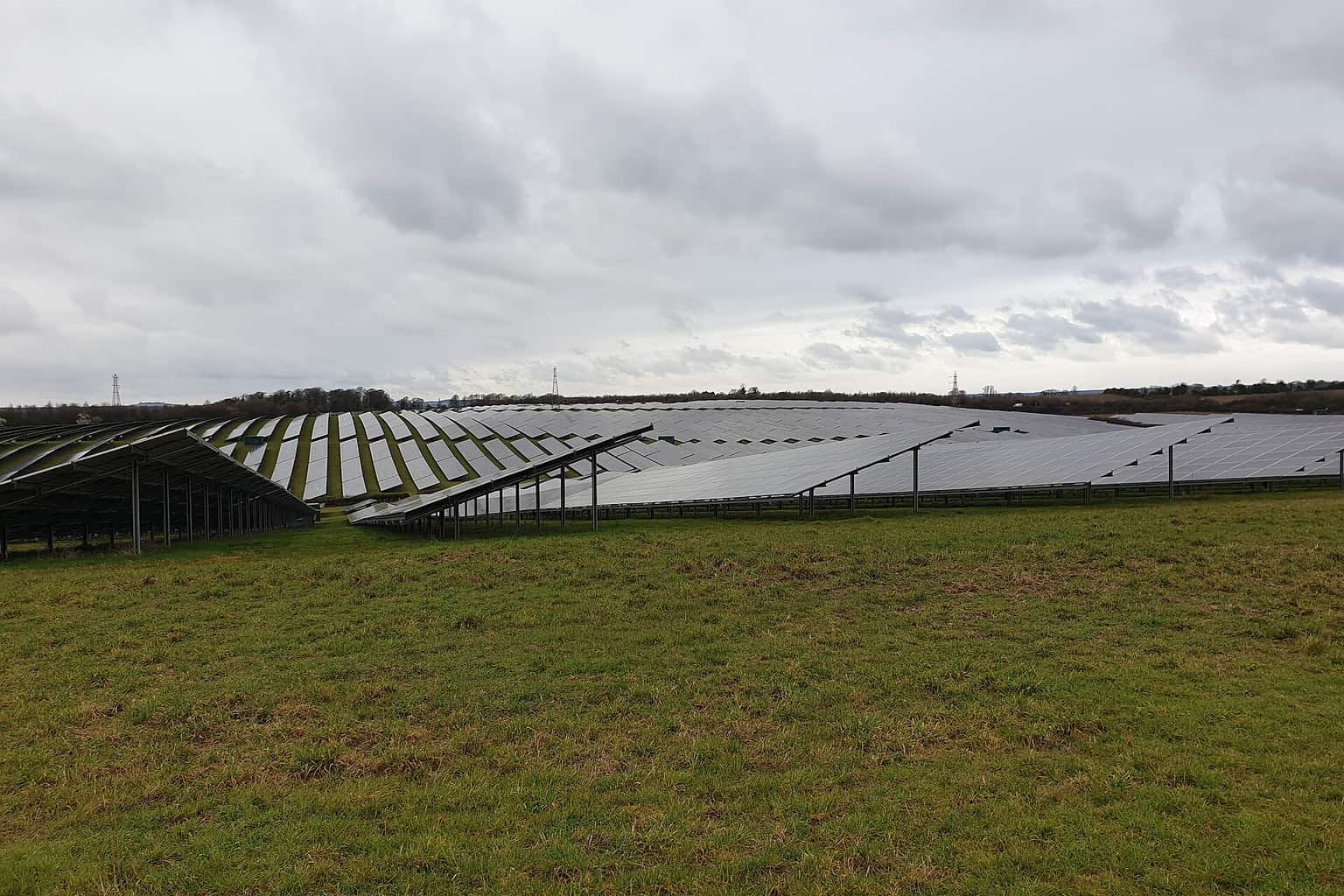
A hailstone falling on a solar field does not hit every panel the same way. Its speed, its angle and the energy it carries at impact all depend on the wind, and on how the panel is tilted. Researchers in Iran have now built a computational model that captures those effects together, and tested it on a real site.
The team, from Shahrood University of Technology, with two companies, Radsun Energy Pars and Asoo Vision Pardaz, used a 3 MW solar project in Takestan, Iran, as its case study. Local weather records from 2004 to 2024 set the conditions. The model follows each simulated hailstone, with diameters from 1 cm to 10 cm, as it falls from an initial height of 2,000 m under winds of 1 to 50 metres per second. The trajectories are computed by solving the equations of motion with the fourth-order Runge–Kutta method, a standard numerical technique, and the researchers then project each impact onto the panel's surface to find the energy that actually pushes into it.
The central result concerns wind direction. Comparing panels tilted at 25° and 30° under four wind scenarios, the team found that the same wind speed can produce very different impacts depending on where the wind comes from. "Wind speed alone cannot adequately describe the impact behavior," lead author Armin Hasanpour says. The model also shows that the way air resistance is handled matters: for hailstones of 8 cm or more, a constant drag coefficient can deviate by approximately 14% from a calculation using a variable one.
To estimate damage, the researchers used a conceptual model with an assumed critical energy of 2 J to mark impacts that could crack or dent a panel. That threshold is an assumption, not a measured value, and the check against a theoretical impact-energy calculation is the only validation the study reports. The limits are clear: this is a simulation, not a field test on hail-struck panels.
What changes is the way tilt is chosen. Hasanpour argues that orientation "should not be selected based on energy production alone" and that local hail risk belongs in the decision. He suggests the tools could eventually feed photovoltaic hail-risk databases used by insurance companies, and help policymakers assess climate risks. Hasanpour gave no timeline for that. The next step is for the model to be used with real hail records from other sites.
Sources — read the originals(Paris time)
Read next
Comments
Loading the thread…
Sign in to leave a comment. Sign in