East-west solar degrades less than trackers, UNSW simulations show
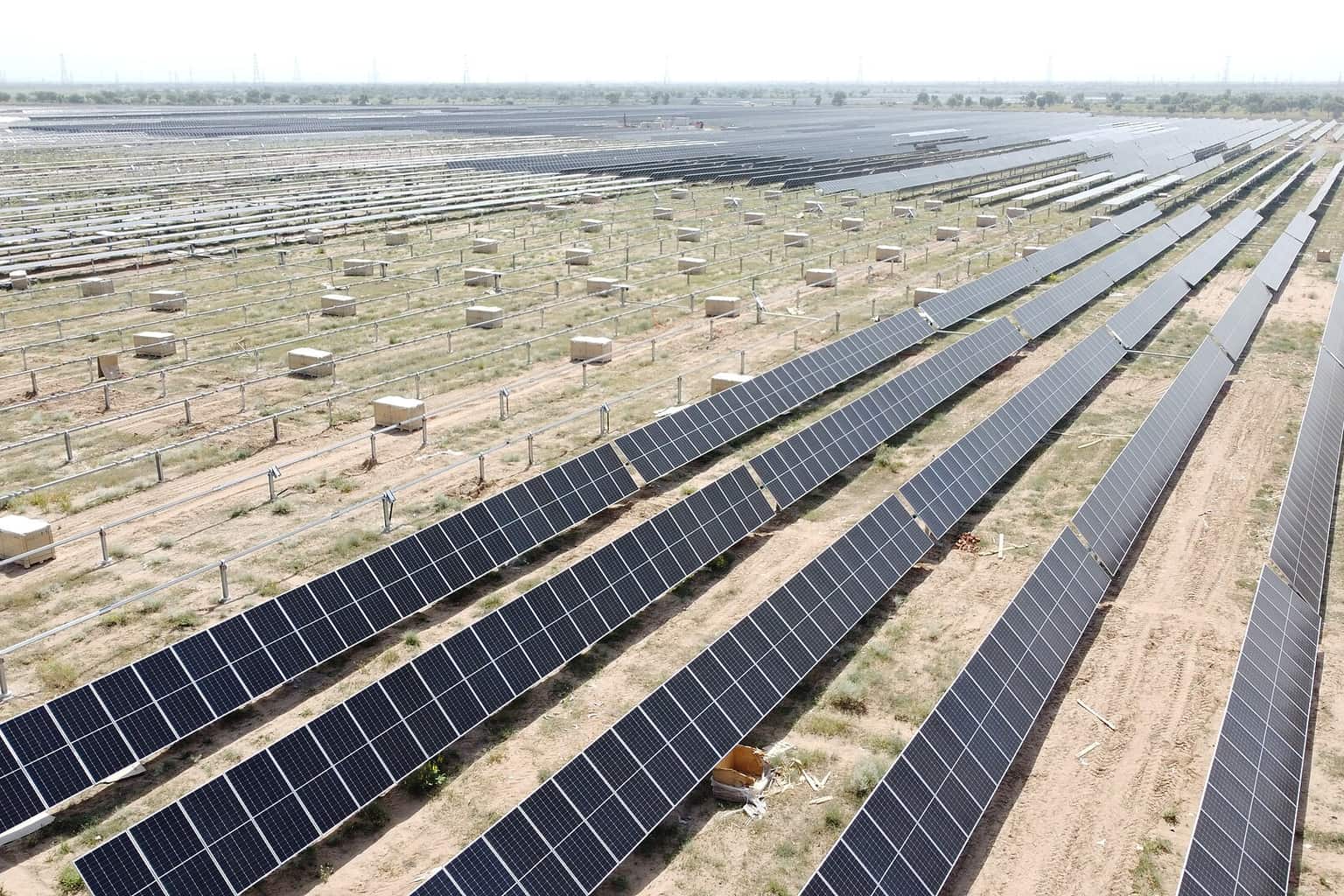
A Maverick unit carries up to 90 solar panels on frames that unfold like a concertina, tilted at 10 degrees and set down with minimal digging. The design was made for speed and for land that nothing else suits: sites with little usable ground, rough terrain, or old mine waste dumps. In 2024, 342 of these units formed a 16.9 MW solar installation at the Jundee gold mine in Western Australia.
The question that interested a team at the University of New South Wales (UNSW) was less about installation than about lifespan. Solar panels lose output as they age, and heat and ultraviolet light accelerate that loss. A single-axis tracker turns its panels to follow the sun, so it collects more light and, as a consequence, runs hotter. A fixed east-west layout collects less light and runs cooler. The researchers wanted to know whether the cooler running wins over a plant's life, even though it produces less electricity each day.
To answer that, the team built a transient thermal model that takes into account wind direction, mounting configuration, thermal inertia and heat radiated to the sky, which simpler models often leave out. They calibrated it on monitoring data collected between September 2022 and June 2023 at a 5B Maverick test site near Bungendore, New South Wales, then simulated Maverick and tracker layouts at Bannerton in Victoria and Clare in Queensland. The simulations also mapped expected degradation across Australia. The result: Maverick systems were less exposed to both thermal degradation and photodegradation, and the gap was widest in southern and southwestern regions. Both mechanisms peaked in summer. Trackers, however, still generate more energy per module, because they receive more sunlight.
For operators of remote plants, the consequence is concrete. The researchers conclude that lower degradation could make fixed east-west systems particularly attractive where maintenance and replacement are expensive, such as remote installations. They also note that inverter clipping and power curtailment can raise module temperatures and so could speed up degradation. The study does not give a timeline for when such findings would enter standard planning tools, and the 40% figure describes certain degradation mechanisms in simulation, not total output over a plant's life. Its value is that it puts a number on a trade-off that was previously handled with a fixed annual degradation assumption, which Hoex's team argues is too coarse for long-term forecasts.
Sources — read the originals(Paris time)
Read next
Comments
Loading the thread…
Sign in to leave a comment. Sign in