Qatar outdoor tests: vertical PV tube beats flat panels on dust
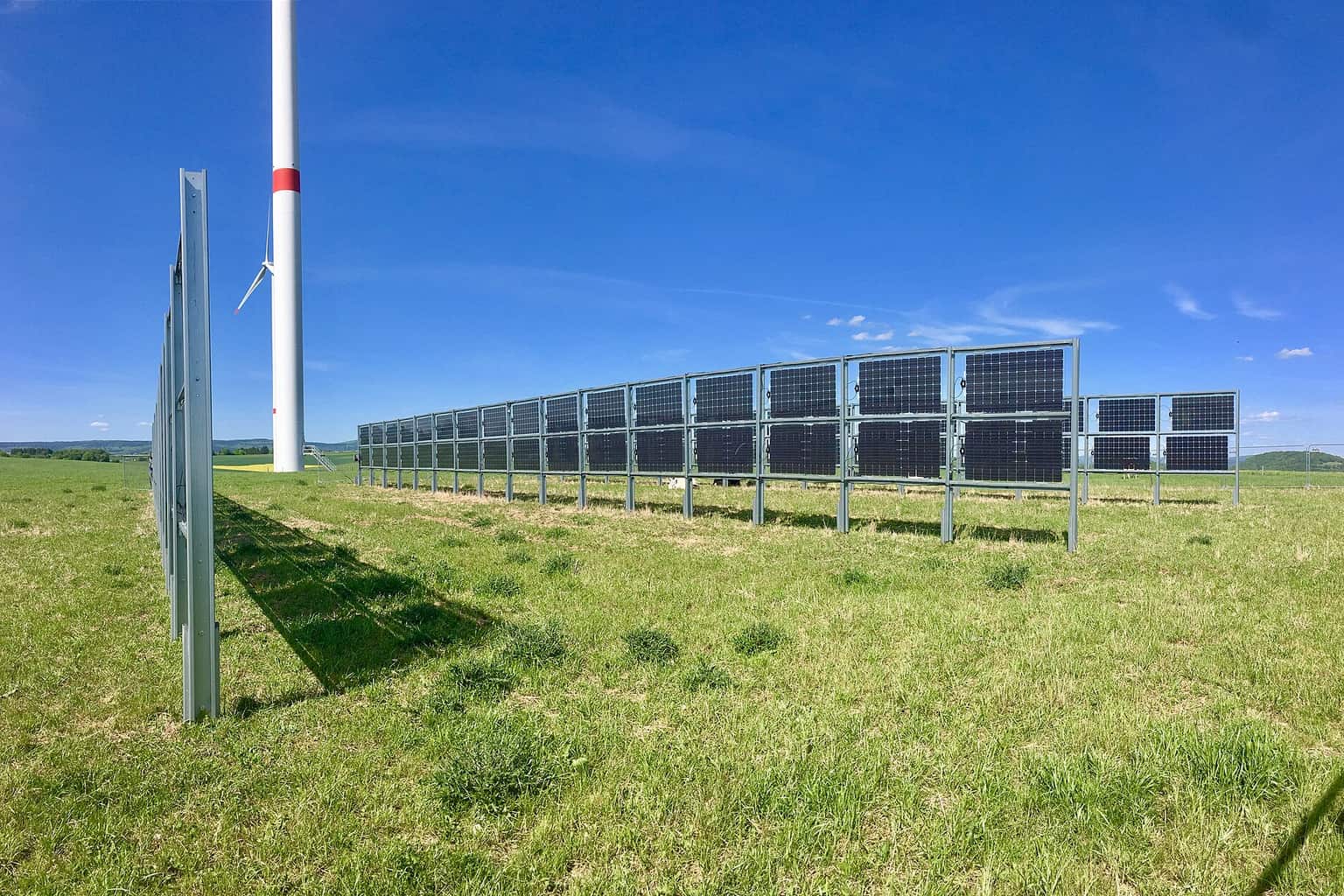
On a pole in a hot, dusty place, a solar panel has to do two jobs at once: catch enough sunlight to keep a streetlight or a camera running, and stay clean enough to keep doing it. In Qatar, the second job is where many designs struggle. Over one year, a team from Hamad Bin Khalifa University measured five pole-mounted configurations side by side at the Qatar Environment and Energy Research Institute's outdoor test facility in Doha.
Pole-mounted photovoltaic, or PV, systems use solar modules attached to or built into poles to power off-grid equipment. Until now, they have usually been chosen on a single number: cost per watt. Corresponding author Khaled Aʼamar argues that engineers also need to weigh maintenance access, shading and wind loads. The team tested U-IBC and bifacial modules, which catch light on both sides, mounted at a 22-degree tilt or vertically, along with an octagonal vertical PV tube. The researchers logged electrical output and environmental conditions every minute, and kept 311 days of data after screening.
The dust result is the clearest. When modules are never cleaned, tilted panels need 16.04% more PV capacity to compensate, against 0.70% for the vertical tube, a 23-fold difference. Shading weighs even more in Doha's conditions. The team's model predicts that all the planar configurations stop producing above 67% shading, while the tube keeps operating. These are model predictions and measurements from one site over one year, not field results from a deployed fleet.
No design wins everywhere. Tilted bifacial modules need the least installed capacity when a site has no constraints. Once maintenance access, shading, space or structural limits come into play, the tube has the lowest combined penalty, even though its baseline capacity requirement is about 2.7 times higher. To turn these trade-offs into a choice, the team built indices for each constraint and a six-criterion framework covering installed capacity, footprint, storage, maintenance, shading resilience and structural compactness. Sensitivity analyses tested criterion weighting, temperature and costs. The authors describe it as the first such framework based on a full year of experimental measurements.
For engineers specifying poles for remote sites, the practical shift is to ask how a panel will perform after months without a visit, not only how much it costs per watt. The next step, according to Aʼamar, is to move "from the test bench to the street." Sunray Solutions, where he is chairman, is looking for partners for pilot deployments of pole-integrated systems. No timeline or price has been announced.
Sources — read the originals(Paris time)
Read next
Comments
Loading the thread…
Sign in to leave a comment. Sign in