Wildfire smoke turns nitrate into air pollution tenfold faster
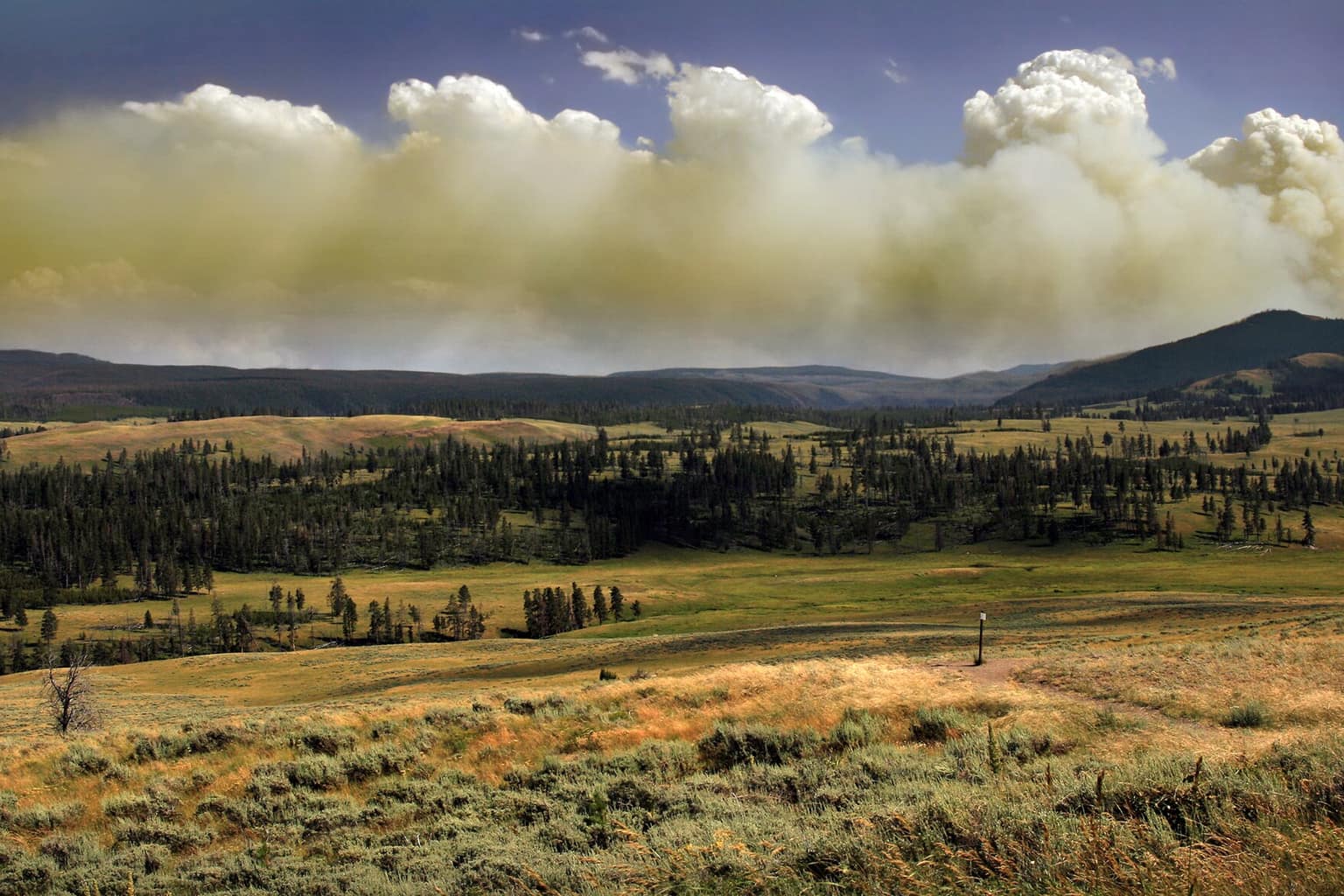
Markus Ammann's team at the Paul Scherrer Institute (PSI) in Switzerland cut the air supply to a wood-burning stove, so it smoked more and released more of the brown-tinted particles that wildfires produce. The goal was to explain why nitrogen oxides stay high even far from the flames. Reporting in Science Advances on November 11, the team, with Fengxia Bao as first author, shows in the lab that these particles speed up a reaction that returns nitrogen oxides to the air, about tenfold faster than the known process under hard ultraviolet light.
Nitrogen oxides form whenever something burns, from wildfires and lightning to fossil fuels, which have pushed urban levels many times above pre-industrial ones. In the lower atmosphere they help form ozone, a greenhouse gas and irritant, and they oxidize into nitric acid, which dissolves as nitrate in tiny particles. Rain then carries the nitrate to the soil. That steady removal should leave far less nitrogen oxide in the air than is measured. Sunlight can turn nitrate back into nitrogen oxide, but Ammann said this route is 'far too slow' to explain the amounts observed. One hypothesis was that something released during wildfires drives a second, faster route.
Wildfire smoke differs from other sources because incomplete burning of wood also produces organic particles, some of which absorb visible light. Scientists call these compounds brown carbon. To test them, the researchers collected smoke on filters, dissolved it in water and placed it in a temperature-stabilized glass tube. They then exposed nitrate to UV lamps that mimic sunlight, with and without the brown carbon. Lamps with a hard, high-energy UV component always produced nitrogen oxide, but significantly more when brown carbon was present. With lamps lacking hard UV, nitrogen oxide appeared only when brown carbon was there. The team concluded the route is indirect: brown carbon absorbs soft UV light, enters an excited state and donates an electron to nitrate, converting it into nitrogen oxide.
Ammann called it a 'clear, powerful result', one that shows experimentally what had only been vaguely suspected. It matters because wildfire plumes can rise a few miles into the air and cross continents and oceans; pollutants from Canadian fires have been detected at the Jungfraujoch in the Swiss Alps. Nitrogen oxides contribute to respiratory illness and, through the greenhouse effect, to climate change. A better account of where they come from could improve predictions of how wildfires affect air quality and climate. The result explains a larger share of atmospheric nitrogen oxides, but not all of it, so other formation pathways still need research.
Next, Ammann wants to make the experiments more realistic by using all of the burned material in PSI's simulation chamber, not only the filtered, dissolved components. The work was funded by the ETH Board's ReCLEAN project.
Sources — read the originals(Paris time)
Pages consulted while writing
Read next
Comments
Loading the thread…
Sign in to leave a comment. Sign in