Lab catalyst converts nitrate to ammonia at 98.95% efficiency
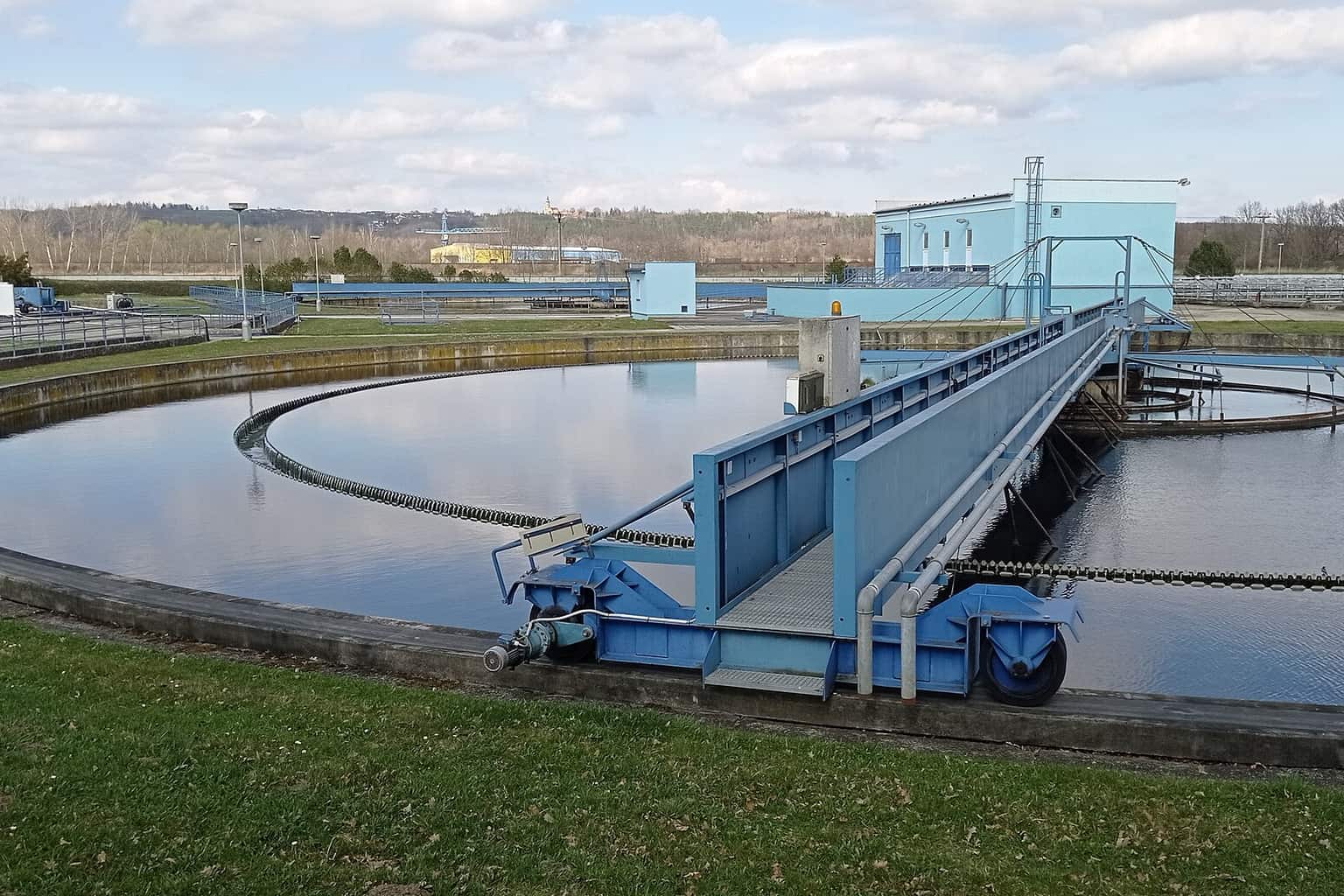
Farm runoff and industrial sewage carry nitrate into rivers and water systems. A team has now built a material that pulls that nitrate out of water and turns it into ammonia, using electricity. In laboratory tests, the catalyst reached a peak Faradaic efficiency of 98.95%: almost all the electrical charge went into ammonia rather than into unwanted by-products.
Ammonia is the base of most nitrogen fertilizers, and the Haber-Bosch process that makes it has supported world food supply for more than a century. That process relies on high temperature and high pressure. Today it consumes about 1% of global energy and contributes more than 1% of annual human-caused CO₂ emissions. Electrochemistry offers a cleaner route: it starts from nitrate, which reacts more readily than nitrogen gas and dissolves easily in water, rather than from the strongly bonded nitrogen molecule.
The electric route has a bottleneck. Turning one nitrate into ammonia requires nine protons, and in standard catalysts protons drift slowly and randomly through water, so too few reach the active sites. The team built a covalent organic framework from a copper-containing core molecule and an aldehyde building block carrying hydroxyl groups. Those groups help the copper capture nitrate and rearrange the surrounding water into continuous hydrogen-bonded chains, which act as fast lanes that deliver protons straight to the copper. A competing reaction, hydrogen evolution, normally wastes electricity on hydrogen gas or leaves toxic nitrite behind; the new framework keeps the three ingredients together at the right moment and avoids both.
In a practical membrane electrode flow cell, the catalyst produced ammonia at 65.84 mg h⁻¹ with a Faradaic efficiency of 93.20%. The zinc-nitrate battery reached an ammonia production rate of 263.2 μg/cm²/h at a current density of 6 mA/cm² and a maximum power density of 1.4 mW/cm², while cleaning nitrate from the solution. The team also trapped the ammonia gas in acid and evaporated the liquid, yielding white ammonium chloride powder suitable for commercial fertilizer.
For a utility treating nitrate-laden water, or a fertilizer maker looking for a lower-energy source of ammonia, this is a material to watch, not yet a product to buy. The tests used prepared solutions, and the authors say real wastewater, with its added complexity, must be tested before the efficiency can be trusted outside the laboratory. The study gives no timeline and no cost. The next step is that trial on real wastewater.
Sources — read the originals(Paris time)
Read next
Comments
Loading the thread…
Sign in to leave a comment. Sign in