Wildfire smoke: blocking one cell signal shields airways
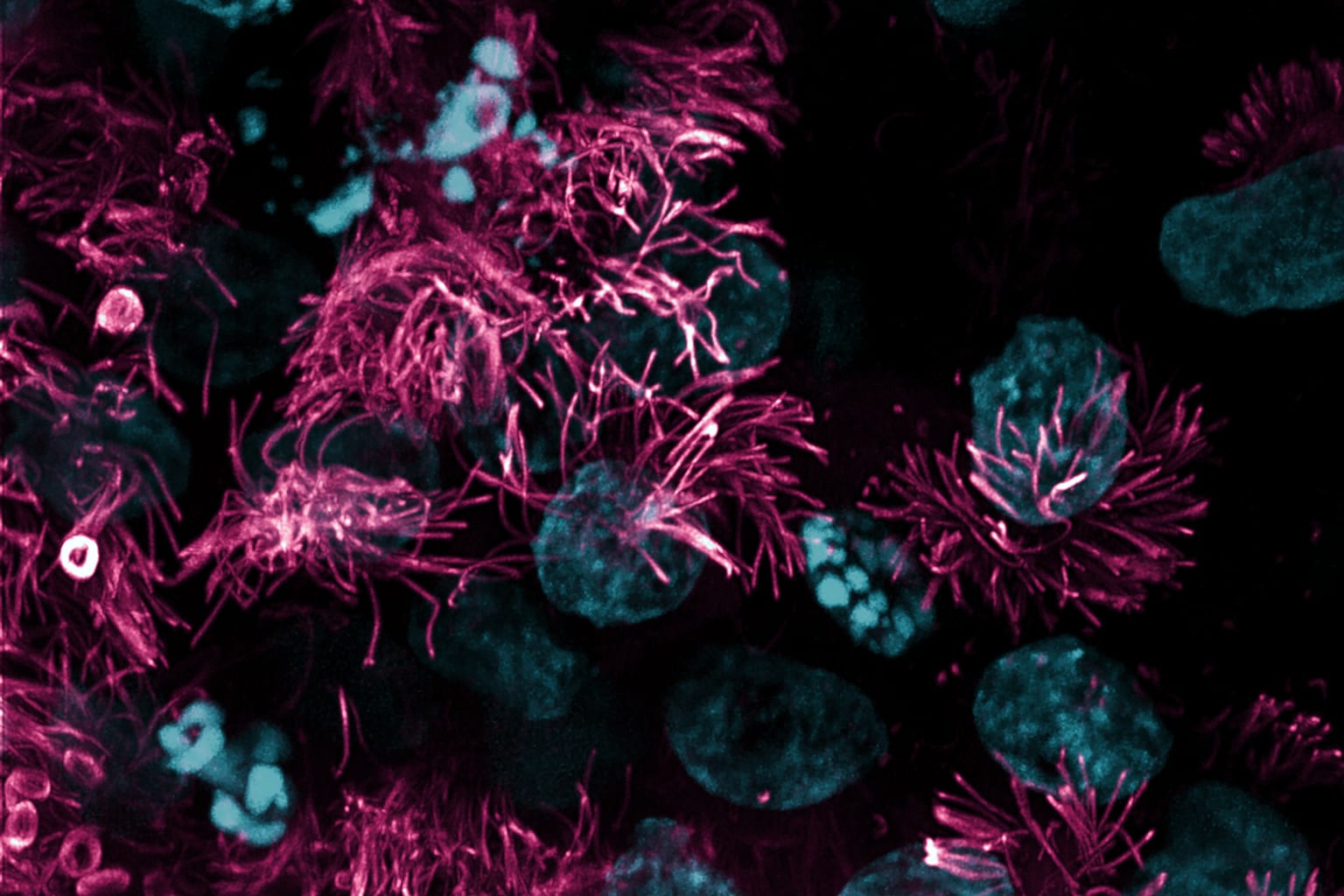
When the Palisades and Eaton fires tore through Los Angeles in January 2025, smoke blanketed the region and air quality plunged into the hazardous range. Now a team at the University of California, Los Angeles (UCLA) reports a way to shield the airway from that smoke, at least in the lab: blocking a single cell signal kept human airway tissue grown in the lab working through repeated exposure.
Fine smoke particles have been linked to lung disease, stroke, heart disease and cancer, but how they harm the cells lining the airways had been hard to pin down. The airway has two lines of defense. Sticky mucus traps viruses, dust and pollution, and tiny hairlike structures called cilia sweep that mucus up and out. Beneath them, the cells sit packed together like bricks held by cement, forming a wall that keeps whatever the mucus misses from reaching the rest of the body. “If the particles are small enough, and if they can break down the airway barrier, they can get into your brain and your heart,” said Dr. Brigitte Gomperts, a UCLA professor of pediatrics and pulmonary medicine. “I call it an insidious threat.”
To see what smoke did to real airways, the team sampled nasal and sinus tissue from 14 Los Angeles residents who had sinus surgery before the fires, during them, or in the two weeks of smoldering that followed. Before the fires, the lining was intact. During them, it was patchy and sloughing off, and the seals between its cells had broken apart. Two weeks later it had partly recovered, but it stayed thinner than before. Every patient had chronic sinus disease, and no one's own smoke exposure was measured, so these samples alone cannot prove that smoke caused the damage.
The team turned to airway tissue grown in the lab from stem cells taken from donated lungs without disease. Those cells mature into the airway's many cell types, and the resulting mini airways had beating cilia and cement between cells, much like the real thing. To expose them, the researchers turned pine bark from a tree on the UCLA campus into smoke. UCLA scientists found that its particle sizes and chemistry were consistent with those of wood smoke measured in the environment. The damage built up with each exposure, even though the tissue breathed clean air in between. In unexposed tissue, about 71% of the surface showed cilia moving in step. After five days of smoke, that fell to about 25%, although the cells were not dying off.
Recovery was only partial. Five days after the last exposure, the movement had climbed back to about 46%, and the barrier was still weakened. “It’s concerning in terms of general public health, because that’s quite some time for the particles to be sitting in our lungs,” said first author Dr. Caroline Cherry, a postdoctoral scholar in Gomperts's lab.
To find what was doing the damage, the team looked at phosphorylation, the way cells switch proteins on and off by attaching small chemical tags. Smoke scrambled those tags, mostly on proteins that build cilia and hold the cell's internal scaffolding. Different signaling pathways tag different proteins, and one stood out: MEK/ERK, which also helps regulate cell growth and is already the target of several cancer drugs. Follow-up tests confirmed that it was switched on in smoke-exposed tissue.
So the researchers blocked it, treating the tissue with a drug that shuts the pathway down before each smoke exposure. In that set of experiments, the treated tissue kept both its cilia moving and its barrier intact. The result comes from lab tissue, and the study does not describe any test in people.
For people living in fire country, the change is still distant. Fire seasons now stretch across the year, and the study shows that one cell signaling pathway, MEK/ERK, contributes to smoke damage and can be blocked in tissue. The study does not yet test whether that can be done safely in a person, and that is the question the work opens.
Sources — read the originals(Paris time)
Pages consulted while writing
Read next
Comments
Loading the thread…
Sign in to leave a comment. Sign in