Locust brains can tell hidden bacterial biofilms by smell
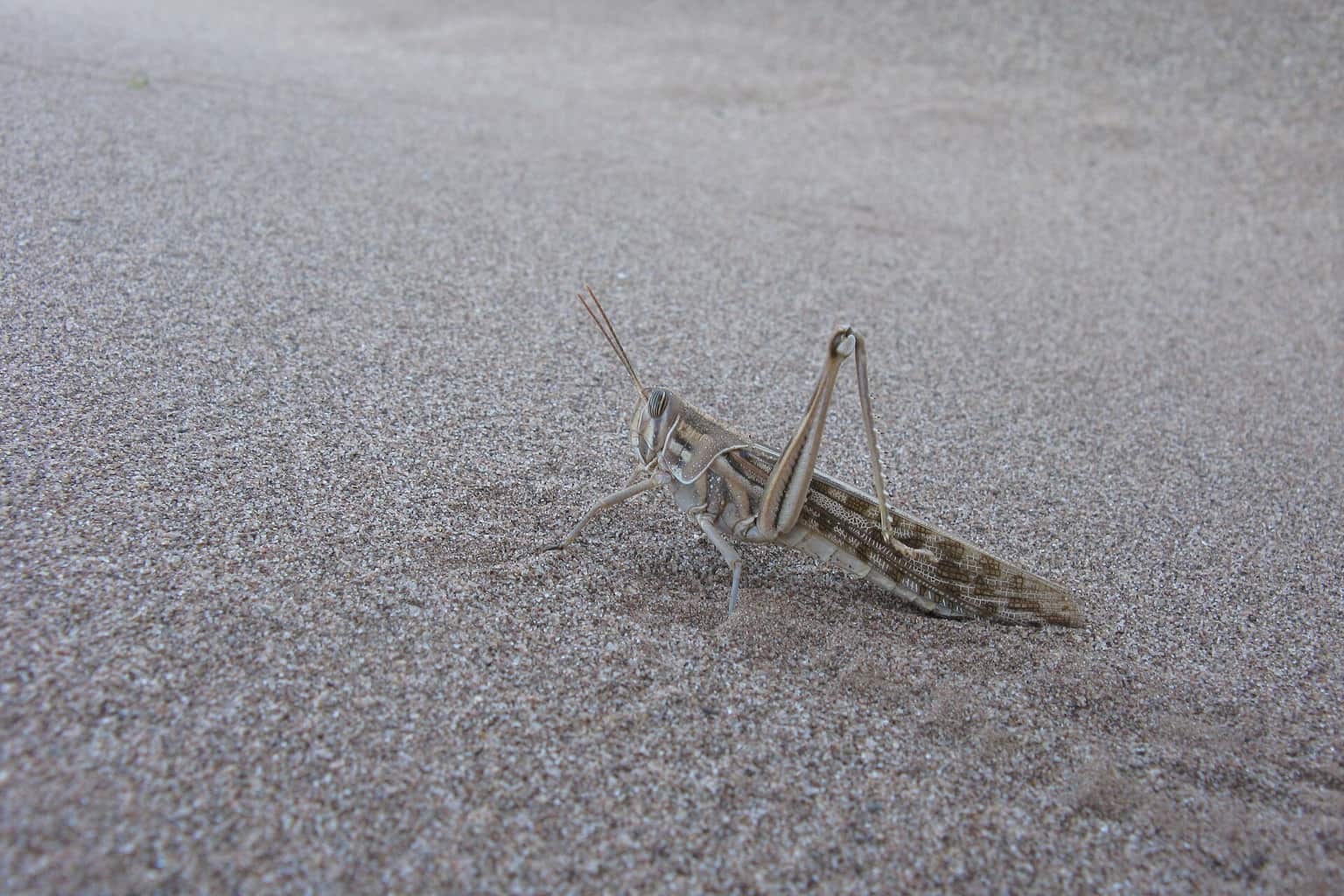
Locusts have no noses. They smell with their antennae, and their brains are remarkably good at sorting complicated odors. At Michigan State University, a team asked whether that skill could tell bacteria apart by how they live: clumped together on a surface, or drifting free. By recording the electrical activity in a locust's brain, the researchers could sort the two states with up to 96% accuracy.
Bacteria that form a biofilm, a community of cells wrapped in a protective layer, are much harder to treat. Research indexed on PubMed found that both acute and chronic lung infections are dominated by biofilms. In the lungs, that layer helps bacteria resist antibiotics. Yet doctors have no noninvasive way to tell whether these communities are present inside the lungs. Knowing would tell them something valuable about an infection, and today they cannot find out without other means.
The trick starts with a simple fact: bacteria release volatile compounds, gases that drift away as they grow and feed. The mixture changes with the bacterial species and with the conditions they grow in, so it can carry a fingerprint of their state. Rather than identifying each compound, the locust's antennal lobe, the brain region that receives smell signals, takes in the whole mixture and produces a characteristic pattern of activity. Electrodes placed there pick up the firing of individual nerve cells, and software turns that pattern into a readable signal.
Saha compares these odors to chemical fingerprints. What surprised him was how much information they carried. “Seeing such a high level of discrimination was therefore quite surprising,” he said. The response also came fast. An odor exposure of about half a second produced activity that could be used, and the most telling responses appeared within the first couple of seconds. The analysis needed less than five seconds of neural data, which the team says could eventually support near-real-time detection.
The team started from earlier work. Saha and his colleagues had previously shown that the same locust olfactory system could distinguish chemical signatures linked to human oral and lung cancer cells. The result comes from controlled cultures in the lab, not from patients. Breath is a much messier target: it contains thousands of volatile compounds shaped by diet, medication and environment. Whether the signal from biofilm bacteria can be separated from that background is still unknown, and the authors caution that real-world use faces challenges.
The next step the team names is breath. Hardy said they want to test samples from children with cystic fibrosis, who can develop persistent lung infections involving biofilms. If the approach works there, it could eventually give doctors information about a lung infection without sampling bacteria directly from the lungs. No timeline has been announced.
Sources — read the originals(Paris time)
Pages consulted while writing
Read next
Comments
Loading the thread…
Sign in to leave a comment. Sign in