An AI assistant weighs lunar landing sites
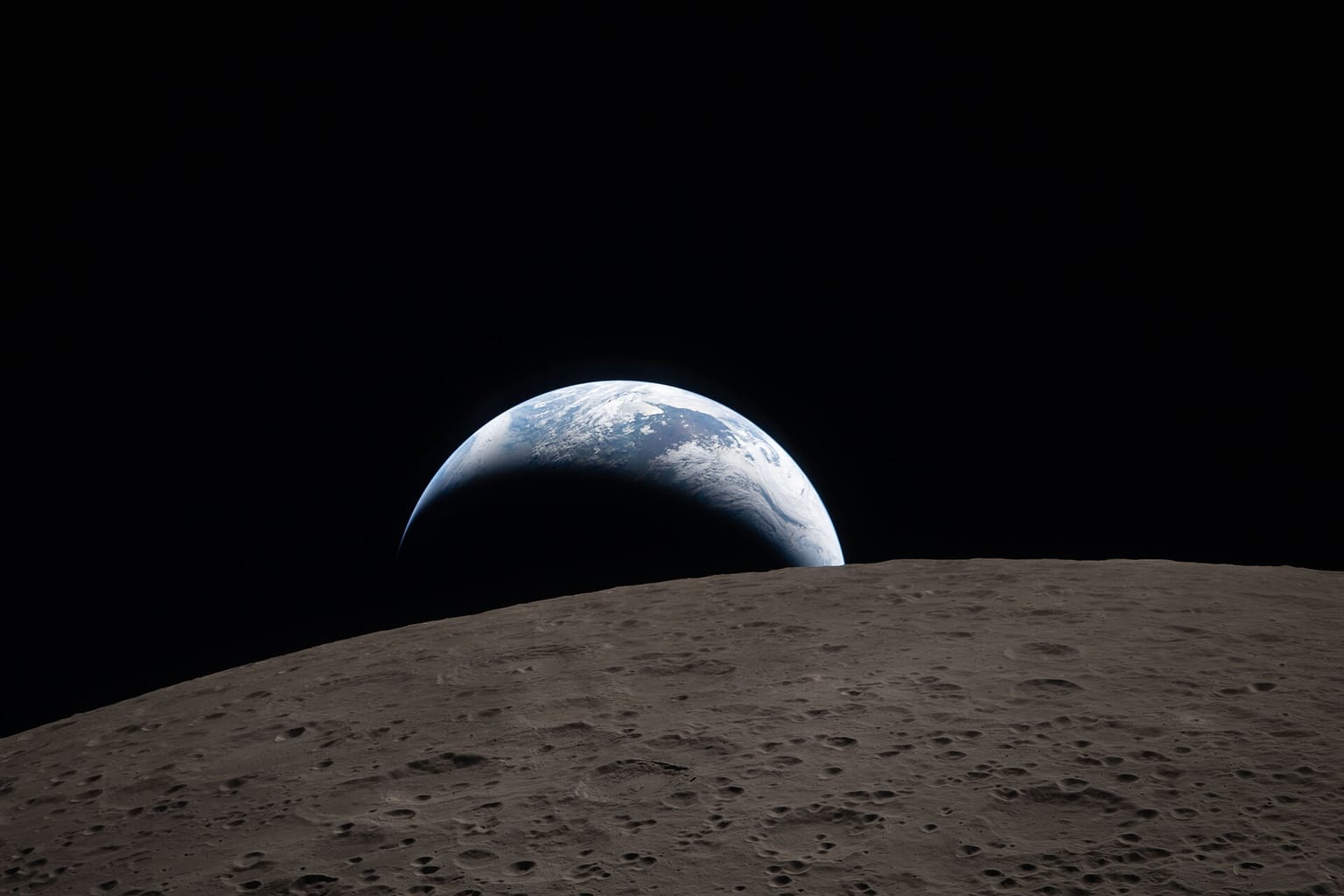
Landing on the Moon is harder today than it has ever been, and the scientific preparation behind each mission can take years. At The Ohio State University, a PhD candidate, Gokce Inal, has built a tool that tries to compress that work: an AI framework called LUMINA, which evaluates candidate landing sites, identifies dangers future crews might face and searches new regions for geologic features of scientific value.
LUMINA rests on an earlier model, LLaVA-LE, a lunar vision-language model that can describe lunar terrain and answer scientific questions about it. LUMINA extends that work with a framework that plans and carries out multistep analyses, assesses potential landing sites and explains the evidence behind each recommendation. Inal describes it as “an active scientific assistant” rather than a passive tool: it works through a problem alongside the experts, and the final judgments stay with mission planners.
The results are preliminary. Inal presented them this month at the 58th annual meeting of the Division for Planetary Sciences of the American Astronomical Society (DPS 58). They show a strong ability to make complex lunar observations and to generate scientifically meaningful commentary on candidate landing sites. The team says such capabilities could help planners locate areas abundant with water ice and other resources, but the model has not yet been tested on new high-quality lunar data.
For mission planners, the immediate gain is time and a second set of eyes. Alper Yilmaz, co-author and professor at Ohio State, notes that as datasets grow, finding the best places to land would otherwise be like looking for a needle in a haystack. The ambition reaches beyond the Moon: the team wants a model that generalizes to other surfaces, such as Mars or some asteroids. “There aren’t many GPT-like map models being developed for space exploration,” Yilmaz said. No timetable for that work has been announced.
The next step is clear. The team plans to test LUMINA on new high-quality lunar data and to evaluate further how well it supports mission planning. Inal points to NASA’s Artemis program as a source of opportunities, and says that as new lunar data becomes available, results can improve systems like hers and better support future mission planning.
Sources — read the originals(Paris time)
Read next
Comments
Loading the thread…
Sign in to leave a comment. Sign in