FLIP rover to run the first AI language model on the moon
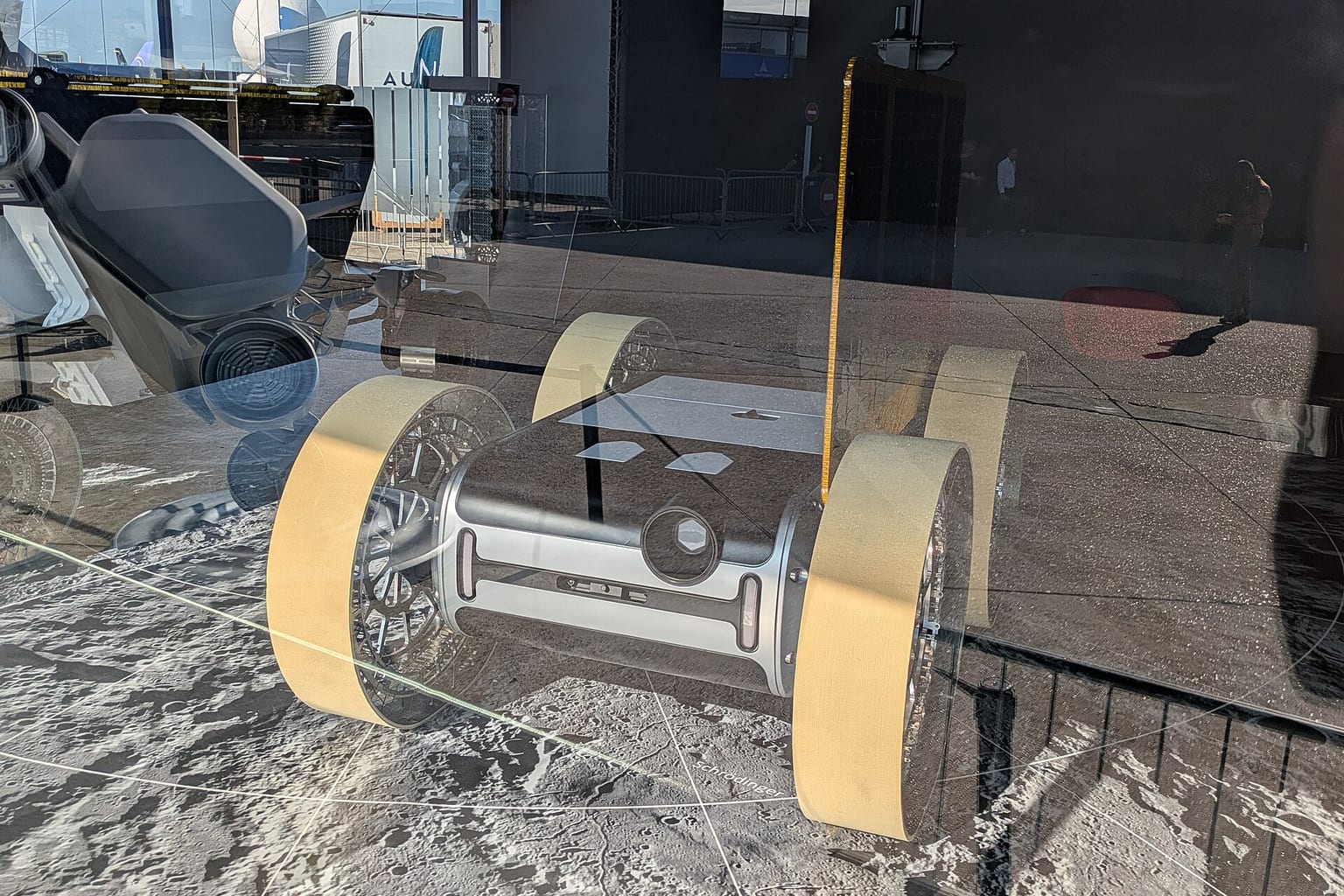
Ask a rover on the Moon to react to what it sees, and the answer arrives late. HPE's chief scientist Mark Fernandez put the problem bluntly at a press conference: even on the Moon, the data reaching operators is "stale", and the Soviets, he said, lost two rovers because of operator errors caused by the delay. The FLIP rover, built by Astrolab and slated to head to the Moon as early as November 2026, is designed to test a fix. It carries 20 scientific payloads, including a lidar 3D mapper, and a high-performance HPE computer that will be the first to run large language models (LLMs), the AI software that processes and summarizes text, on the lunar surface.
The approach builds on earlier missions. China's Chang'e-6 landed on the far side of the Moon in 2024 and used basic AI algorithms and neural networks for autonomous navigation. NASA's Mars rovers Curiosity and Perseverance have driven semiautonomously along pre-programmed paths for years, but their onboard computers are comparable to late 1990s laptops. The Spaceborne-4 is different: it pairs a 64-bit CPU with a GPU, a chip able to run many computing tasks in parallel, as advanced edge computers on Earth do.
HPE did not wait for years of building space-hardened hardware. It sent three Spaceborne computers to the International Space Station (ISS) to test the idea in milder conditions. The Spaceborne-2 and Spaceborne-3, launched in 2021 and 2024, ran Meta's Llama 3.2 model in 2025 under the "Space Llama" initiative, helping astronauts streamline research tasks. Instead of hardening the chips, HPE relied on software that monitors the system and detects errors caused by charged cosmic particles. When radiation spikes, it lowers the computer's power and speed to protect the electronics. Both computers completed runs of more than two years on the station, contrary to initial expectations.
The Moon is a harder place. Temperatures aboard the ISS hover around 20 °C; at the lunar south pole, where FLIP will search for water ice, they swing between 80 °C in sunlit areas and -200 °C in shaded ones. Cosmic radiation there is almost three times as intense as inside the station, which also benefits from Earth's magnetic field. Cordova, of the ISS National Laboratory, called the station's conditions relatively controlled by comparison. Yet the Spaceborne-4 keeps the same software-protected architecture and sheds excess heat through the rover's radiators. Scott Wiest, HPE's chief technology officer, said the computer is expected to last for the life of the mission, which is planned as a 10-day endeavor.
For the teams running this rover, the first gain is a test: if the models hold up, FLIP's experiments will show whether onboard AI can help with safe navigation and reduce the data sent back to Earth, starting with a launch as early as November 2026. FLIP is also the first of a series of Astrolab vehicles NASA has contracted, including future buggies that will move Artemis astronauts across the surface. The larger payoff, as Cordova and Fernandez frame it, lies in distant missions where waiting for Earth costs time and data. Roser Almenar, an AI and space law researcher at the University of Valencia, sees "an enormous potential" in LLMs for Mars and beyond, but warns that these systems "can produce inaccurate or misleading information", and that in space even a small error can have serious consequences.
Comments
Loading the thread…
Sign in to leave a comment. Sign in