Bacteria-based biocomputer tests many solutions at once
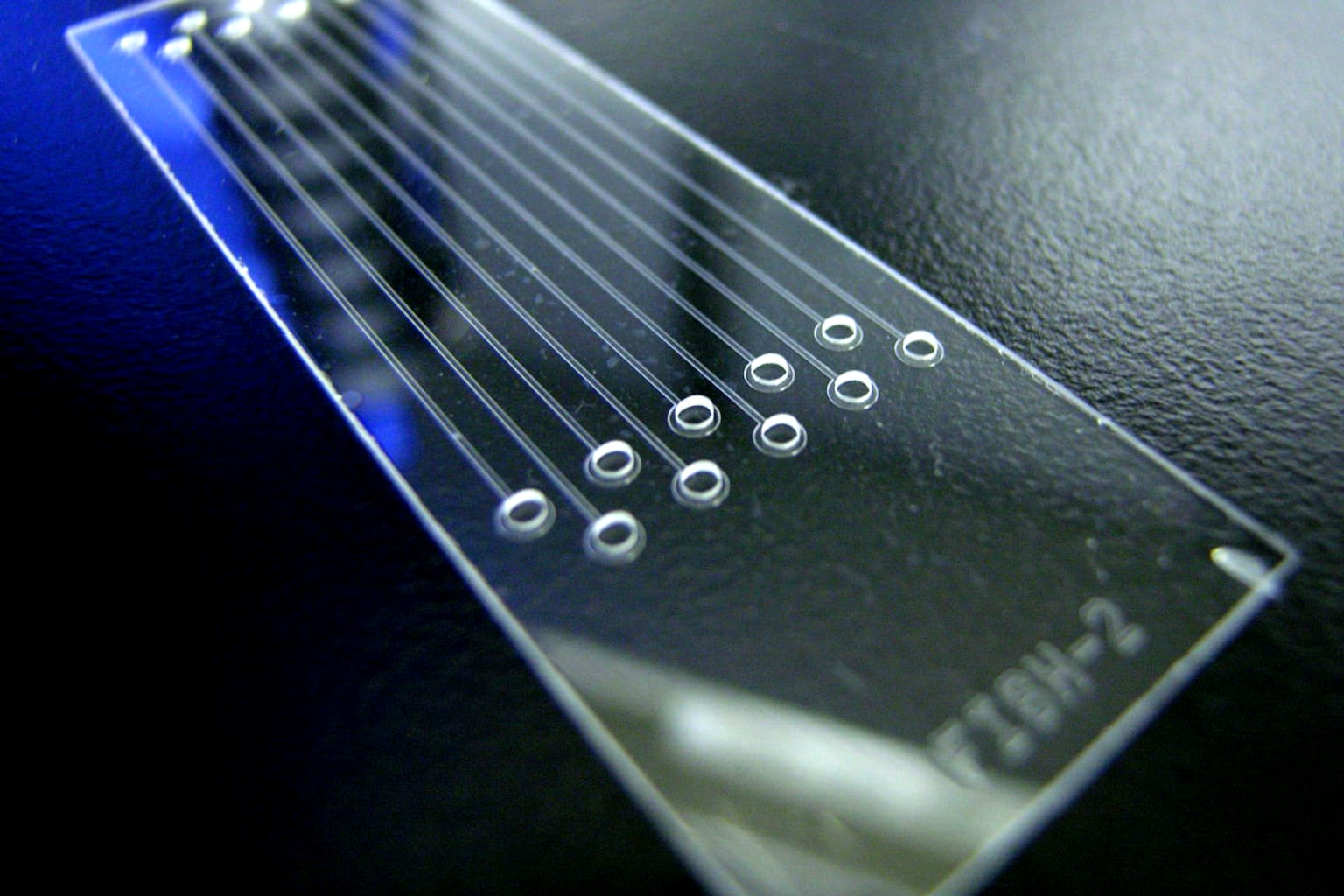
Inside a network of tiny, interconnected channels, bacteria are moving through a maze. As they move, they are solving a problem. A team led by McGill University has built a biocomputer that works this way, and it tackles large, complex problems using a small fraction of the memory and resources that standard computers require.
Standard, or solid-state, computers test each possible solution one after another. For complex problems, that can take years or even centuries. Bacteria work differently: they explore many possible solutions at the same time, and they can divide to create more biological processors. "Modern electronic computers make millions of operations per second using one chip," said Dan Nicolau, the senior author and a professor of bioengineering. "With bacterial division, we have 1 million chips working at the same time." Each of these processors is slower on its own, he explained, but more of them solve the problem faster.
The researchers translated a classic problem into a graph of possible choices and rebuilt it as a network of channels. Each route through the network represents a different possible solution, while the logic gate junctions mark decision points. The bacteria spread through these routes collectively, and the team controls their growth by adjusting the temperature to prevent overcrowding. Automated image analysis then traces the successful routes, showing the combinations that meet the problem's constraints.
The biocomputer is not meant to replace classical or quantum computers. The researchers present it as a resource-efficient, cost-effective tool for problems that electronic machines are not designed to solve. Nicolau cited the mapping of protein structures, and he argued that AI, which he says can only scan available data, does not solve such problems from scratch. The project is the outcome of a 20-year collaboration among researchers in Canada, Europe, the United Kingdom and Australia, and it has been published in the journal Microsystems & Nanoengineering.
For now, the gain is for research teams facing problems that today's computers handle poorly, and the work stays in the laboratory. The researchers give no timeline for using the approach outside it, nor any cost figure. What it changes is the way a computer can search: instead of checking every option in sequence, the search spreads across a population of living cells that multiplies as the problem grows.
Sources — read the originals(Paris time)
Read next
Comments
Loading the thread…
Sign in to leave a comment. Sign in