Seven linked living computers hit 99% accuracy
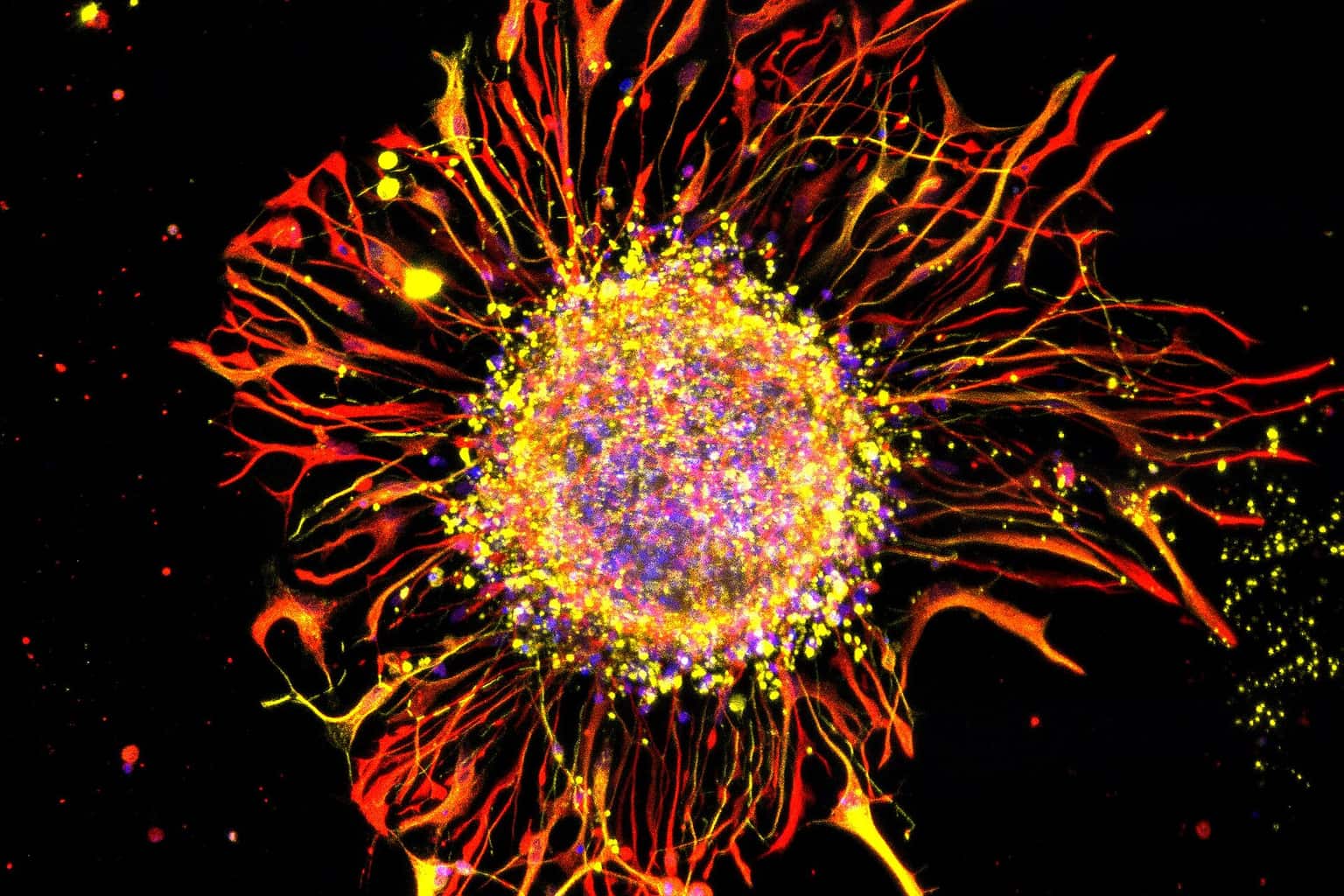
Living neurons are unreliable. One culture can perform well one day and badly the next, and a single biological computer can only go so far. At the first International Conference on Organoid Intelligence in Washington, D.C., on October 26 and 27, Australia's Cortical Labs presented a different answer: link several machines together and let them share the load.
The system, called HIVE, connects 15 of the company's CL1 biological computers. Nobody programmed the division of labour. The machines split the different parts of a task and found the most efficient route to the result once they were part of a bigger network, according to the company. Dr Brett Kagan, co-founder and CEO of Cortical Labs, describes it in biological terms: "Brains distribute information across specialized regions, while hives rely on many workers each with their own functions contributing to a shared outcome."
The gains are the company's own figures. In a symbol recognition test, linking seven machines raised accuracy from around 80% to 99%. In a grid-navigation test, a conventional AI, the Deep Q Network, reached about 32% of the maximum score. The best single CL1 machine reached 40%, several machines working together reached around 70%, and specialist groups dividing the task reached around 80%. The team presents these as preliminary results, limited to its experimental design and to the AI model it chose as a benchmark.
For now, what changes is mainly the stability of the approach. Combining several culture groups spreads the load, so one underperforming group matters less to the final result, and the system keeps running if one group stops responding. Cortical Labs also says the approach is far more energy efficient than conventional machine learning, but it gives no figures for that claim. It has not announced a timeline for HIVE beyond the laboratory, and no application is named.
The next steps are already set. The team wants to understand how the neurons signal and process feedback across the connected machines, and to test whether adding more connections moves the results further. "When cultures work together, those individual differences have less influence over the final result," says Johnson Zhou, a scientist at Cortical Labs. "HIVE gives us a way to manage that variability while drawing on the adaptability that makes biological systems so powerful."
Sources — read the originals(Paris time)
Read next
Comments
Loading the thread…
Sign in to leave a comment. Sign in