Bee nest lining crumbles in soil within 11 months, lab study finds
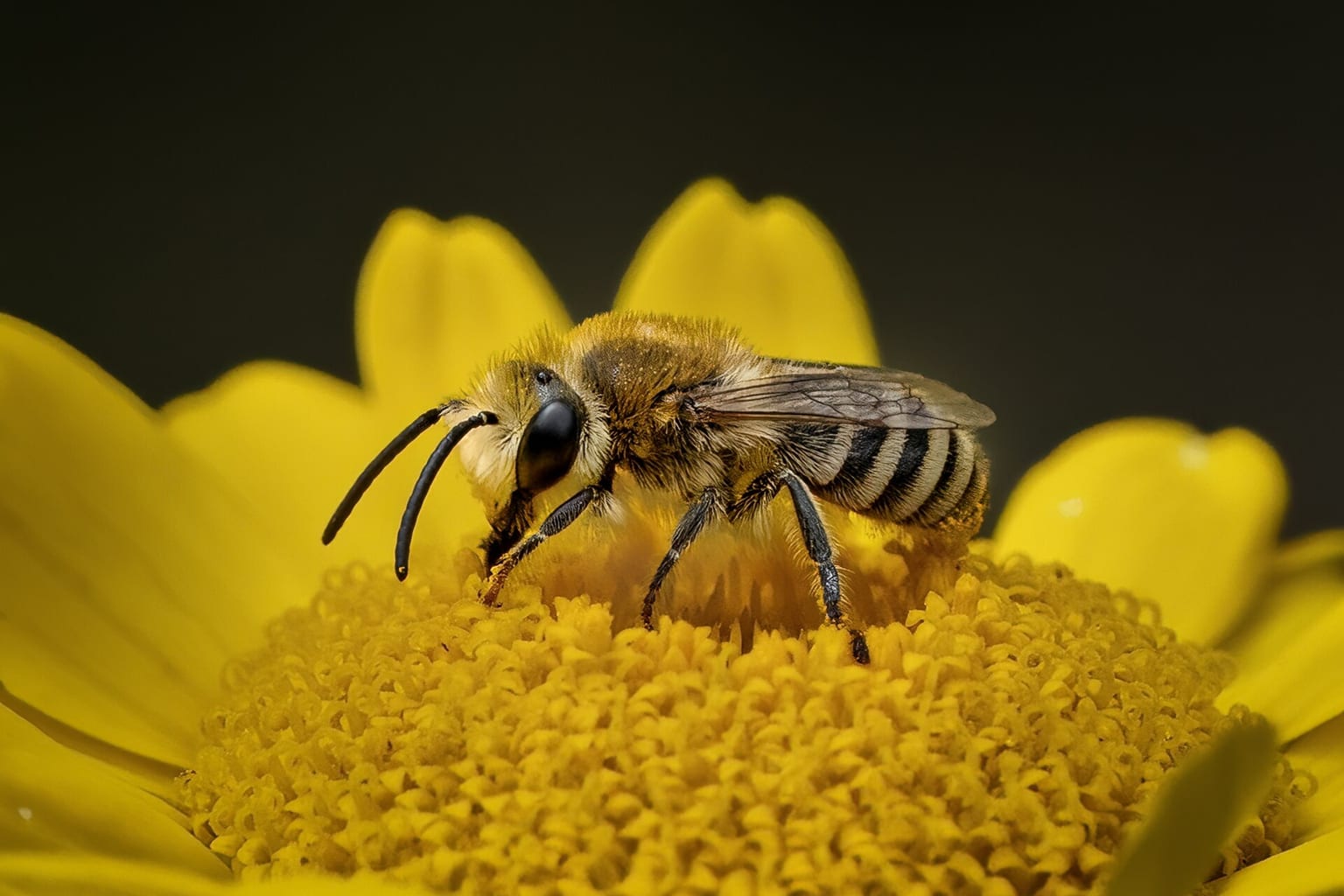
Some bees line their nests with a thin, flexible film, and in the soil that film gives way. Cellophane bees nest underground, and females wall off each egg in its own chamber with a secretion from a gland on the abdomen. Jonathan Coote and his collaborators at Virginia Tech gathered these linings from two Tennessee nest sites of the species Colletes inaequalis and put them through a battery of tests.
Polyethylene makes up about one-third of human-produced plastics and is the most commonly used plastic for packaging. Lab-made polyethylene-like polyesters generally break down poorly in the environment. The bees' material does the opposite: a fresh lining is about 73% polyester and 27% silk by weight, and the polyester has a crystal structure and degradation temperature similar to polyethylene. The most surprising finding is that it is probably cross-linked, with its polymer chains tied into a network. Such thermosets are usually very durable, so a thermoset that breaks down quickly in soil is, in Coote's words, "very counterintuitive."
The decay was tracked over time. After four months, the linings are just 40% polyester, which means the polyester degrades faster than silk in those first months. At that stage the linings remain flexible and intact, guarding the cell against moisture and microbes, much like shrink wrap on a bell pepper. By seven months, around the time the larva becomes an adult bee, they crack easily. By 11 months they crumble in the hand. The lining protects the developing bee for as long as it is needed, and no longer.
The study remains a lab analysis of a natural material. The researchers hypothesise that the crystal structure of the polyester leaves the bonds between its subunits more exposed than in other polyesters, and they have found evidence of an enzyme that breaks those bonds, possibly carried in the mother bee's saliva. Neither hypothesis is yet tested. "The goal is to reverse engineer what the bees are doing so that we can design similar materials in the lab and eventually produce them at practical scale," Coote says.
For now, the gain is a blueprint. Materials scientists who want plastics that hold their form during use and then vanish in soil have a working example to study, and no synthetic material has yet been shown to do the same. Packaging makers would be the first to benefit if a scalable version emerges, but the study gives no date and no cost, and the path from a natural lining to an industrial process is still unmapped.
Sources — read the originals(Paris time)
Read next
Comments
Loading the thread…
Sign in to leave a comment. Sign in