Lab tests: one bioplastic breaks down in 17 days, another barely moves
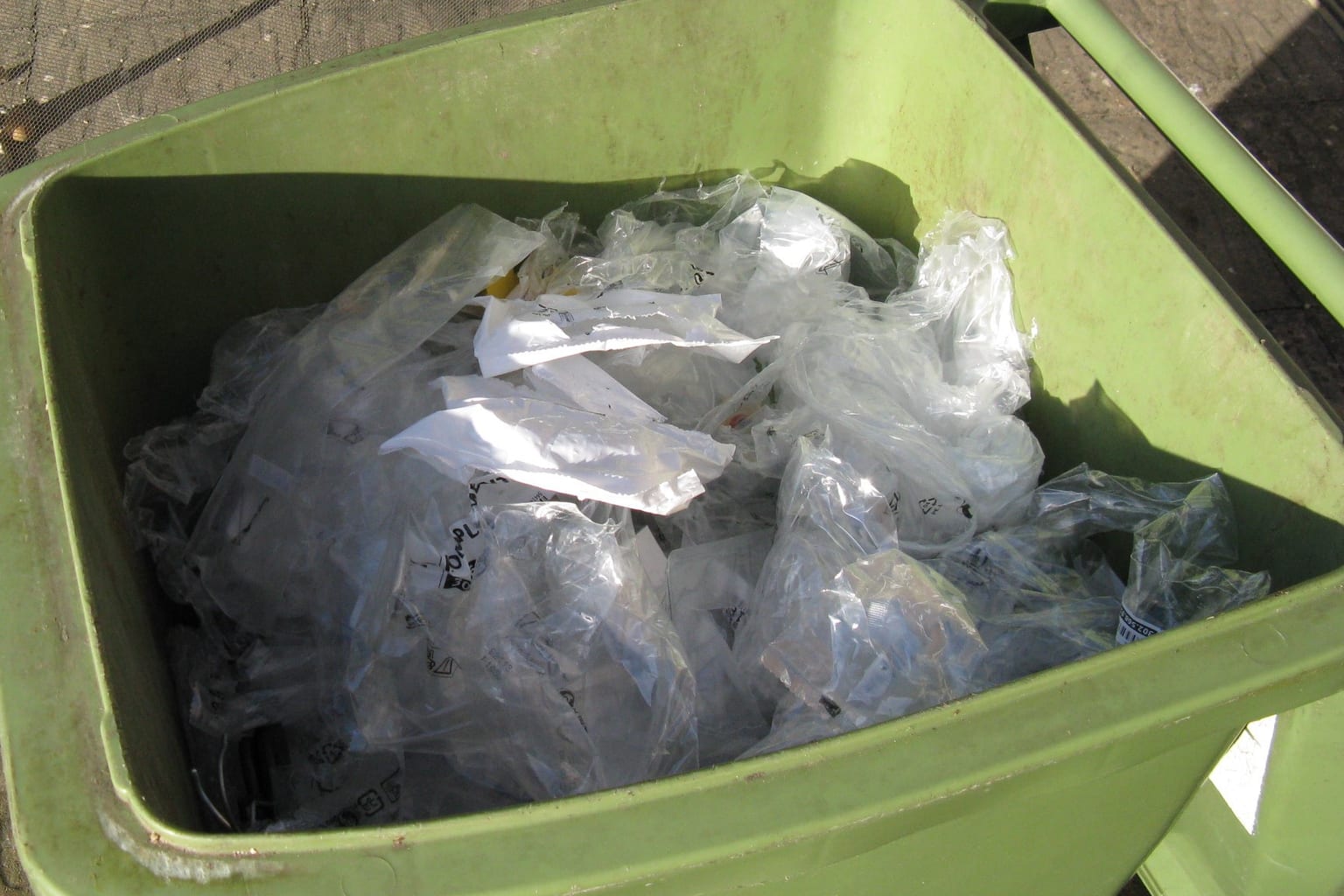
For up to 320 days, a team led by the Korea Advanced Institute of Science and Technology (KAIST) kept three plastics labeled biodegradable in landfill leachate, the liquid that drains through waste and carries dissolved substances and microorganisms. At 35 °C and with little oxygen, they did not behave alike. Within 17 days, polyhydroxybutyrate (PHB) had turned 99.9% of its carbon into gas. The yardstick is the share of plastic carbon converted into gases such as methane and carbon dioxide, not how much a film looks fragmented.
Poly(lactic acid), or PLA, started slowly, with a lag of about 20 days, then degraded gradually to 83.6% after 320 days. The authors call that result particularly notable: PLA is generally known to break down more readily in hot composting facilities, yet here it did so over a long period at just 35 °C. Electron microscopy showed biofilms, thin communities of microorganisms, clinging to cracks and damaged areas of the PLA films. Poly(butylene adipate-co-terephthalate), or PBAT, reached only 2.7%, and conventional low-density polyethylene (LDPE) reached 0.4%. An earlier study of commercial PLA and PBAT bags had found both hardly biodegradable under anaerobic conditions at 35 °C, but that work used anaerobic digestion, a different setup from landfill leachate, so the two cannot be compared head to head.
The team then asked which microbes were doing the work. Combining DNA and RNA analyses, the researchers reconstructed 238 microbial genomes. In 118 of them, they found candidate genes for enzymes that could break apart the long chains of PHB or PLA. Only 49 showed those genes being transcribed, meaning switched on. Having a gene is not the same as using it. Many of the active candidates belonged to poorly characterized lineages, not among the experimentally validated plastic degraders in reference databases. Transcription was also stronger in biofilms on the plastic than in the surrounding liquid, which suggests that what microbes do on the surface matters as much as which ones are present.
The authors set the limits themselves. Transcription does not by itself show that a microbe or enzyme degrades the plastic, so those candidates need follow-up experiments. The degradation figures come from laboratory incubations at 35 °C and should not be read as predictions for real landfills, whose physical and chemical conditions a leachate test cannot fully reproduce. No independent replication has been reported so far.
For anyone choosing materials, the practical lesson is that a label is not enough. A plastic sold as biodegradable can barely move in 320 days, while another is almost entirely converted within 17. The researchers say the work can help match materials to their disposal environment and guide the search for plastic-degrading microbes and enzymes, starting with the poorly characterized lineages. The timing is open: the team names validation experiments as the next step and gives no date.
Sources — read the originals(Paris time)
Pages consulted while writing
Read next
Comments
Loading the thread…
Sign in to leave a comment. Sign in