Beta's Electric Alia Flies Near 160 km/h, Eyes FAA Approval in 2027
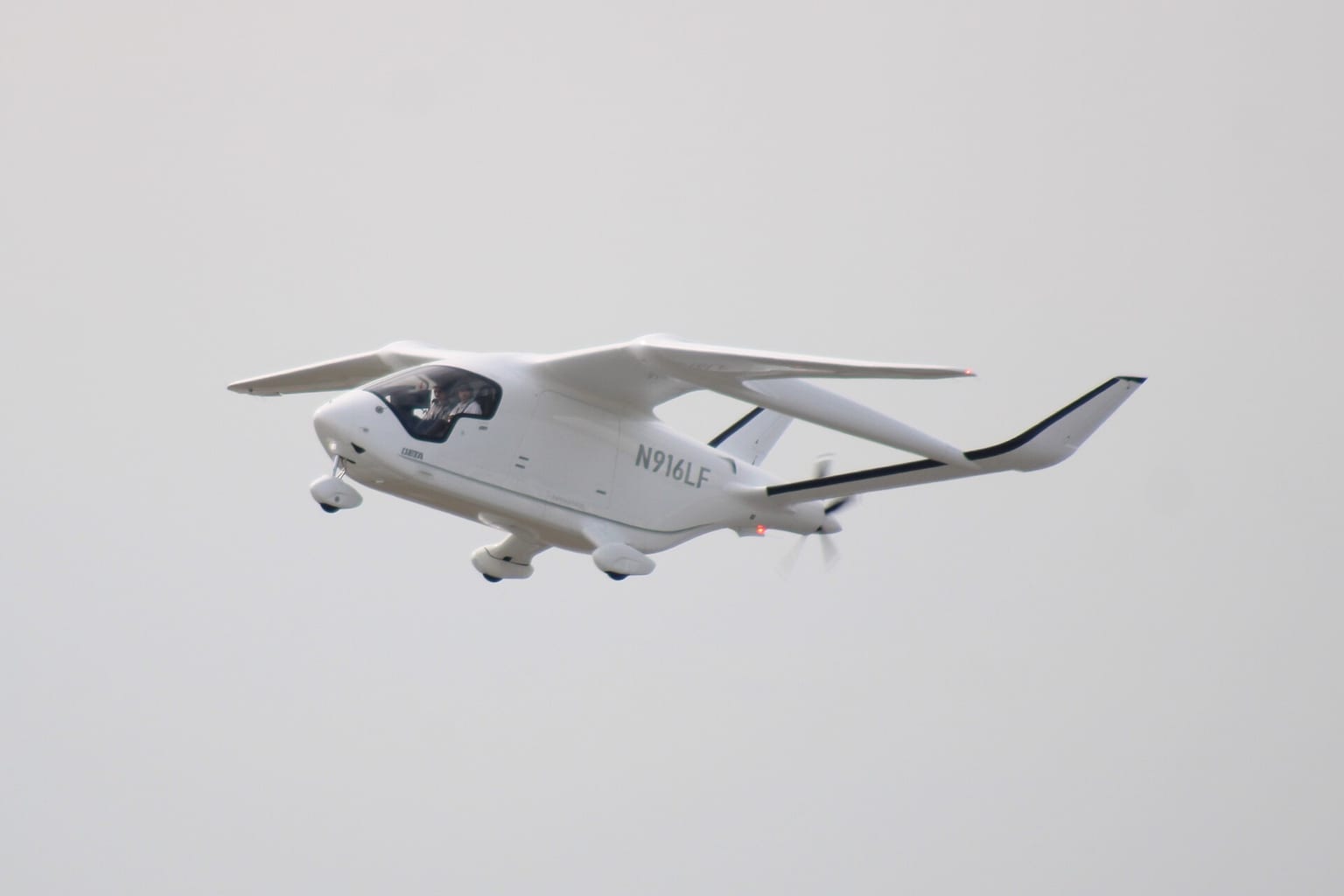
Runway 33 at Patrick Leahy Burlington International Airport, Vermont. Pilot Chris Caputo releases the brakes of Beta Technologies' Alia CX300 and pushes the throttle forward. Behind the cabin, a five-blade pusher propeller starts turning, and the aircraft leaves the ground without the shriek of a turbofan or the shudder of a piston engine. Within seconds it reaches 85 knots, almost 160 km/h, and climbs over Lake Champlain toward the Green Mountains.
The fuel comparison is what Beta puts first. A half-hour flight in the Alia consumes about US $9 of electricity. The same flight in a comparable Cessna 208 Caravan would burn roughly 25 to 30 gallons of Jet A fuel, costing $210 to $255 at press time. "Even at full throttle, we're not burning any fuel up here," Caputo says. The figure covers electricity only, and the jet fuel price is the one the source quotes for that moment.
Electric aviation has moved out of the experimental stage. After years of renderings and prototypes, companies are now flying full-size aircraft, submitting them for certification and testing routes with prospective customers. Among the three leading U.S. developers, Archer Aviation and Joby Aviation are building electric vertical-takeoff-and-landing aircraft (eVTOLs) for urban air taxis. Joby says its four-passenger S4 is in the final stage of the Federal Aviation Administration (FAA) certification process, and Archer says its Midnight is in Phase 4. Beta has chosen another route: short-haul freight planes that use conventional runways and an open charging network. Its CEO and founder, Kyle Clark, describes a stepwise plan: "We're ready to go today with medical and cargo aircraft that fly from airport to airport." Passenger planes with conventional takeoff come next, then cargo eVTOLs, and finally passenger eVTOLs.
The two Alia variants share the same pusher motor, battery pack, flight control computer and fixed-pitch propeller. The CX300 takes off on a runway, while the A250 adds four lift propellers for vertical takeoff and landing. Beta says its test pilots have flown the Alia family more than 300,000 km, including multiple U.S. crossings and overseas demonstrations. Its 17,500-square-metre factory beside the Burlington airport is where technicians make composite structures and join aircraft sections.
For operators, the immediate change is on short routes between airports, for medical and cargo transport and regional logistics, if certification arrives on schedule. Beta expects FAA certification for the CX300 in 2027 and for the A250 a year later. Until then, the aircraft is a prototype, not a certified product, and the 991-aircraft backlog is the company's own figure. The question of whether the cost gap holds in commercial service will be tested on those first routes.
Sources — read the originals(Paris time)
Read next
Comments
Loading the thread…
Sign in to leave a comment. Sign in