Blue Origin test-fires Northstar, a lighter engine meant to cost less
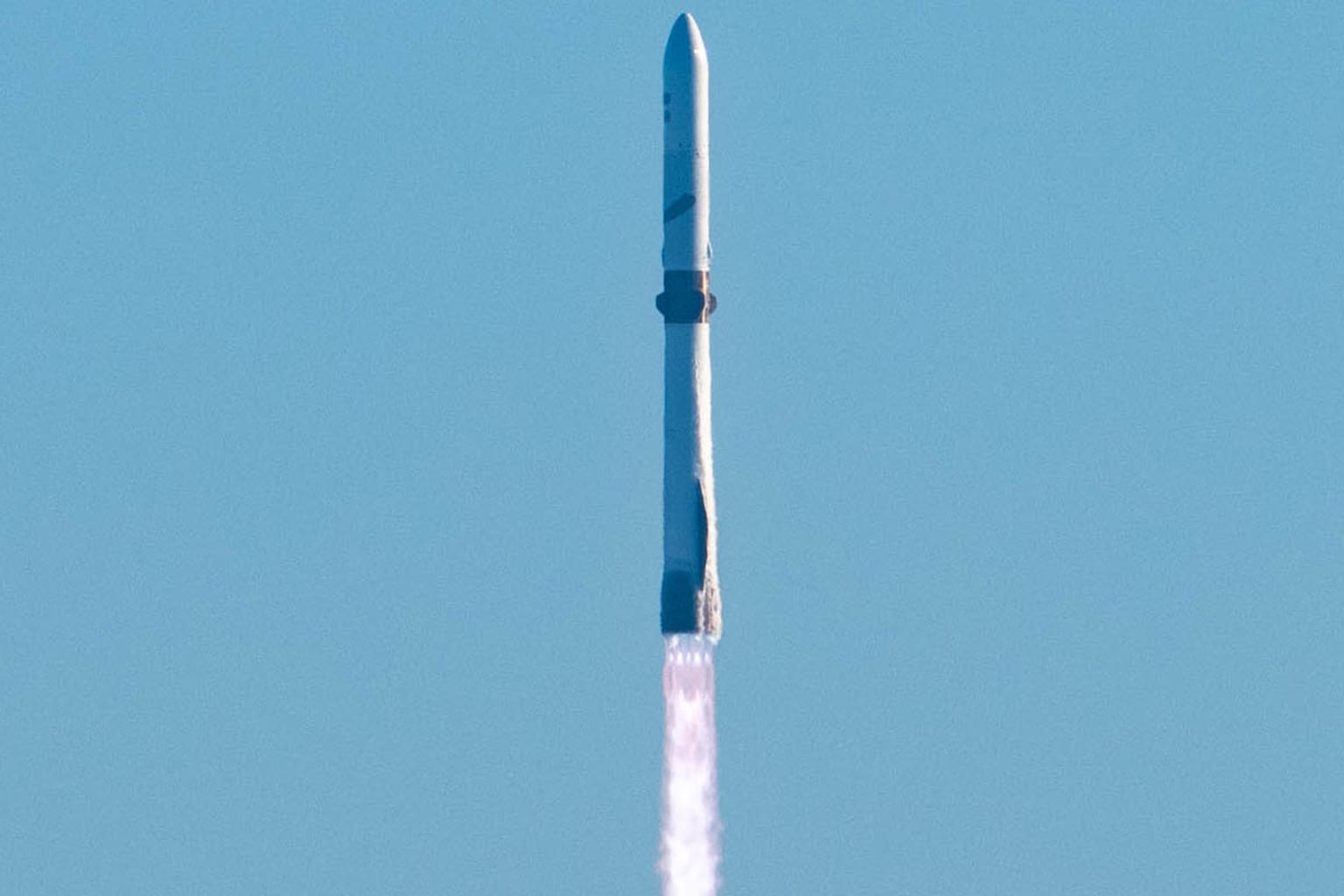
At the UP.Summit conference, held at the Shuttle Landing Facility in Florida, Blue Origin's chief executive, Dave Limp, announced two upgrades to the New Glenn rocket on Thursday. The first is a new engine, Northstar, whose test-firing campaign has already begun. It will eventually replace the BE-4 that powers the rocket's first stage. "There has never been higher demand for launch, ever," Limp said.
Northstar is a simplified but more powerful version of the BE-4. It has half the number of parts and 30 percent less mass, and about 65 percent of it can be 3D-printed. Blue Origin believes it can build the engine for 25 percent of the cost of a BE-4, and eventually assemble each one in less than a day. Thrust, the force that pushes the rocket upward, is the key figure: the BE-4 produces 640,000 pounds today, and Northstar is set to start at 715,000 pounds. Like the BE-4, it burns methane and liquid oxygen in an oxygen-rich staged combustion cycle, using a single-shaft turbopump.
The second upgrade is GS3, a hydrogen-oxygen third stage in development that gives the rocket an extra boost. Together, the changes expand New Glenn's capacity to deliver payloads to geostationary orbit and to the Moon. Limp said the goal is to eventually launch New Glenn more than 1,000 times a year. "To get access to space at a lower cost, we have to look at every part of the vehicle," he said.
For operators who need to send payloads to geostationary orbit or the Moon, the upgrades point to more capacity and a lower cost per vehicle. None of these gains has been measured in flight yet. The cost and assembly figures are the company's own estimates, and Blue Origin gave no date for Northstar's first flight. Blue Origin will also keep building the BE-4 for United Launch Alliance (ULA), which uses two of these engines to power its Vulcan rocket.
What comes next is the test campaign already under way for Northstar, and the development of GS3. Both will determine whether the cost and performance targets hold once the engines leave the test stand.
Sources — read the originals(Paris time)
Read next
Comments
Loading the thread…
Sign in to leave a comment. Sign in