NASA tests developmental RS-25 engine at 111% power
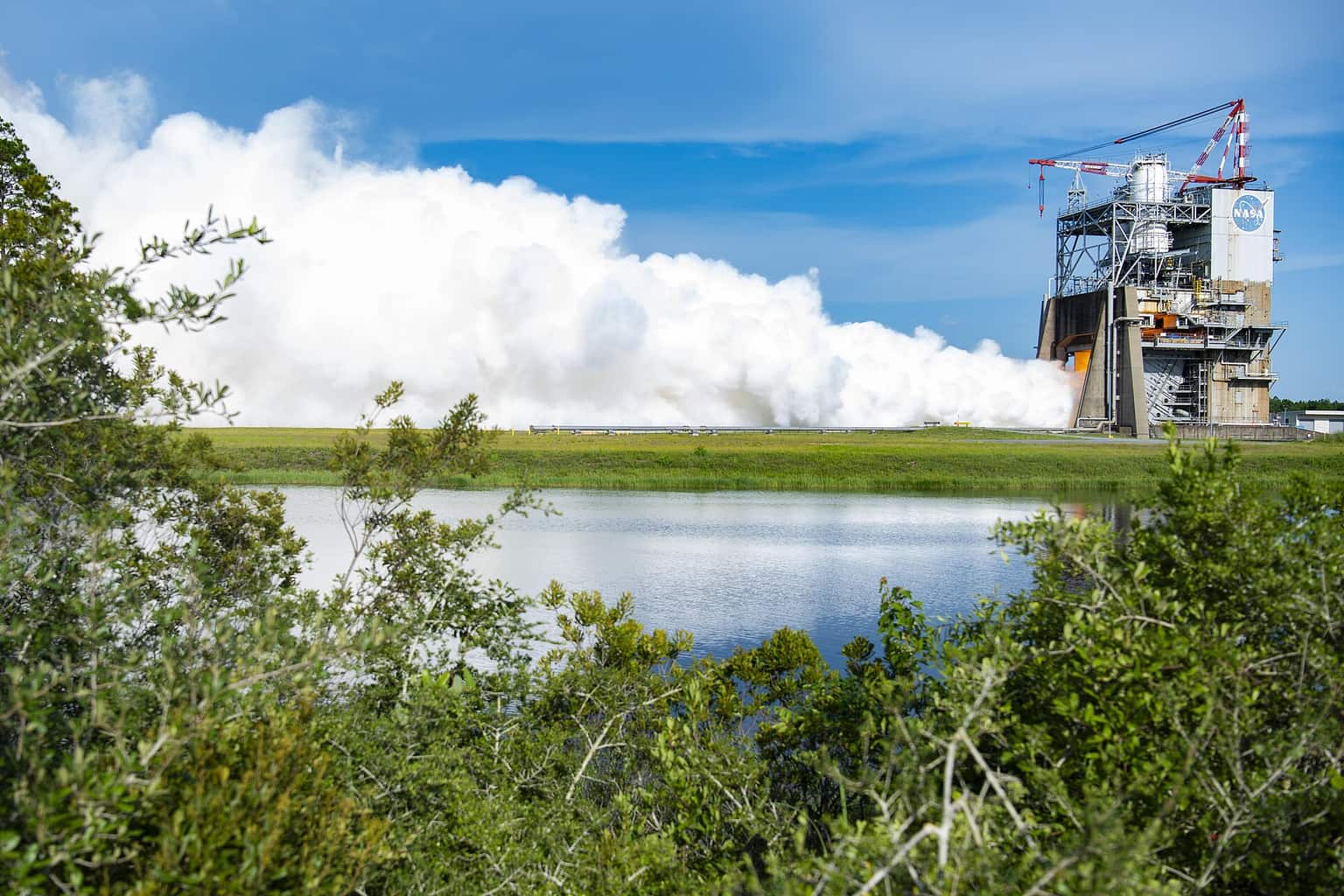
At Stennis Space Center, near Bay St. Louis, Mississippi, the RS-25 engine No. 10001 fired on the Fred Haise Test Stand on October 21, 2026. Test teams ran it for 500 seconds, almost eight and a half minutes, the same time an RS-25 burns during a launch of NASA's SLS rocket. Then the operators pushed it to 111% power, the thrust level that new production engines need to carry the SLS rocket and the Orion spacecraft to orbit.
The test had two goals. The first was to acceptance-test RS-25 flight components for future Artemis missions. The second was to validate a new thermal protection system, which protects the engine nozzle from the heat around the SLS rocket during launch. The engine itself is developmental and will not be used in flight. Its data, however, gives NASA and its prime contractor, L3Harris Technologies, the means to improve engine performance and reliability.
The stakes are large. Four RS-25 engines produce up to 2 million pounds of combined thrust to launch the SLS rocket for each Artemis mission. Every RS-25 is tested at Stennis and proven flightworthy before it is used. These tests are run by a team of operators from NASA, L3Harris and Nova Space Solutions.
For the Artemis program, the gain is concrete: a heat shield for the nozzle checked under full power, and engine data gathered before any flight engine is committed. NASA's announcement gives no date for the next Artemis launch, and it does not say how many flight engines will be tested this way.
Sources — read the originals(Paris time)
Read next
Comments
Loading the thread…
Sign in to leave a comment. Sign in