ESA's reusable Prometheus engine ignites repeatedly in ground tests
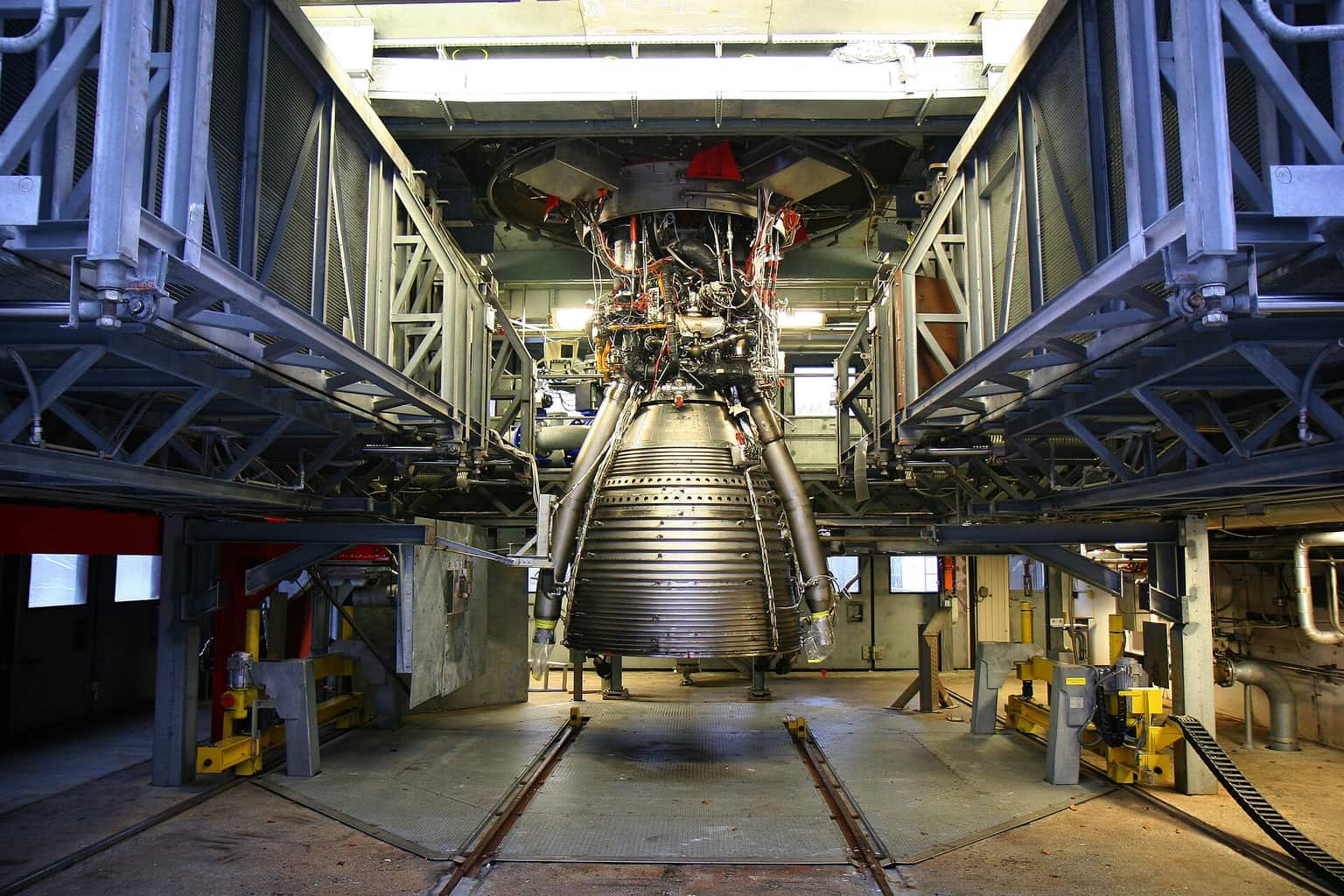
On a test stand in Lampoldshausen, Germany, the Prometheus engine was ignited several times in a single day, and each time it reached stable operating conditions. It also proved it could start without a separate starter system. ArianeGroup, the French aerospace firm that builds the engine for the European Space Agency (ESA), calls this a European first for a gas-generator-cycle engine in its thrust class. The trials took place on Thursday, 29 October 2026.
The reason reusability is hard is that a returning rocket has to restart its engines after launch, to return to Earth and carry out controlled landings. Launches need high thrust, while descent and landing need precise control, so the engine also has adjustable thrust. Prometheus runs on liquid methane instead of liquid hydrogen, because methane is denser and can be stored at higher temperatures. The engine can produce about 100 metric tons-force of thrust.
The test site was DLR's P5 stand, which was upgraded to handle liquid methane and liquid oxygen, the two propellants Prometheus uses. According to DLR, the site had never before achieved repeated methane-oxygen ignitions in a single test day. It can now handle up to five ignitions per day, longer burns and different thrust levels, and it measures thrust, fuel flow, pressure and temperature. “Up to five ignitions in a single test day place high demands on the coordination of the test stand systems,” said Anja Frank, head of the DLR Institute of Space Propulsion. “The fact that we can carry out these procedures automatically, safely and in a reproducible manner is an important step towards testing reusable propulsion systems.”
The campaign also brought the first test of a combustion chamber made by Cold Gas Spray, a 3D-printing process in which metal powder is sprayed at high speed onto a part, and the particles bond to its surface to form solid layers without melting. ArianeGroup uses 3D printing extensively to simplify manufacturing, shorten production times and cut costs.
For Europe, the gain is sovereignty over a technology that Philippe Clar, head of Space Transportation Programs at ArianeGroup, says is “more important than ever” in space transportation. Clar said the campaign shows the ability of teams in France and Germany, working with partners, “to give Europe sovereign capabilities in reusable space technologies.” These were ground trials, for future missions, so the engine's next milestones are still ahead. ArianeGroup has already started work on an upgraded engine, Prometheus Mark 2, whose next test campaign will reportedly take place at the company's Vernon test center in France. No date was given.
Sources — read the originals(Paris time)
Read next
Comments
Loading the thread…
Sign in to leave a comment. Sign in